

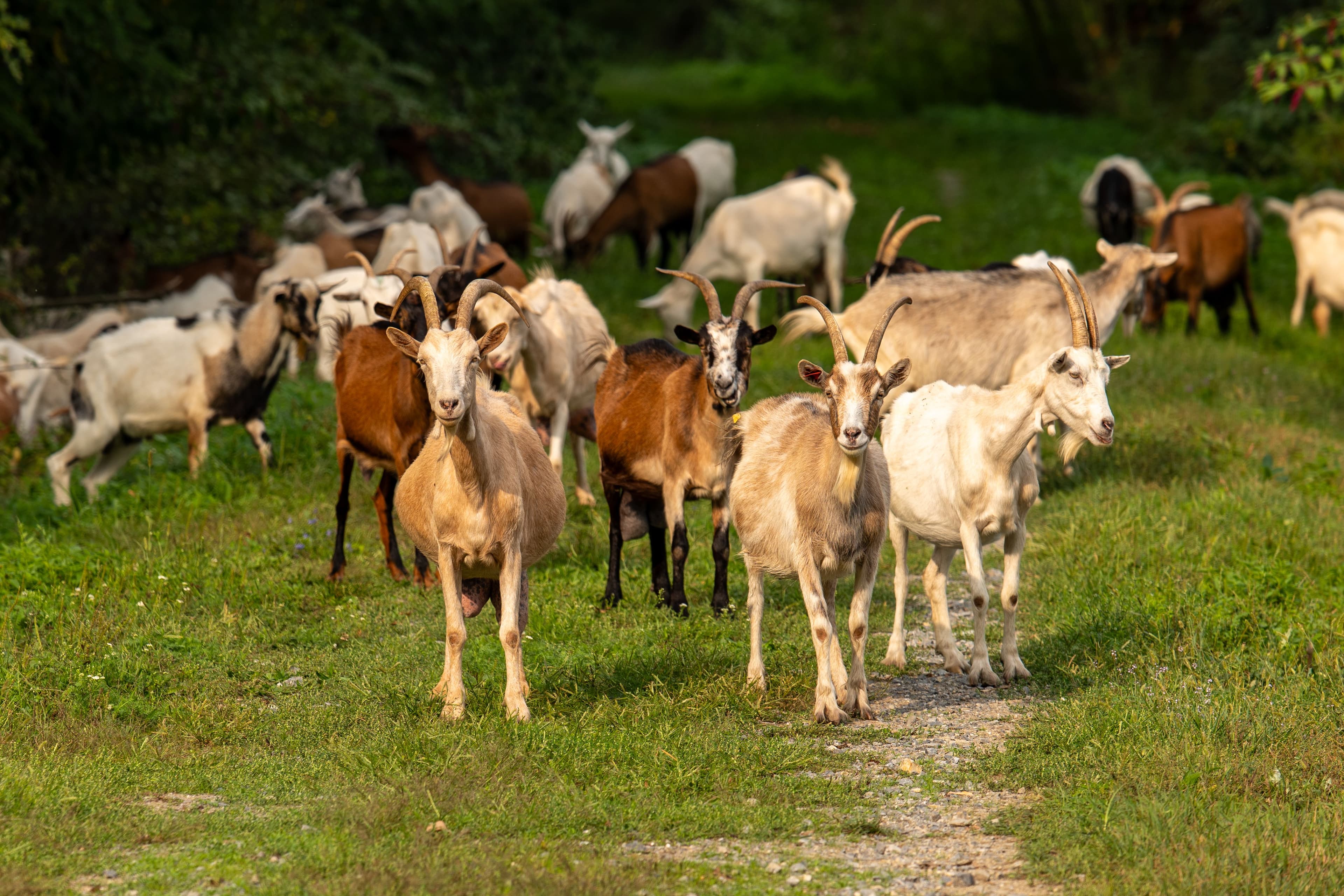
Goat Farming in the Philippines: How to Start Goat Raising in 10 Steps
Goat farming is one of the easiest livestock businesses to start in the Philippines, because goats need little space, eat what grows around the farm and multiply quickly. Whether you want a few goats in your backyard or a bigger herd, goat raising in the Philippines gives rural families meat, milk and goats to sell.
This guide covers everything you need to know about goat farming in the Philippines: what goat farming is, whether goat raising pays, the 10 steps to start, the equipment you need, answers to common questions, and where to find goats for sale.
In this guide | Short answer |
|---|---|
Raising goats (pag-aalaga ng kambing) for meat, milk, breeding stock and manure | |
It can be: you earn from kids, breeding stock, milk and manure, and goats multiply fast | |
Goal, land and forage, goat house, stock, feeding, breeding, kidding, kid care, health and records | |
An elevated, dry and well-ventilated house with 0.75–1.50 m² of floor space per adult goat | |
Goats are browsers: grasses like napier plus leaves of ipil-ipil and kakawate, with clean water and salt | |
Breed does at 8–10 months (best 10–12); heat comes every 18–21 days; 1 buck for 25 does | |
A goat pregnancy lasts about 150 days, or 5 months | |
Pneumonia and worms are the main killers; deworm by worm load and ask a veterinarian | |
Goat house and pens, feeding racks, drinkers, fencing, a hoof trimmer and a record book | |
Lifespan, pregnancy, goats per hectare, what goats eat, breeding age, backyard raising, and one question in Tagalog | |
Goats, goat feeds, supplements and livestock equipment from sellers on FarmyHub |
What Is Goat Farming?
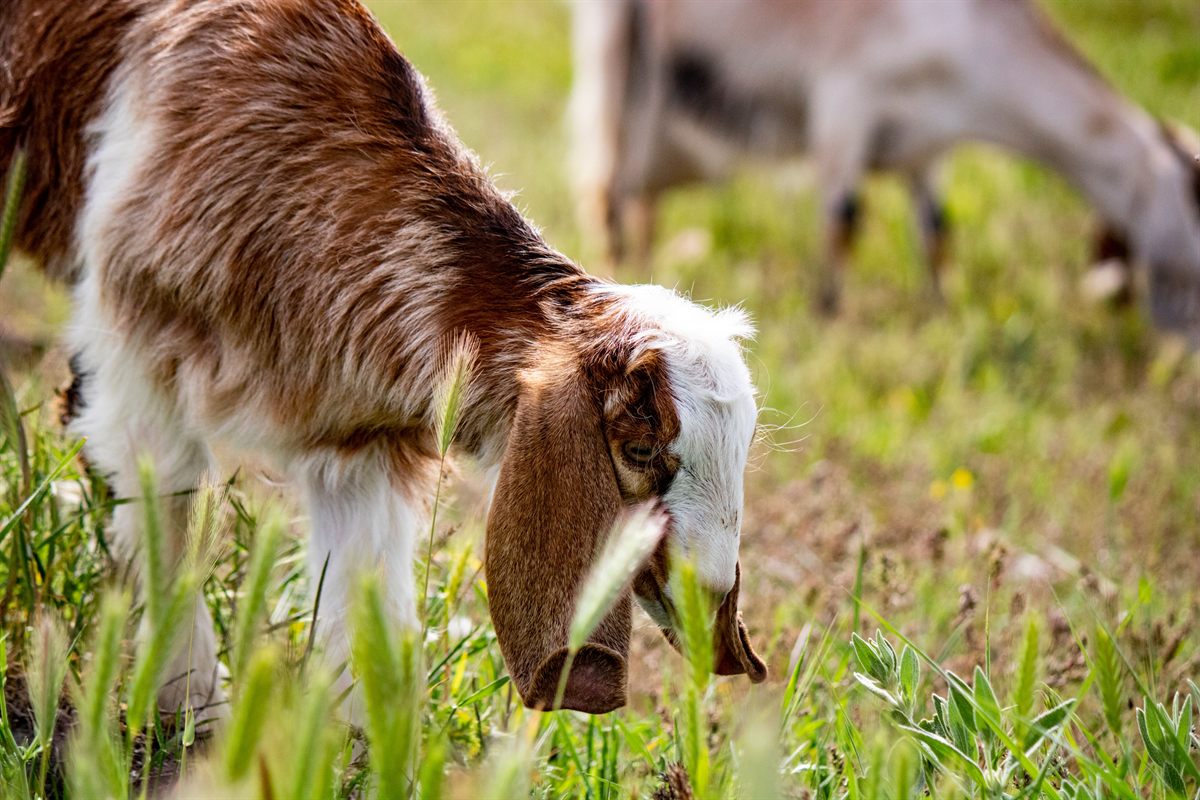
Goat farming (pag-aalaga ng kambing), also called goat raising or goat husbandry, is raising goats for meat, milk, breeding stock and manure. In other words, goat raising means keeping a herd of goats, housing and feeding them, and breeding them so the herd grows.
Most goat raising in the Philippines is backyard goat farming: small farmers keeping a few goats beside the house or under their coconut trees. If you want to start goat farming at home or on a small scale and are asking “paano mag-alaga ng kambing?”, think of this guide as goat raising 101. It starts with the basics, then walks you through goat care in 10 steps, from the goat house to selling your first kids.
Why Goats Suit Small Farms
According to the Agricultural Training Institute (ATI), goats are one of the most practical animals for small farmers. This is why goat raising is important for many rural families, and why goats are easy to raise even for beginners:
Lower capital: you need much less money to start than with cattle.
Faster reproduction: a doe can give birth to as many as five kids before she is three years old.
Low feed needs: about ten native goats eat what is enough for one cow.
Docile nature: anyone in the family, including women and children, can handle them.
Weed control: they clear weeds under coconut trees and fruit orchards.
Free fertilizer: their manure feeds gardens, farms and fishponds.
Insurance: goats are savings you can sell when a crop fails.
Goat Production in the Philippines Today
Data from DOST-PCAARRD and the Philippine Statistics Authority (PSA) show that the Philippines had 3.64 million goats in 2025, and about 99.4% of them were raised on smallholder farms. The top goat-raising regions are the Negros Island Region (451,870 heads), Central Luzon (431,180 heads) and Central Visayas (375,560 heads).
Goat Terms for Beginners
Before you follow any goat raising guide, learn the basic words breeders use (Wikipedia):
Kid: a young goat.
Doe: a female goat.
Buck: an intact male goat.
Wether: a castrated male goat.
The basic requirements for goat farming are a dry goat house, enough forage, clean water and healthy breeding stock. The 10 steps below cover each of them.
Is Goat Farming Profitable in the Philippines?
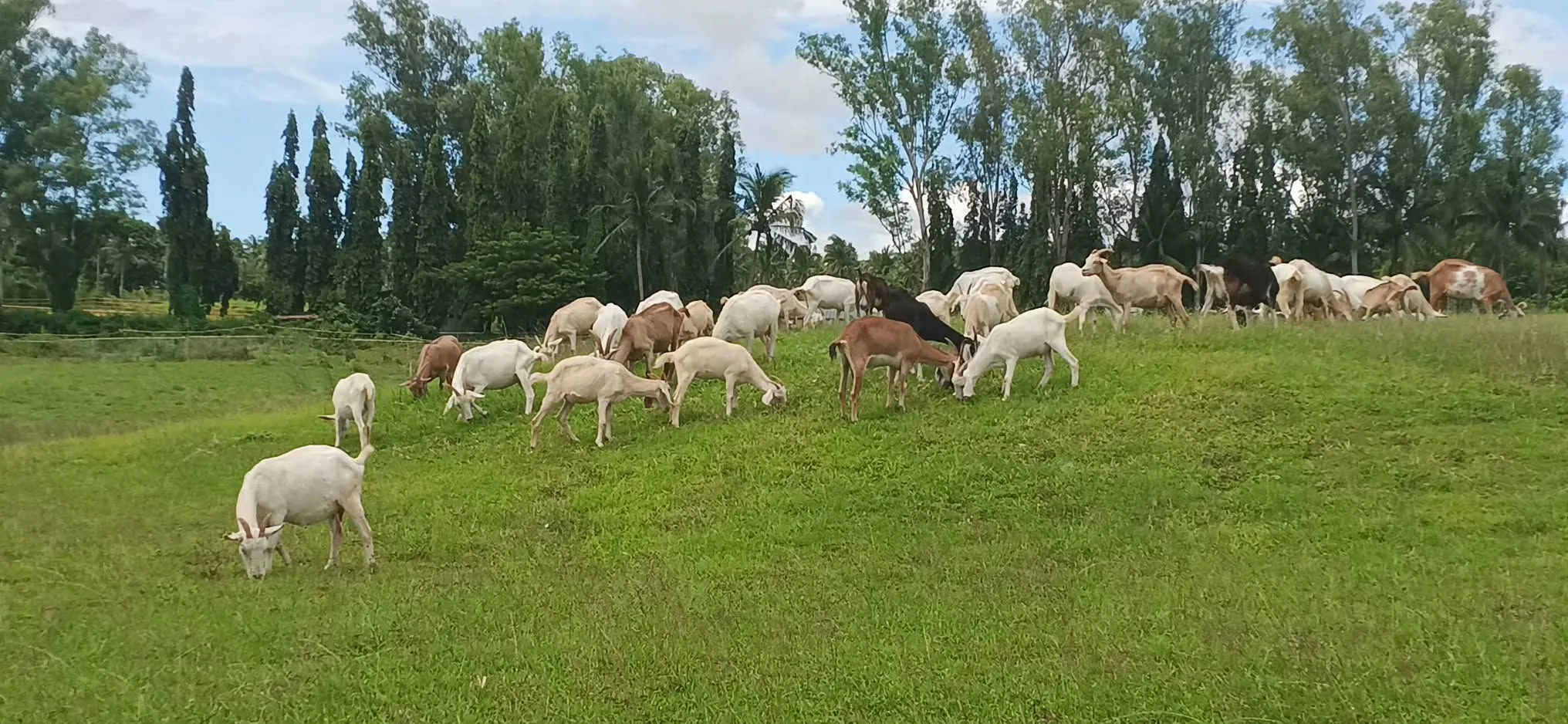
Photo: goats listed by a FarmyHub seller
Goat farming can be a good livestock business in the Philippines, but whether it pays depends on how you run it. Before you write a goat farming business plan, look at both cost and profit: what you will spend and where the money comes from.
What You Spend on Goat Farming
According to the Department of Agriculture (DA) guide, how much goat farming costs depends on the size of your farm:
Backyard farms: the goat house (kulungan ng kambing) and your first breeding stock, then medicines, vaccines, concentrates and vitamin supplements.
Larger farms: also a water pump, feeding troughs, fencing, pasture, land and farm labor.
The prices of goats and materials change by region and season, so a goat farming feasibility study for your own area is the best way to estimate your project cost. To see current goat prices, check what sellers ask on FarmyHub.
Where the Money Comes From
A goat raising business earns from four things: selling kids for meat, selling breeding stock, selling milk, and using or selling the manure. What makes goat farming profitable for many small farmers is how fast the herd grows: according to the ATI, a doe can give birth to as many as five kids before she is three years old.
Some farms also milk their does and start a small goat milk business. Can goat farming make you rich? Not overnight. Profit depends on good management, healthy goats and buyers for your kids, so there is no fixed income per goat or per month.
Goat farming is one of many agribusiness ideas for small farmers. Before you start, complete your RSBSA registration so you can qualify for DA programs and assistance.
How to Start Goat Farming in 10 Steps
These 10 steps show you how to take care of goats from planning to selling, with practical goat farming tips from the DA and ATI. If you are starting goat farming for the first time, follow them in order; if you already raise goats, jump to the step you need.
1. Choose Your Goal: Meat, Breeding Stock or Milk
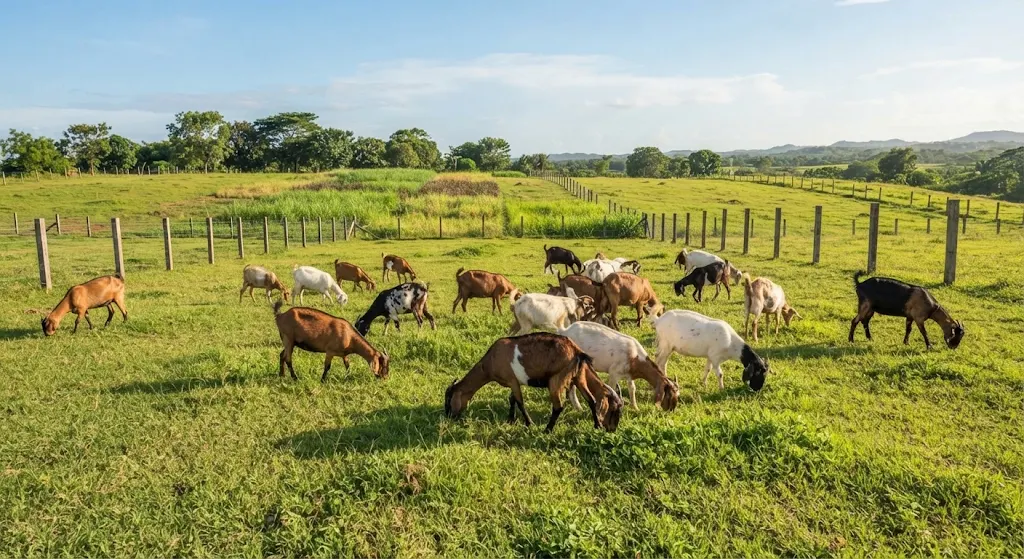
Decide first what your goats are for. Most raisers start with meat goat farming (raising kids for chevon, or goat meat), selling breeding stock, or dairy goat farming for milk. Many backyard raisers combine meat and breeding.
According to the ATI, raisers choose one of three systems:
Grazing: the goats graze on natural or improved pasture.
Cut-and-carry: the goats stay in the goat house, and you cut the forage and bring it to them.
Sloping land (SALT 2): goats are raised together with forage crops and fruit trees on sloping farmland.
Which goats suit meat or milk best depends on the breed: see the goat breeds in our goat farms and breeders article. For goat milk production, the DA guide gives three simple rules: milk your does at the same times every day, keep your hands and utensils clean, and keep the buck away from milking does so his smell does not get into the milk.
2. Plan Your Land, Forage and Water
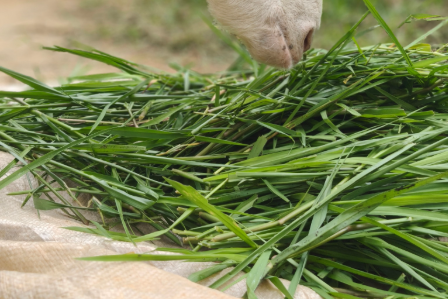
Prepare the land before your goats arrive. How much area is required for goat farming, or how many goats per hectare can you raise? According to the DA guide, a well-developed (improved) pasture can carry up to 15 goats per hectare. For 50 goats, plan about 3 hectares divided into 9 paddocks, so you can rotate the goats and let the grass grow back.
Plant your forage early: napier and other grasses, plus legume trees such as ipil-ipil and kakawate (see step 5). Clean drinking water must always be available.
3. Build the Goat House (Kulungan ng Kambing)
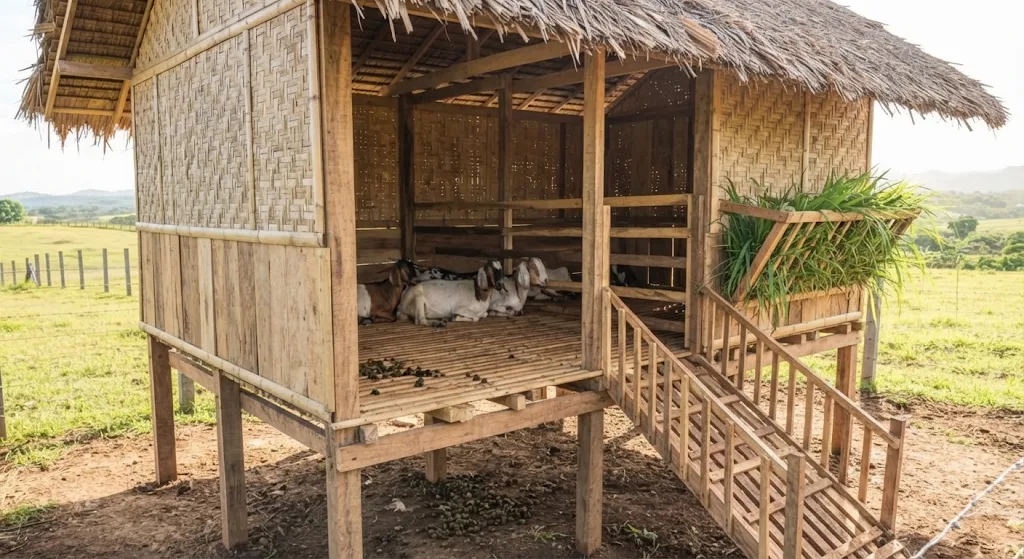
Good goat housing keeps your goats dry, whether they graze or stay inside. They are afraid of rain and wet floors, which make them prone to pneumonia, and they like to sleep on raised platforms. That is why the usual goat house design in the Philippines is an elevated goat house with a slatted floor: well ventilated, well drained and easy to clean.
How much space does each goat need? The DA guide recommends:
Goat | Floor space per head | Feeding space per head |
|---|---|---|
Adults (does and bucks) | 0.75–1.50 m² | 15–25 cm |
Growing goats | 0.50–0.75 m² | 10–15 cm |
Kids | 0.20–0.50 m² | 8–13 cm |
Goat house materials: the DA guide prefers roofs of cogon or nipa in hot, humid places, because they keep the inside cooler. Aim for 28–30 °C inside, because above 30 °C goats eat less. Leave a gap of 0.5 to 1 foot between the floor and the wall and between the wall and the roof beam so air can flow.
Sketch your goat house plans before you build. A good goat farm layout has:
Separate pens: one each for does with kids, dry does, kids and growers, and the buck.
Loafing area: a fenced area beside the goat house where the goats can move around, about 100–150 m² for 50 goats, with a cemented floor that dries quickly.
Fencing: nine-eye hog wire, with posts every 2 meters.
Feeding racks: within reach of both the goats and the caretaker.
Put the buck pen where the does can see him, but far enough away that his strong smell does not reach the milking does. Whether you build a small goat pen for a few backyard goats or a bigger goat farm shed, the design rules stay the same. Keeping goats in a kulungan (pag-aalaga ng kambing sa kulungan) works well with the cut-and-carry system from step 1.
4. Buy Healthy Breeding Stock
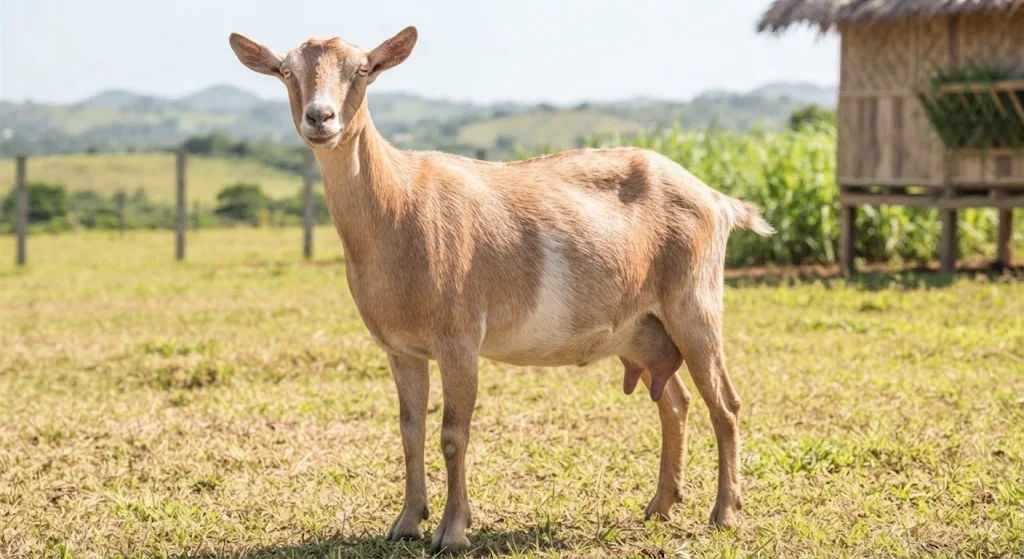
Your first goats decide how well your herd starts. According to the DA guide, look for:
Does: native or graded does of at least 25 kg, from an area with a similar climate, with a healthy udder, even teats, alert eyes and a good appetite.
Bucks: about one year old, already proven (he has mated before), and from a doe that often had twins. Replace your buck about every three years.
Upgrading: breed native or graded does with a purebred buck, but keep the foreign blood at 75% or less, and avoid inbreeding.
Quarantine: keep new goats apart from your herd for at least one month.
Don't buy breeding stock from livestock markets. Buy from farms you can check: see goats for sale on FarmyHub or our list of goat farms and breeders.
5. Feed Your Goats
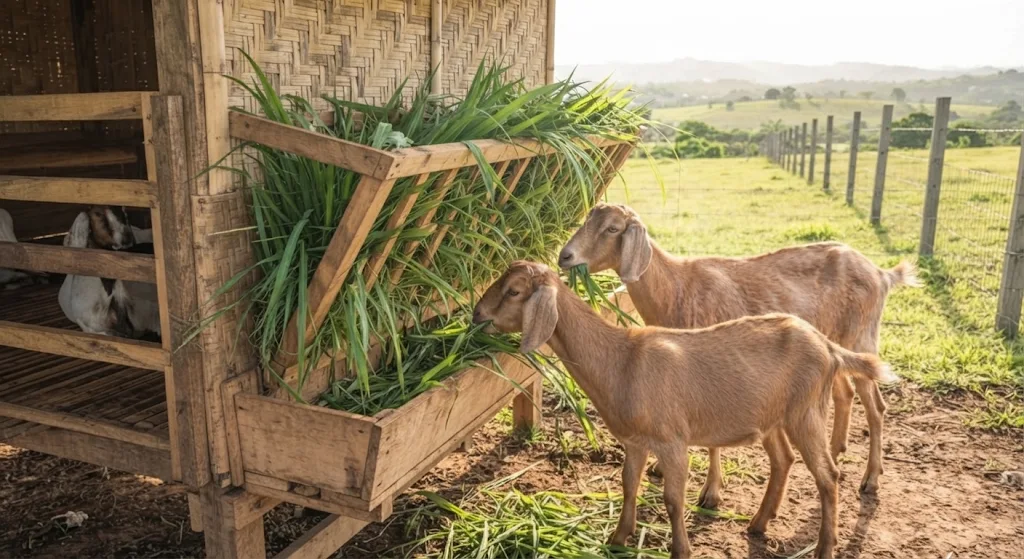
What do goats eat? Goats are browsers, not grazers: they like the leaves of shrubs and trees as much as grass. Good goat feeding gives them both, plus clean water and salt.
Forage goats like:
Grasses: napier grass, para grass, star grass, guinea grass and centrosema (DA guide).
Legume trees and shrubs: ipil-ipil, calliandra, kakawate (madre de cacao), flemingia and sesbania (ATI). Their leaves are rich in protein.
In rainy weather, keep the goats inside and bring them cut grass or hay. Rotate your pastures, because grass that is grazed all the time fills up with worms.
How much feed does a goat need per day? It depends on its age and stage. This goat feeding guide from the DA works as a daily feeding schedule by age:
Goat | What to give each day |
|---|---|
Birth to 3 days | Colostrum (first milk), as much as they want, 3–5 feedings |
4 days to 2 weeks | Milk, 0.5–1 litre per kid in 3 feedings; water; vitamin-mineral mix |
2 to 16 weeks | Milk, 0.5–1 litre per kid in 2 feedings; hay or good fresh forage; starter feed, increased slowly; water |
4 months to first kidding | Forage as much as they want; 0.2–0.7 kg concentrates; water; vitamin-mineral mix |
Dry and pregnant does, bucks | Forage as much as they want; concentrates (0.2–0.7 kg for pregnant does, depending on body condition; bucks 0.2–0.7 kg two weeks before and during breeding) |
Milking does | Forage as much as they want; 0.3–0.5 kg concentrates per litre of milk; water |
Always give clean water and salt or a mineral mix.
Change the feed slowly. A sudden switch to grain can cause grain overload, which can kill a goat.
Buy goat feeds (pagkain ng kambing) and vitamins and supplements from sellers on FarmyHub.
6. Breed at the Right Age and Time
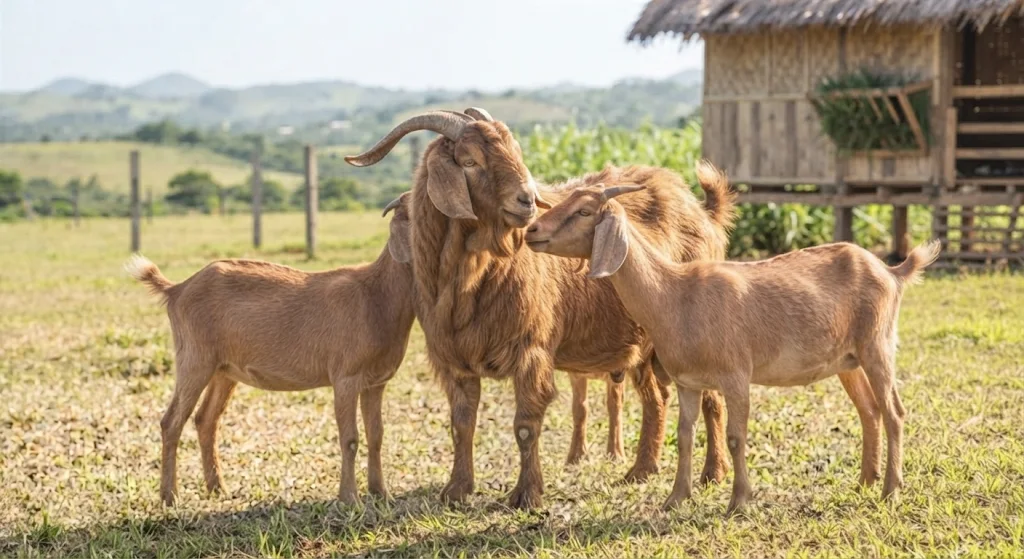
Good goat breeding starts at the right age. According to the DA guide, start breeding does at 8 to 10 months; the best goat breeding age is 10 to 12 months, depending on the doe's weight. Bucks can start at the same age.
A doe comes into heat every 18 to 21 days, and the heat lasts 2 to 3 days. Goat heat signs to watch for:
Mucus from the vulva that mats the hair of the tail
Restlessness and frequent urination
Less appetite and frequent bleating
She stays near the buck and lets him mount her
Goat mating tips:
Bring the doe to the buck, not the buck to the herd.
Two to four matings during one heat are enough.
Keep one buck for about 25 does.
Looking for the best goat breed for meat or milk? See the goat breeds in our goat farms and breeders article. To plan your herd's year, use this goat breeding chart:
Breeding fact | Goats |
|---|---|
Puberty | 4–8 months |
Start breeding does | 8–10 months (best 10–12 months, by weight) |
Heat cycle | Every 18–21 days |
Heat lasts | 2–3 days |
Matings per heat | 2–4 |
Buck to doe ratio | 1 buck : 25 does |
Gestation | 150 days, give or take 5 (about 5 months) |
Move to kidding pen | 1 week before kidding |
7. Care for the Pregnant Doe and Kidding
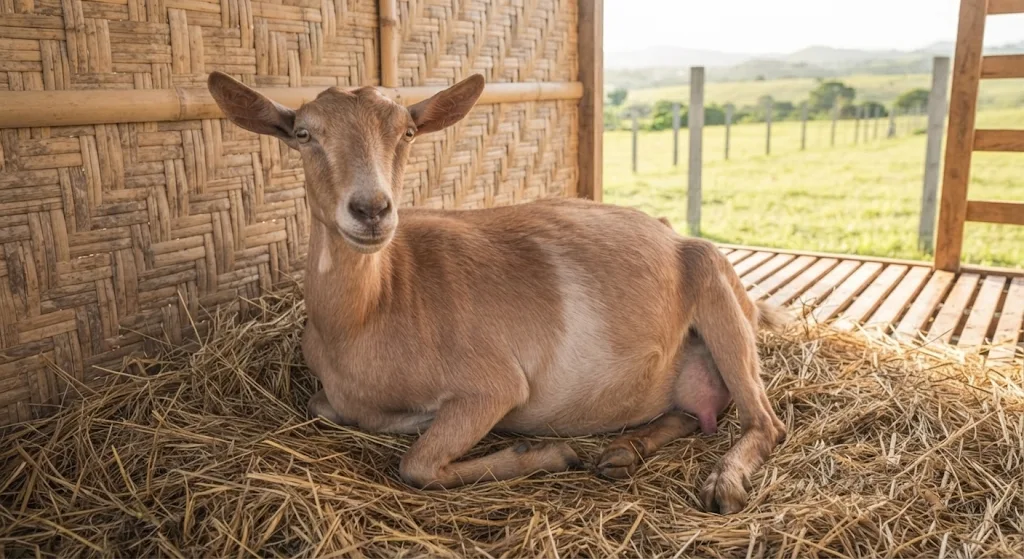
How long is goat pregnancy? The goat gestation period is 150 days, give or take 5 days, or about 5 months (DA guide). In Tagalog: ilang buwan buntis ang kambing? Mga limang buwan.
Before kidding:
If you milk the doe, stop milking her 1½ to 2 months before kidding.
One week before kidding, move her to a quiet, clean kidding pen.
Signs that kidding is near:
A swollen vulva with discharge
Full, waxy teats
She lies down often
Native does bred to big purebred bucks often have difficult births, because the kids are large. Call a veterinarian if a birth is difficult.
8. Care for Newborn Kids and Weaning
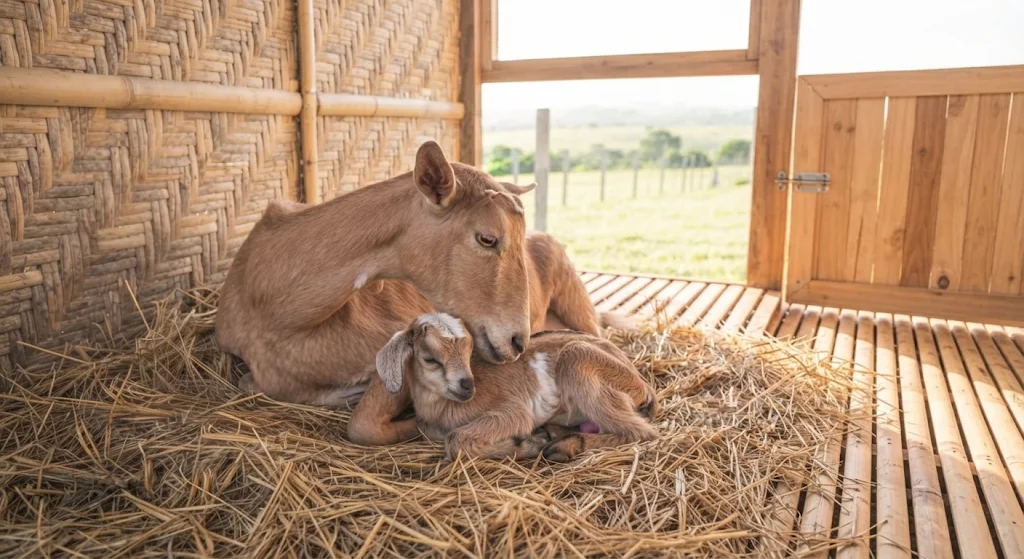
Baby goat care starts in the first hour. According to the DA guide:
Wipe the kid's mouth, nose and body so it can breathe.
Make sure it suckles within one hour, because the first milk (colostrum) matters most.
Tie the navel cord with a clean string and disinfect it.
Check that the afterbirth comes out within 24 hours.
Feed the kids milk for the first weeks, then add hay or fresh forage and a starter feed (see the feeding table in step 5). Castrate male kids raised for meat within the first month. After goat weaning, keep the kids in a separate pen, and separate the males from the females at 4 months, because some goats reach puberty at that age.
9. Keep Your Goats Healthy
According to the DA guide, pneumonia is the top cause of death in goats, and worms are second. Learn the common goat diseases (sakit ng kambing), such as goat pneumonia, bloat and mange, and the sick goat symptoms below, and keep the farm clean:
Clean the pens every day.
Wash them three times a week.
Disinfect them at least twice a month.
Keep sick goats in a separate pen and limit visitors.
Goat deworming should follow a check of the worm load, not a fixed calendar. Ask your veterinarian or municipal agriculturist which dewormer to use and when. The same goes for goat vaccination and any other gamot sa kambing.
Common goat diseases in the Philippines:
Disease | Signs | What to do |
|---|---|---|
Pneumonia | Fever, nasal discharge, coughing, hard breathing | Dry, clean, well-ventilated house; call a veterinarian early |
Worms (parasitic gastroenteritis) | Thin goat, pale gums, diarrhea, pot belly | Deworm by worm load, rotate pastures |
Bloat | Swollen belly, uneasiness, fast shallow breathing | Avoid sudden feed changes and very finely ground feed; call a veterinarian |
Mange | Strong itching, hairless, thick or scabby skin | Check the herd often; treat as your veterinarian advises |
Sore mouth (orf) | Scabs on the lips, face and feet, mostly young goats | Contagious: separate sick goats, clean equipment |
Foot-and-mouth disease | Fever, blisters in the mouth and between the hooves, drooling, lameness | Report to the authorities immediately |
Hemorrhagic septicemia | High fever, swollen throat, hard breathing | Prevented by vaccination; ask your veterinarian |
Always ask a veterinarian before you treat a goat. If you suspect foot-and-mouth disease, report it to your municipal agriculturist or the DA right away.
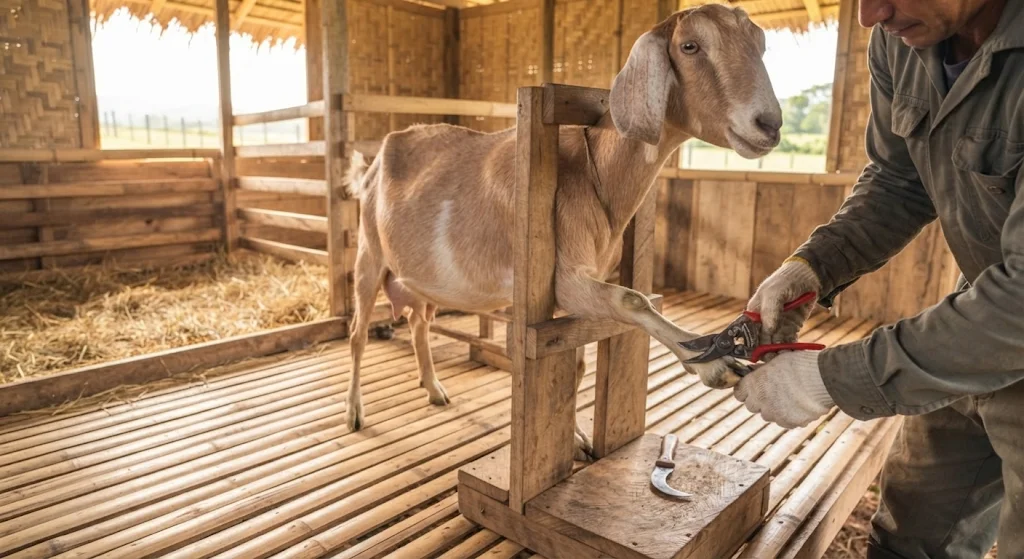
Hoof trimming: goats kept in a goat house grow long hooves, because the floor does not wear them down. Trim the hooves level with the white center using a rose pruner and a small curved knife, or the goat will go lame.
10. Keep Records and Sell Your Goats
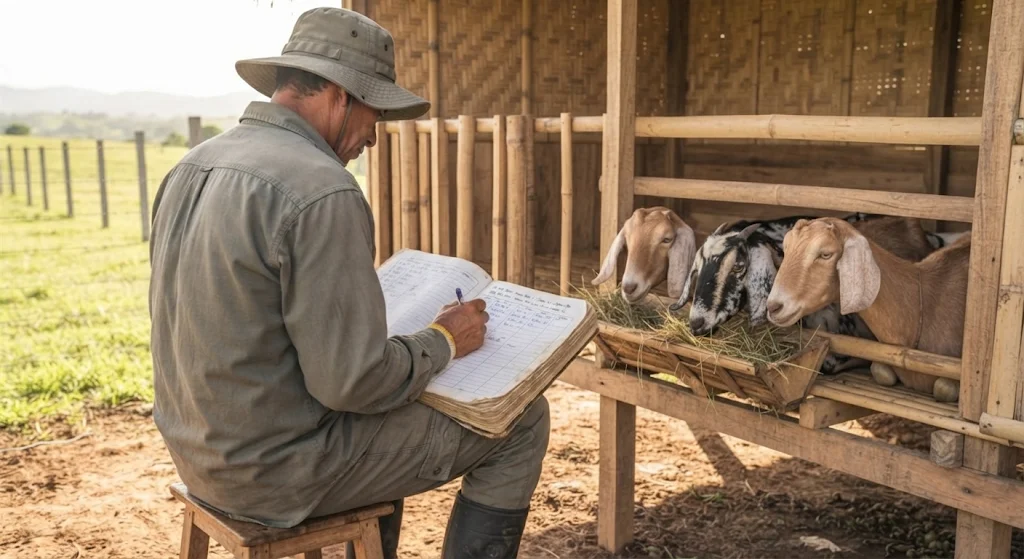
Good goat record keeping shows you which does and bucks are worth keeping. The DA guide prefers ear notching to mark each goat. Keep one record per goat with its birth date, sire and dam, birth weight, single or twin birth, breeding and kidding dates, and milk.
Don't waste the manure: keep it in a pit for at least a month, then use it as organic fertilizer for fruit trees and vegetables.
When your herd grows, sell kids, breeding stock or milk. You can sell your goats on FarmyHub for free, and buyers across the Philippines message or call you directly.
Goat Farming Equipment You Need
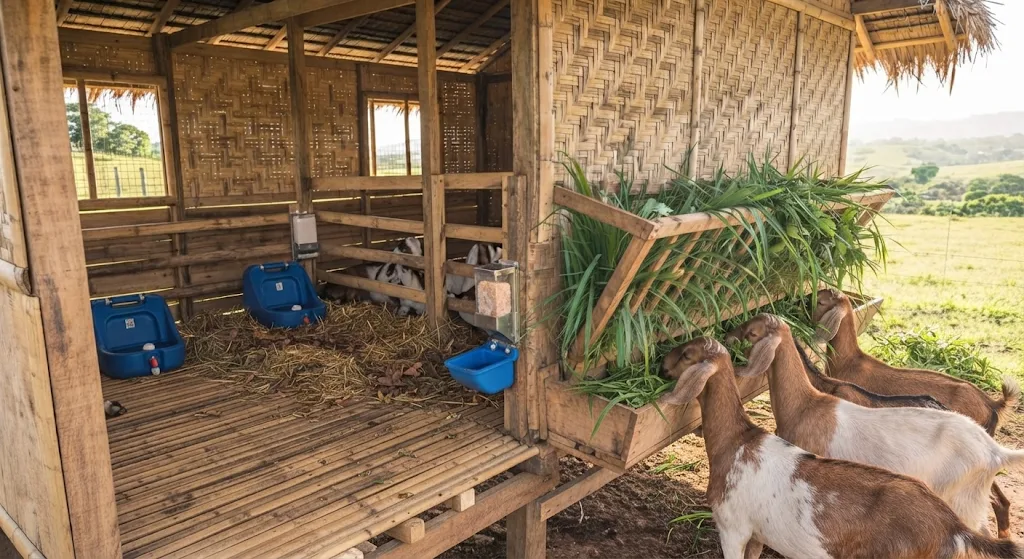
You don't need expensive machines to start. This goat farming equipment list, based on the DA guide's list of production inputs, covers a small farm:
Goat house with an elevated slatted floor and separate pens
Feeding racks and troughs
Water troughs or drinkers, and a salt or mineral feeder
Fencing (nine-eye hog wire) and a loafing area
Spade, wheelbarrow and ropes
A water pump for larger farms
Hoof trimmer (a rose pruner and a small curved knife)
Clean string and disinfectant for the navel cord, and a kidding pen
A record book for each goat
Find feeders, drinkers, fencing and other livestock equipment from sellers on FarmyHub.
Frequently Asked Questions About Goat Farming
How long do goats live?
The average goat lifespan is 15 to 18 years (Wikipedia). Farms replace breeding goats much earlier: the DA guide suggests replacing the buck about every three years.
How long is a goat pregnant?
About 150 days, or 5 months (give or take 5 days), according to the DA guide.
How many goats can you raise on one hectare?
Up to 15 goats per hectare on a well-developed (improved) pasture, according to the DA guide. For 50 goats, plan about 3 hectares split into 9 paddocks.
What do goats eat?
Goats eat grasses such as napier, para grass and star grass, plus the leaves of shrubs and legume trees such as ipil-ipil and kakawate. They also need clean water and salt or a mineral mix. See step 5 for a feeding table by age.
At what age can goats be bred?
Start breeding does at 8 to 10 months, best at 10 to 12 months depending on their weight. Bucks can start at the same age.
Can I raise goats in my backyard?
Yes. Backyard goat farming is the most common way to raise goats in the Philippines: according to the DA guide, a farmer raises one or two goats on average. Give them an elevated, dry goat house, clean the pen every day, and bring them cut forage if you have no pasture.
Is goat farming profitable in the Philippines?
It can be, if you keep your goats healthy, feed them well and have buyers for your kids and breeding stock. There is no fixed profit per goat. To see what goats sell for, check goat prices on FarmyHub.
Ilang buwan buntis ang kambing?
Ang pagbubuntis ng kambing ay tumatagal ng humigit-kumulang limang buwan, o 150 araw, ayon sa gabay ng Kagawaran ng Agrikultura (DA).
Where to Buy Goats, Feeds and Supplies
Ready to start goat raising? Find what you need on FarmyHub:
Goats for sale: does, bucks and kids from sellers across the Philippines
Goat farms and breeders: farms that sell breeding stock
Goat feeds: feeds and concentrates
Vitamins and supplements: for healthy goats
Livestock equipment: feeders, drinkers and fencing
Raising other animals too? Read our guide to livestock animals in the Philippines, or our poultry farming and fish farming guides.
🐐 Browse goats for saleSell Your Goats on FarmyHub
Do you raise goats for meat, breeding or milk? You can reach buyers across the Philippines on FarmyHub. There are two ways to start:
List your products yourself, for free. Create a free account in seconds with your Google or Facebook account, then post your listing in a few minutes. Once approved, your listing is visible to buyers, who can message or call you directly.
🌱 List your products for freeBecome a FarmyHub supplier. Tell us about your farm or business, your products and how much you can supply. Our team will contact you to learn about your business, and when a bulk buyer is looking for what you sell, we can recommend you.
🤝 Become a supplierPrefer using your phone? Download the free FarmyHub app to post listings and reply to buyers on the go.
📱 Get the app on Google PlayRegistered agriculturist, higher education instructor, and hands-on farmer. I write practical farming and agribusiness guides based on my work in the field and in the classroom.