

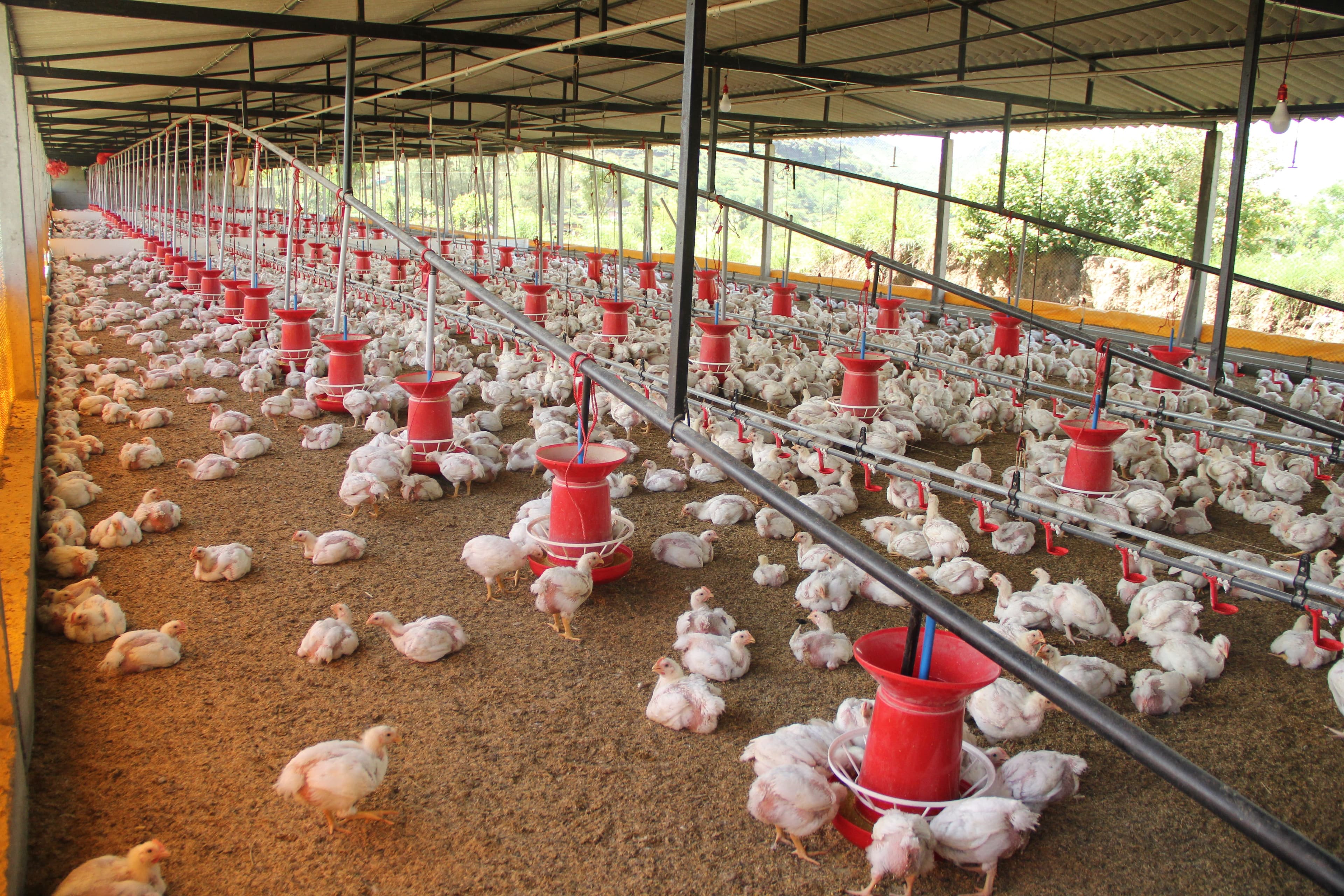
Poultry Farming in the Philippines: How to Start a Broiler or Layer Farm in 10 Steps (2026 Guide)
Poultry farming is one of the fastest ways to earn from a small piece of land in the Philippines, whether you raise broilers for meat or layers for eggs. Starting a backyard poultry farm or diving into commercial chicken farming is a practical way to provide a steady income. Many rural families also explore small-scale hen farming as an extra source of livelihood, making chicken farming in the Philippines a reliable and trusted agricultural business.
This complete guide covers everything you need to know to get started, including broiler versus layer farming, the 10 steps to start a poultry farm, poultry house design, contract growing options, disease prevention, and estimated costs. If you are looking to buy stock for your project, you can browse available live chickens.
In this guide | Short answer |
|---|---|
Raising chickens, ducks, quail, turkeys or geese for meat and eggs. | |
From backyard flocks to large contract farms; the country still imports chicken. | |
Broilers: meat in 45 to 60 days. Layers: eggs from 20 to 22 weeks. | |
From choosing broilers or layers to permits, brooding and records. | |
The integrator supplies chicks and feeds; you provide the house and labor. | |
Open-sided or controlled-environment, space per bird, equipment list. | |
Newcastle disease, bird flu, coccidiosis and a DA vaccination schedule. | |
Housing, chicks, feeds, vaccines, utilities and labor; prices change often. | |
Broiler days, laying age, permits, integrators and more. | |
Live chickens, chicken feeds, supplements, equipment and egg trays. |
What Is Poultry Farming?
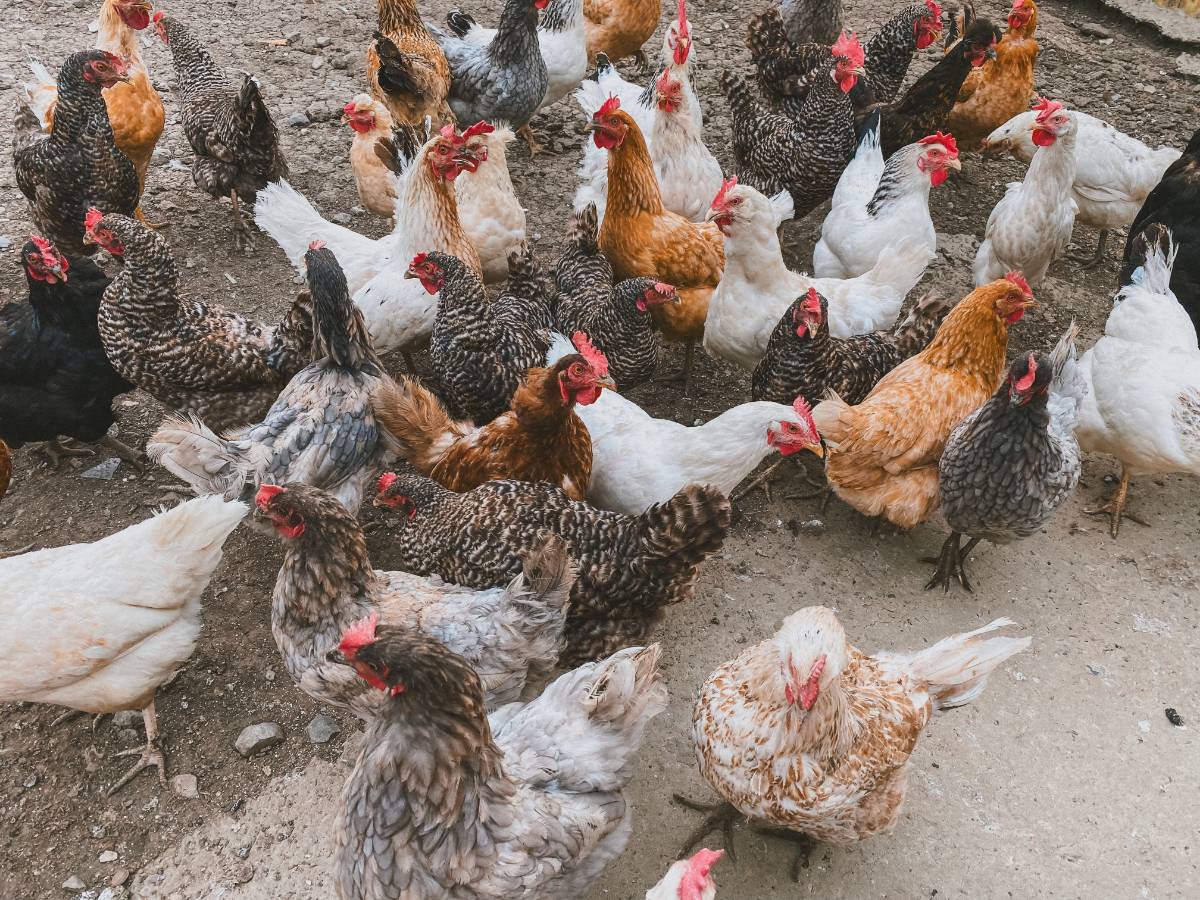
To understand the poultry farming definition, it simply means raising domesticated birds for meat and eggs. Most of the time, this refers to chickens (poultry chicken farming), but poultry farming animals also include ducks, quail, turkeys, and geese (Wikipedia).
If you want a clear poultry farming meaning, it covers the various types and poultry raising practices designed for food production. The poultry farm in Tagalog is a "manukan", and raising chickens is known as "pag-aalaga ng manok".
What is chicken farming in practice? There are different chicken farming methods, and the main poultry farming types are:
Broilers (meat): Chickens raised specifically for meat.
Layers (eggs): Hens raised specifically to produce table eggs.
Free-range and native chickens: Raised outdoors to forage naturally.
Understanding the overall chicken farming process and knowing the main poultry farming advantages—such as fast production cycles and steady market demand—helps beginners start strong. For other types of poultry, you can check out separate guides or categories for ducks, quail eggs, and turkeys.
Poultry Farming in the Philippines Today
The Department of Agriculture (DA) classifies chicken broiler and egg production as “the most progressive animal enterprises in the Philippines today.” Over the years, chicken farming Philippines-wide has grown significantly, transforming from small backyard flocks into large integrated contract farming operations. Today, poultry farms in the Philippines range from a few backyard birds to large contract farms, and even a medium-sized poultry farm in Philippines towns adds to this expanding agricultural sector.
According to government agricultural data and reports, including insights from the Philippine Council for Agriculture, Aquatic and Natural Resources Research and Development (PCAARRD), chicken production in Q1 2024 reached 506,277 tonnes—a 7.67% increase. Despite this growth, the country still imports chicken, which accounts for about 34.5% of all meat imports.
The poultry industry in the Philippines continues to expand to meet high domestic demand. Dedicated poultry raisers in the Philippines supply the daily market, while large integrators drive the commercial supply chain. If you look for the biggest poultry farm in the Philippines, you will mostly find these integrators rather than a single farm: Bounty Agro Ventures (BAVI), for example, calls itself the second-largest poultry integrator in the country and worked with 359 broiler contract growers (BusinessMirror).
Broiler vs Layer Farming: Which One Should You Start?
Choosing between broiler farming vs layer production depends on your capital, available time, and target market. Whether you are venturing into broiler chicken farming or managing a dedicated poultry farm broiler, understanding your main production goals is essential. Similarly, layer chicken farming (also called poultry layer farming) requires patience: your poultry layers only start to pay once they lay, and a commercial layer farm focuses on steady egg yield. If your goal is chicken farming for eggs, choose layers.
Factor | Broiler | Layer |
|---|---|---|
Main Product | Chicken Meat (live or dressed chickens) | Eggs (by tray), later spent hens |
Production Time | Ready in 45 to 60 days | Laying from 20–22 weeks, peak at 30–36 weeks |
Housing Style | Floor house with litter; open-sided or controlled-environment | Laying house, often with cages |
How You Earn | Once per batch | Every day once the hens lay |
Where You Sell | Integrator (contract growing), dressing plants, markets | Egg dealers, stores and bakeries (see the chicken eggs category) |
Broilers: Fast-growing meat birds, sold at about 45 to 60 days depending on the strain (DA guide). The shortest cycle is the 45 days broiler many raisers talk about, which keeps broiler raising fast.
Layers: Young female chicks grow into dumalaga (pullets), move to the laying house at about 16 to 18 weeks, and start laying at about 20 to 22 weeks. A laying hen is called inahing manok. Many egg farms use a cage system for layers, which keeps the eggs clean and easy to collect. Meat-type broilers are sold long before laying age, so farms keep layers for daily egg production. If you are planning an egg layer farm, ask your chick supplier which layer chicken breeds Philippines farms in your area use. Egg farming Philippines-wide depends on good feeding and management as much as on the breed.
Free Range: Free range chicken farming Philippines-style lets the birds roam outdoors during the day, with a safe shelter at night. It suits native chickens and small farms.
How to Start a Poultry Farm in the Philippines in 10 Steps
Learning how to start a poultry farm or figuring out how to start a chicken farm is an exciting venture. Whether you want to explore new poultry business ideas or understand how to start chicken farming, having a clear roadmap is essential. For many entrepreneurs figuring out how to start poultry business in the Philippines, establishing a solid poultry business begins with proper planning.
Here are 10 steps on how to start a poultry farm and master chicken farming for beginners:
1. Choose Broiler, Layer, or Free Range
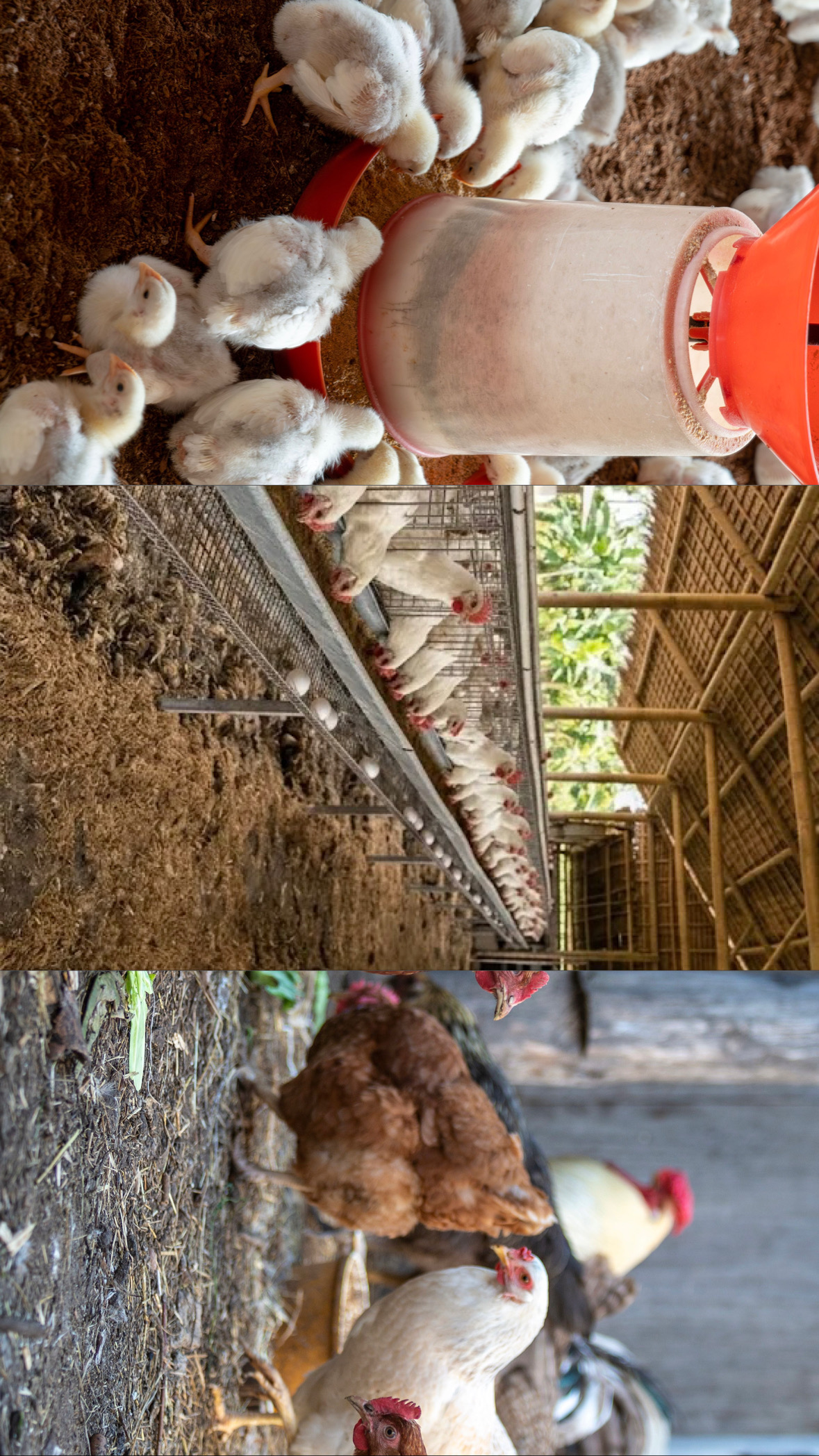
Decide whether you want to focus on meat, eggs, or chicken farming free range methods, based on your capital and target market. Poultry farming for beginners works best on a small scale: backyard chicken farming, a poultry backyard farming setup such as a backyard poultry Philippines project, a modest manukan farm, or a small community manukan business (negosyong manukan) is a good way to gain hands-on experience before you invest more.
2. Decide: Your Own Farm or Contract Growing
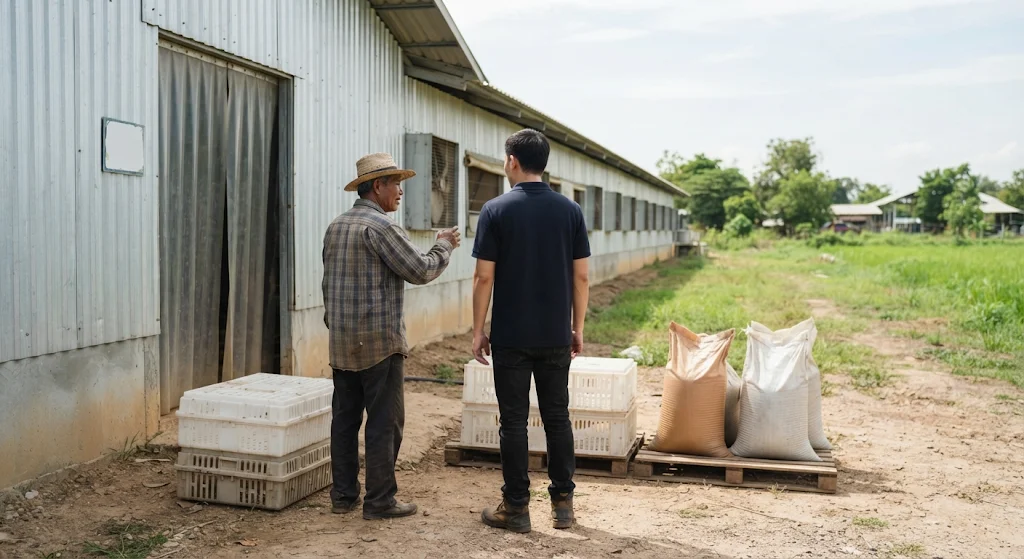
Evaluate whether you want to operate independently as a small commercial raiser or partner with major local integrators under contract growing arrangements. The contract growing section below explains how it works.
3. Write a Simple Business Plan
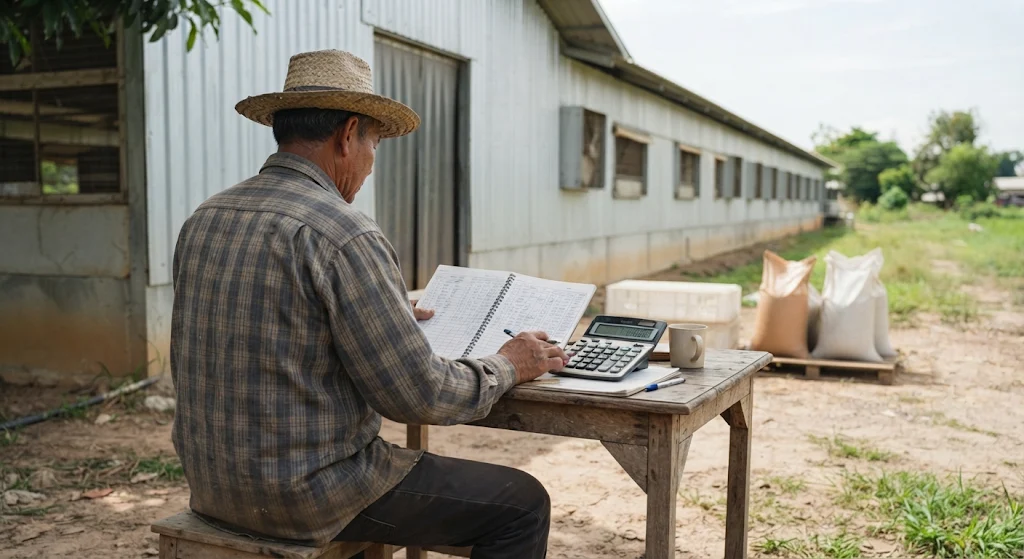
A simple chicken farming business plan, also called a poultry farm business plan, lists your flock size, housing, chicks, feeds, vaccines, labor and where you will sell. For eggs, a poultry egg farming business plan also counts the trays you expect per day and the egg buyers you can reach. Writing your poultry farming business plan first shows how much capital you need and when the money comes back. Keep your poultry business plan short: one page is enough to start.
4. Pick the Location and Get Permits

Choose a suitable, accessible site away from heavy residential zones. The poultry farm rules and regulations Philippines raisers follow, and the overall poultry farming requirements, depend on your farm size and your local government unit (LGU). The usual poultry farm requirements are:
Business registration (DTI, SEC or CDA)
Barangay clearance and a municipal or city (mayor’s) permit, including zoning clearance
An Environmental Compliance Certificate (ECC) or Certificate of Non-Coverage from the DENR
A vicinity map or location plan of the farm
A biosecurity protocol (asked for Good Animal Husbandry Practices certification)
Registration of the animal facility with the DA (in MIMAROPA: ₱1,000 the first time, ₱3,000 for a 3-year renewal)
Requirements change by region, so ask your municipal agriculturist or the DA regional office before you build. The list follows the DA MIMAROPA regulatory services page.
5. Build the Poultry House
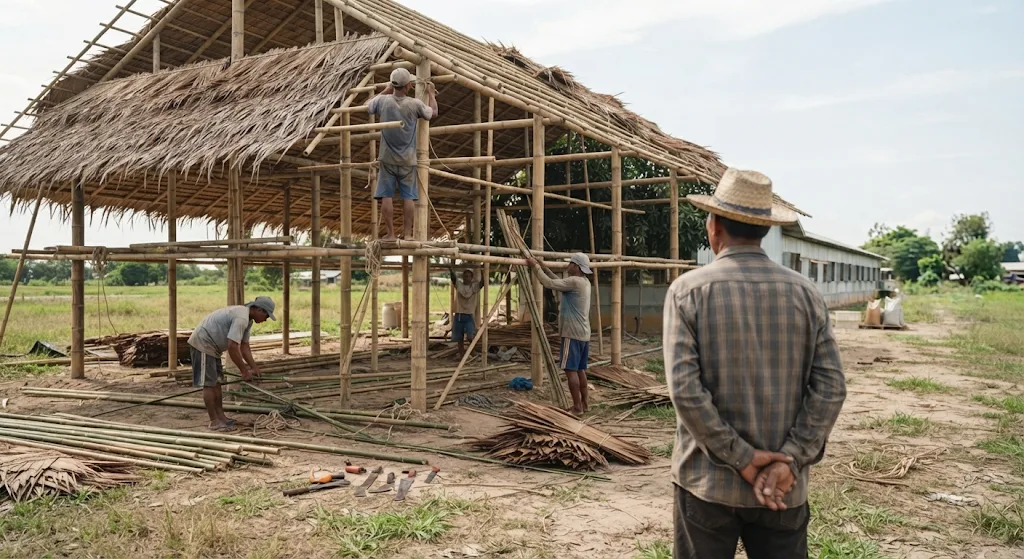
Build a house that fits your birds, your budget and your climate. The DA guide recommends cheap local materials, a length parallel to the wind direction, removable brooder floors for cleaning, and breeding, growing and laying houses kept apart. The poultry house section below compares open-sided and controlled-environment houses and gives the space each bird needs.
6. Buy the Equipment
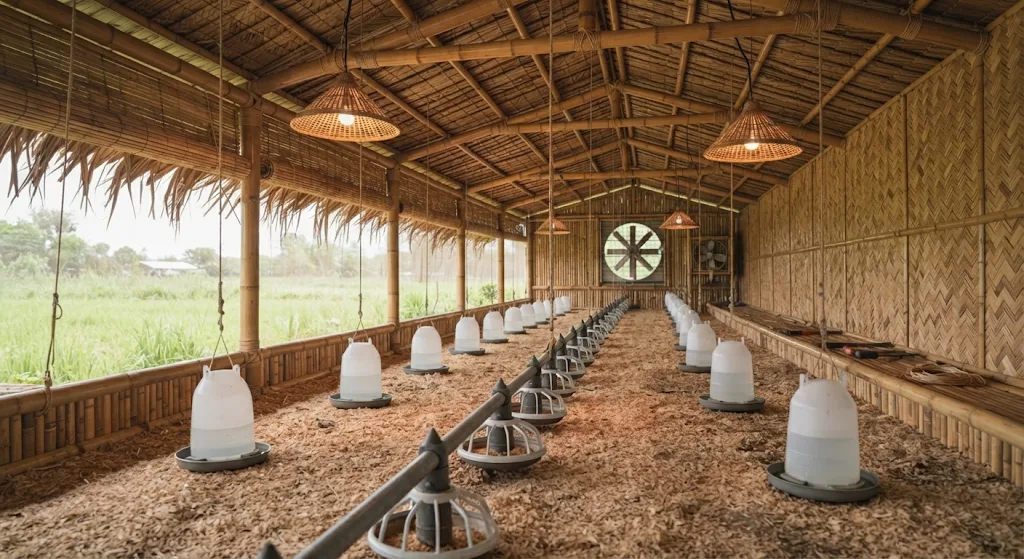
Prepare the feeders, waterers, brooder heaters and ventilation before your chicks arrive. The equipment checklist below has the full list.
7. Buy Healthy Day-Old Chicks
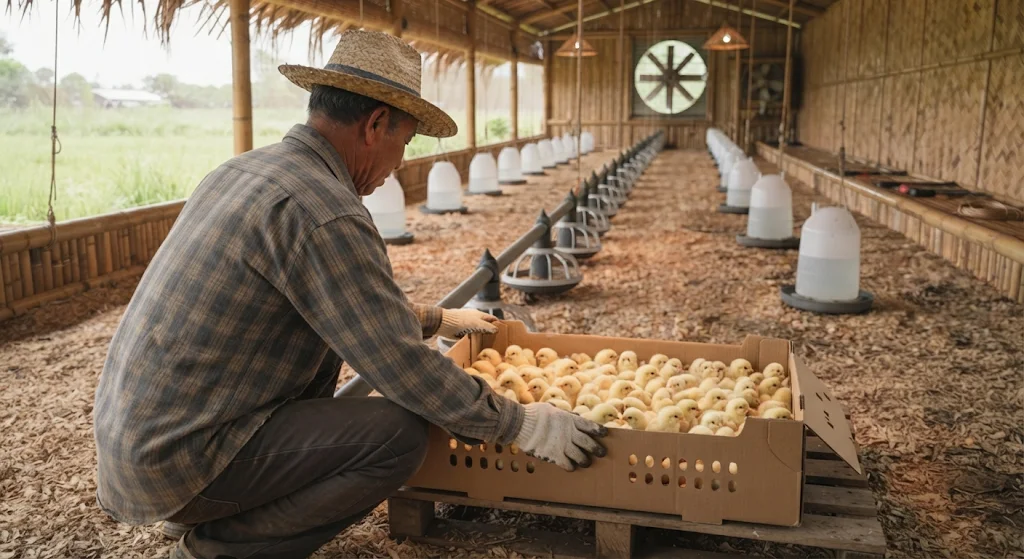
When starting your chicken farming project or poultry farming project, buy your sisiw only from a reliable hatchery or franchised dealer. According to DA guidelines, chicks must be completely free of disease and deformities, and they should be uniform in size and color.
8. Brood the Chicks (Sisiw)
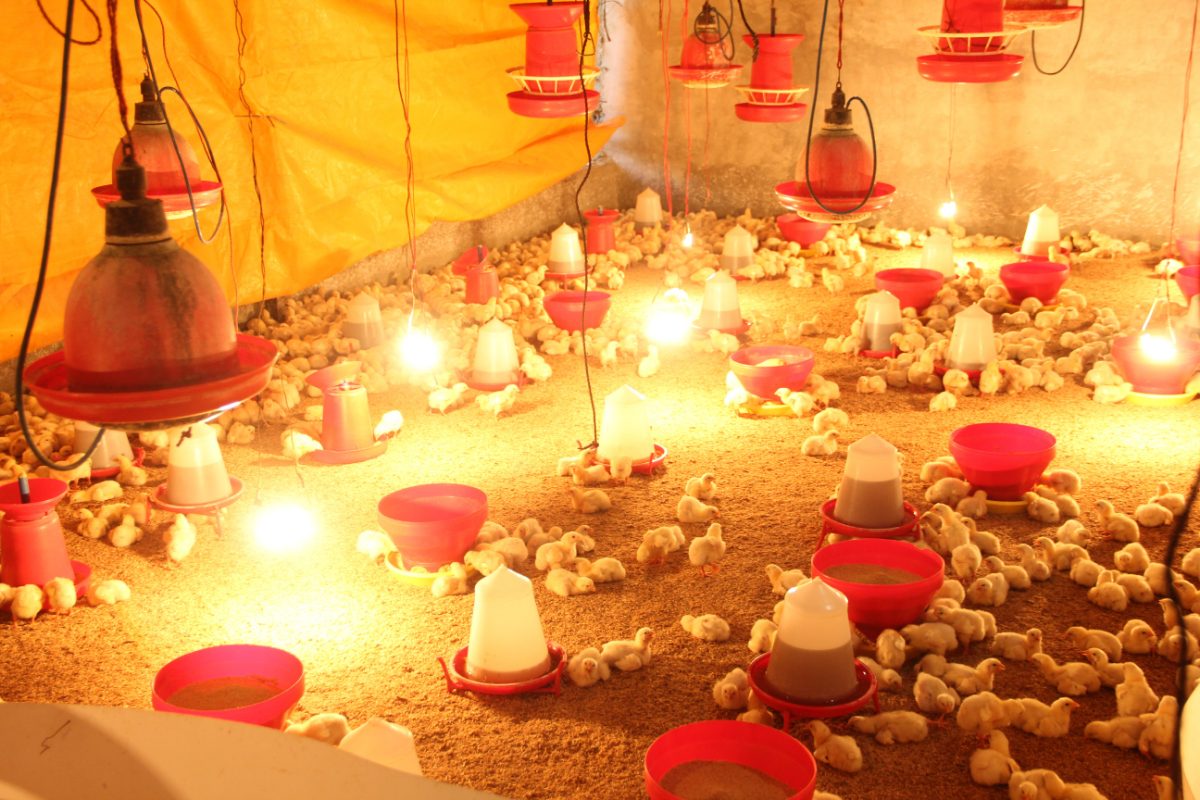
Manage your brooding environment carefully using the DA guide’s brooding temperatures for Philippine conditions. Learning paano mag alaga ng sisiw properly during this stage ensures strong foundation health for your growing alagang manok:
Age of chicks | Brooding temperature |
|---|---|
Week 1 | 32.2–35.0 °C (90–95 °F) |
Week 2 | 29.4–32.2 °C (85–90 °F) |
Weeks 3–4 | 26.7–29.4 °C |
Over 4 weeks | Remove the heat |
Watch the chicks, not only the thermometer. If they pant, spread their wings and move away from the heat, it is too hot. If they crowd under the heater and pile up, it is too cold. Comfortable chicks are active and spread evenly across the brooder.
9. Feed and Water
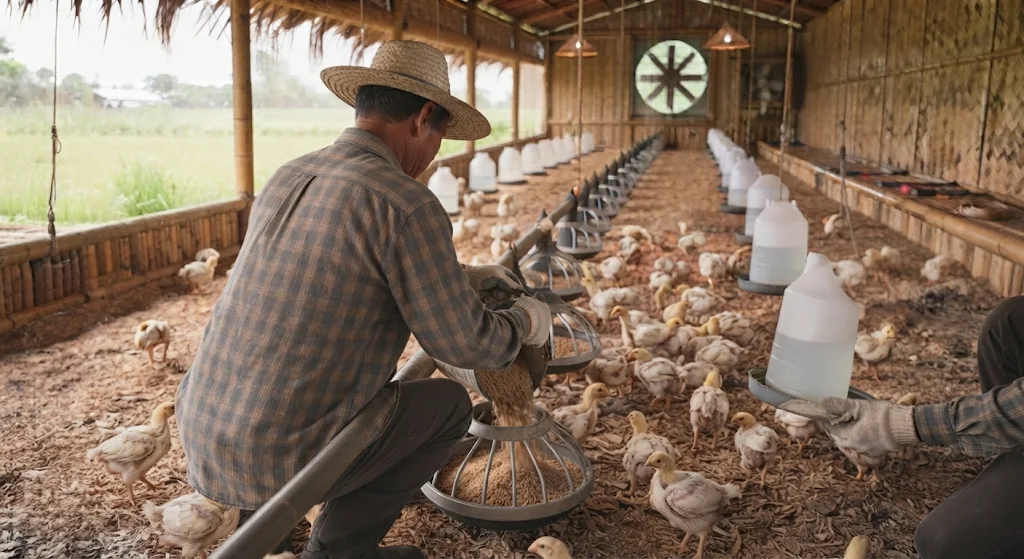
Provide clean, fresh water daily and quality feeds formulated for your birds' specific life stages. You can consult a poultry feeds guide for expert nutritional advice, and browse available chicken feeds to stock up on the right provisions.
10. Vaccinate, Keep It Clean, and Keep Records
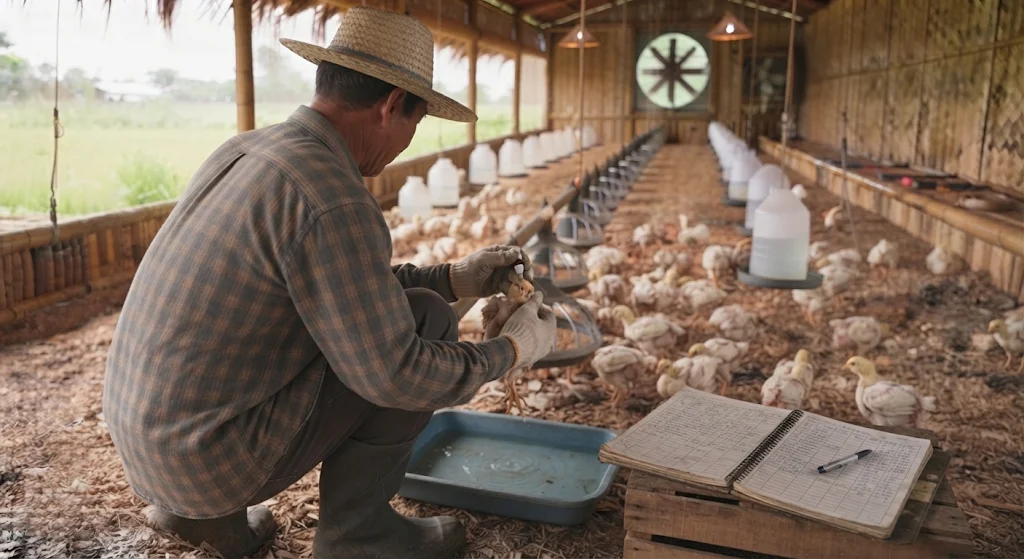
Paano mag-alaga ng manok the right way? Every paraan ng pag-aalaga ng manok comes down to the same three habits: follow a vaccination schedule (see the vaccination table below), keep strict biosecurity, and write down feed, deaths, weights and sales every day. Tamang pag-aalaga ng manok matters most in the short broiler cycle: the pag-aalaga ng 45 days na manok decides your harvest weight, so wastong pag-aalaga ng manok 45 days long means checking the birds every morning and evening.
Contract Growing: Raising Broilers for an Integrator
For many independent raisers looking to enter the poultry business with reduced market risk, partnering with a major poultry integrator is a popular path. Through broiler contract growing arrangements in the Philippines, the operational responsibilities are shared between you and the company.
How It Works: As the grower, you provide the land, poultry house (either open-sided or controlled-environment system), utility connections, and the necessary labor. Meanwhile, the integrator supplies the high-value inputs: day-old chicks, feeds, health supplements, medicines, and regular technical support.
Payment Structure: In the BAVI example reported by BusinessMirror, growers can claim an advance check when they receive the chicks and get the balance as soon as about 10 working days after harvest. How much you earn per batch depends on the contract and on how the birds perform, for example the Feed Conversion Ratio and the harvest recovery rate.
Important Advice: Contract terms, grower fees and performance bonuses differ per integrator. Always review and finalize the contract with the integrator carefully before investing in house construction.
Poultry House Design and Equipment (Kulungan ng Manok)
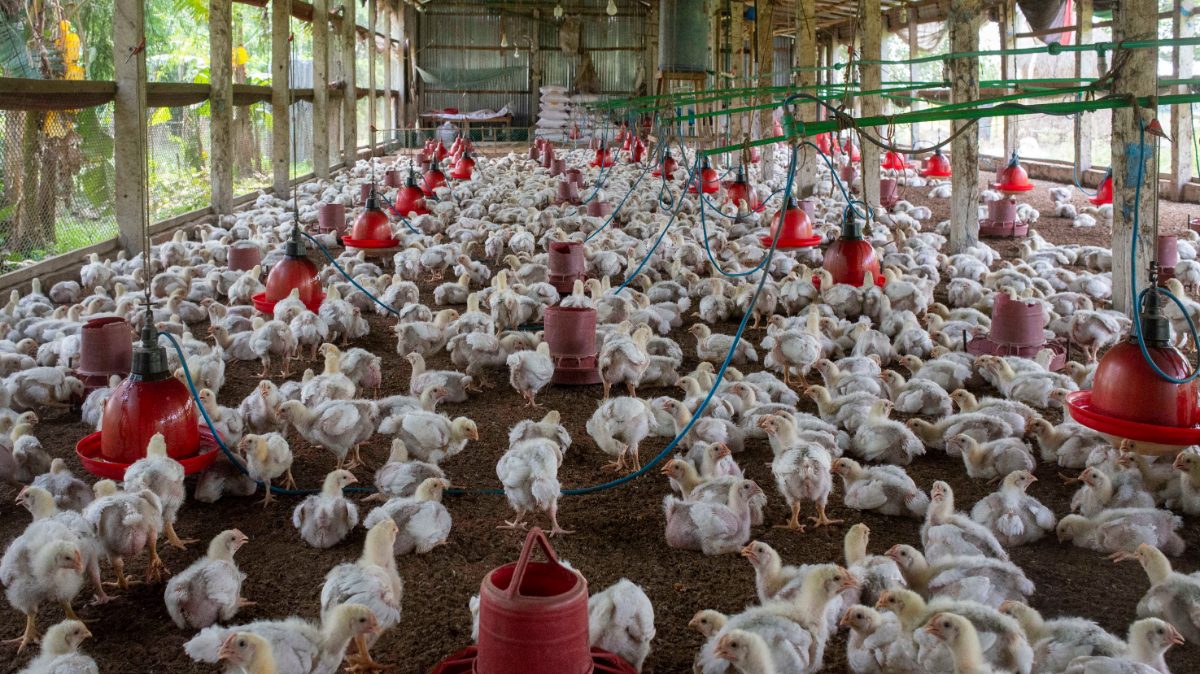
Establishing an efficient poultry house or a proper kulungan ng manok is foundational to a successful project. Whether you are drafting a detailed poultry house plan, a poultry house floor plan or your overall chicken farm layout, good poultry farm design directly affects flock health and productivity.
Housing Systems: Open-Sided vs. Controlled-Environment
When planning your chicken farm design, poultry house layout or specific broiler house design, you choose between two main uri ng kulungan ng manok (types of poultry houses):
Open-Sided Houses: The traditional poultry farming house design across the country, and the usual chicken farming house design for small farms. They rely on natural cross-ventilation, so build the length parallel to the wind direction (DA guide). They are cost-effective to construct, but in hot months the birds depend on good airflow and shade.
Controlled-Environment (Tunnel-Ventilated) Houses: Designed for intensive commercial production, these closed houses use exhaust fans and evaporative cooling pads to keep the temperature and humidity steady inside. They cost more to build and need steady electricity, but they keep the birds cool during hot Philippine months.
DA Guidelines for Local Construction
According to Department of Agriculture standards for a practical poultry house design, build the bahay ng manok with its length parallel to the prevailing wind direction to ensure optimal airflow. Utilize cheap, accessible local materials such as bamboo, coconut lumber, cogon, nipa, and rattan to minimize initial capital expenditure. For a standard kulungan ng manok design, make the brooder floors removable so you can clean and sanitize them easily between batches. Furthermore, always maintain proper physical distance by keeping breeding, growing, and laying houses well separated to prevent disease transmission.
Space-per-Bird Requirements
Proper stocking density changes as your birds grow. According to DA guidelines, adhere to the following space requirements:
Age | Floor Space per Bird |
|---|---|
Day-old to 3 weeks | 0.3 sq ft |
3 to 4 weeks | 0.5 sq ft |
5 weeks to market age | 1.0 sq ft |
For layer chicks, the DA guide gives 15 square inches per chick up to 4 weeks and 30 square inches from 4 to 8 weeks.
Essential Equipment Checklist
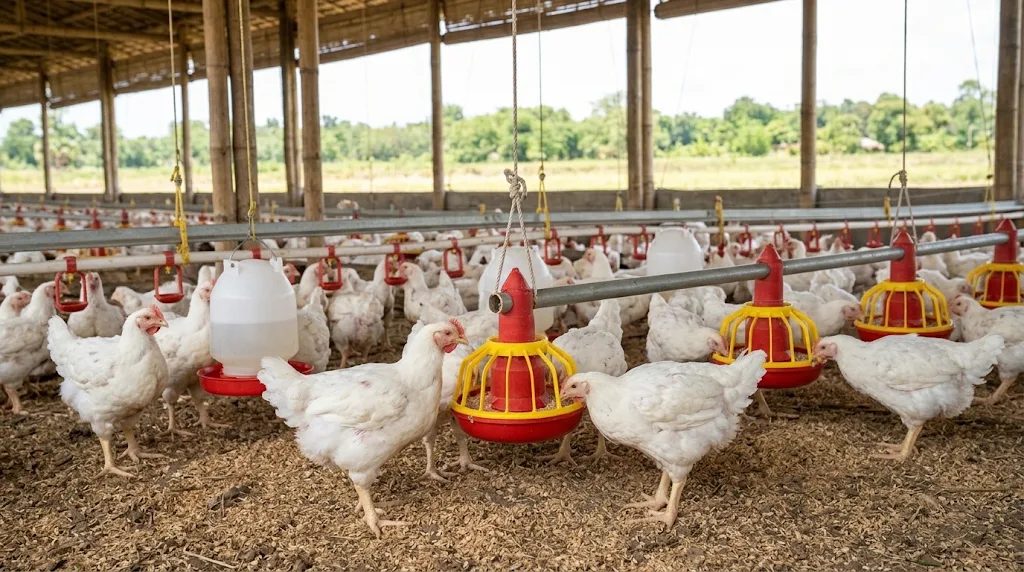
Equipping your facility correctly starts with a complete poultry farm equipment list. Essential items for equipment for chicken farming, general poultry farming equipment, and specialized broiler farming equipment include:
Brooder and heat source (bulbs or a heater)
Feeders (trough or hanging)
Waterers or drinkers
Litter (rice hull) for broilers; cages or nests for layers
Lights, curtains or fans for ventilation
Weighing scale, egg trays, sprayer for disinfecting
Footbath at the entrance (biosecurity)
To source these items, including a chicken farming cage for layers, browse quality poultry equipment: the mga kagamitan sa pag-aalaga ng manok and chicken farming tools that make daily work easier.
Small Backyard Flocks (Balay sa Manok)
For small-scale raisers with traditional backyard flocks, a simple, elevated kulungan ng manok kawayan (a bamboo hen house, or balay sa manok in Bisaya) works well for a small kulungan ng manok 45 days batch of broilers or for native chickens. It is a simple chicken coop design Philippines backyard raisers often use: low-cost, airy and easy to clean.
Common Poultry Diseases and Vaccination
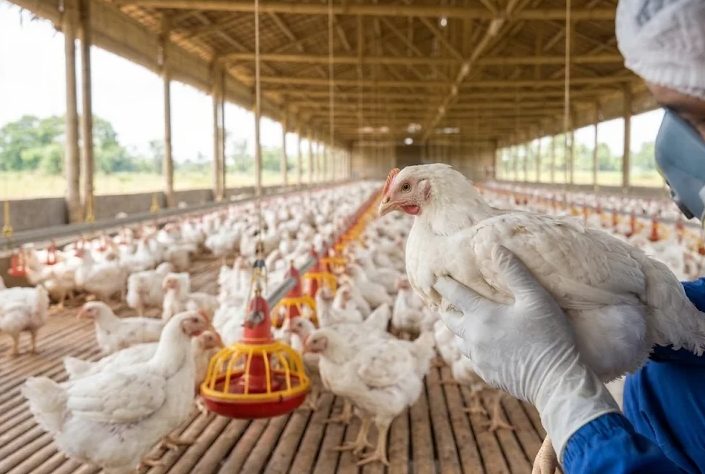
Keeping your flock healthy requires vigilance against various poultry diseases, common sakit ng manok, and acute peste ng manok. Understanding how to prevent and manage these health risks through a proper poultry vaccination program and strict poultry farm biosecurity is vital for a profitable operation.
Common Poultry Illnesses (Sakit sa Manok)
To protect your flock, you must recognize the signs of major diseases and follow the recommended prevention practices:
Disease | What to know |
|---|---|
Newcastle disease (avian pest) | Virus; causes coughing, gasping, paralysis, and a drop in egg production. There is no known treatment; prevent it entirely through timely bakuna sa manok and vaccination guidelines. |
Bird flu (avian influenza) | A reportable disease. In May 2025 the BAI confirmed the first H5N9 case in the Philippines, in ducks in Camarines Sur, and the birds on the affected farms were culled (DA). News about bird flu Philippines-wide and avian influenza Philippines outbreaks comes from the DA and BAI: report sick or dying birds right away to your municipal agriculturist or the Bureau of Animal Industry (BAI). |
Coccidiosis in chickens | Caused by coccidia protozoa in the gut; prevented with anticoccidial agents in feed or water and maintaining dry, clean litter. |
Marek’s disease | Prevented through early vaccination; there is no known treatment once contracted. |
Chronic respiratory disease (CRD) | Respiratory ailment; good ventilation, strict stocking density management, and reduced stress help prevent outbreaks. |
Sources: DA Tips on Poultry Raising and DA: first H5N9 bird flu case.
Managing Health and Treatment
When dealing with general gamot sa sakit ng manok, never attempt unverified dosages or administer medicines blindly. Always ask a veterinarian for professional diagnosis and precise recommendations.
Sample Vaccination Schedule
The DA guide gives this sample schedule:
Age of bird | Vaccine |
|---|---|
8–10 days | Newcastle disease (avian pest) |
21–24 days | Newcastle disease booster |
As advised | Fowl pox; Marek’s disease (usually at the hatchery) |
Consult a veterinarian for a vaccination program that suits your farm.
Biosecurity and Farm Hygiene
Preventing pathogens from entering your facility is far more effective than curing an outbreak. Strong poultry farm biosecurity practices include:
Restricting farm visitors and maintaining a strict footbath at every entrance.
Requiring farm workers to change footwear and clothing before entering houses.
Promptly isolating any sick birds showing signs of sakit ng manok.
Thoroughly cleaning, disinfecting, and resting houses between production batches.
Implementing proper poultry farm waste management to dispose of manure and mortalities safely without attracting vectors.
Poultry Farming Costs and Income
Entering the poultry business requires careful budgeting, whether you are managing an independent venture or establishing a commercial chicken farming business. Understanding the typical financial structure of a poultry business in the Philippines helps stakeholders evaluate the required poultry business capital while accounting for market volatility.
Main Operational Costs
Running any commercial setup involves managing several major capital and operational expenses:
Housing Construction: Expenses for building the structure (open-sided or tunnel-ventilated).
Day-Old Chicks (DOCs): Stocking expenses per batch cycle.
Feeds: Typically accounts for the largest portion of daily operating costs.
Vaccines and Medicines: Critical biological inputs for disease prevention.
Electricity and Water: Utility costs for ventilation, lighting, and drinking systems.
Labor: Manpower wages for daily feeding, monitoring, and farm maintenance.
How Contract Growing Lowers Starting Capital
For entrepreneurs worried about high setup costs, entering a poultry business through contract arrangements significantly reduces upfront financial burdens. According to reports from BusinessMirror, contract growing lowers starting capital requirements because partner integrators supply the high-value inputs—such as day-old chicks, feeds, and medicines—directly to the grower.
Market Price Fluctuations
Poultry market prices are volatile and move frequently based on supply, demand, and import pressures. For instance, PCAARRD reported that the average broiler farmgate price stood at ₱126.12 per kilo in Q1 2024, down from ₱137.43 per kilo during the same period Q1 2023. Because farmgate prices and feed costs fluctuate significantly across cycles, estimating a fixed poultry farm income per month Philippines-wide can be misleading; earnings depend heavily on harvest recovery, Feed Conversion Ratio (FCR), and prevailing market rates.
For a broader perspective on livestock investment risks and returns, you can review this piggery vs poultry comparison guide.
Frequently Asked Questions About Poultry Farming
What is poultry farming?
Poultry farming is the commercial or backyard raising of domesticated birds—such as chickens, ducks, turkeys, and quails—primarily for meat and egg production. In the Philippines, it plays a vital role in food security and rural livelihoods.
How many days before broilers can be sold?
Broilers are usually sold at about 45 to 60 days, depending on the strain, feeding and target harvest weight (DA guide). Many raisers aim for the shortest cycle, the broiler chicken 45 days harvest.
When do layer chickens start laying eggs?
In layer farming, pullets (young layer hens) move to the laying house at about 16 to 18 weeks and start laying at about 20 to 22 weeks. Egg production peaks at about 30 to 36 weeks (DA guide).
Can broiler chickens lay eggs?
Yes, a broiler hen can lay eggs if she lives long enough. But broilers are bred for fast meat growth and are sold at about 45 to 60 days, long before laying age, so egg farms keep layer breeds instead.
What permits do I need for a poultry farm?
The usual poultry farm requirements are business registration (DTI, SEC or CDA), a barangay clearance and a mayor’s permit with zoning clearance, an ECC or Certificate of Non-Coverage from the DENR, and registration of the farm with the DA regional office. They depend on farm size and location, so confirm with your municipal agriculturist. The full checklist is in step 4.
What is a poultry integrator?
A poultry integrator is a major commercial agribusiness company that partners with independent growers by supplying essential high-value inputs—such as day-old chicks, commercial feeds, and biologics—while handling the final processing and marketing of the harvested poultry products.
What is the most common chicken disease in the Philippines?
Newcastle Disease (locally known as avian pest) is one of the most prevalent and aggressive viral threats affecting local flocks, characterized by respiratory and neurological symptoms.
Ilang araw bago maibenta ang broiler?
Ang mga broiler ay karaniwang ibinebenta sa edad na mga 45 hanggang 60 araw, depende sa strain at pagpapakain, ayon sa gabay ng DA.
Where to Buy Chicks, Feeds and Equipment
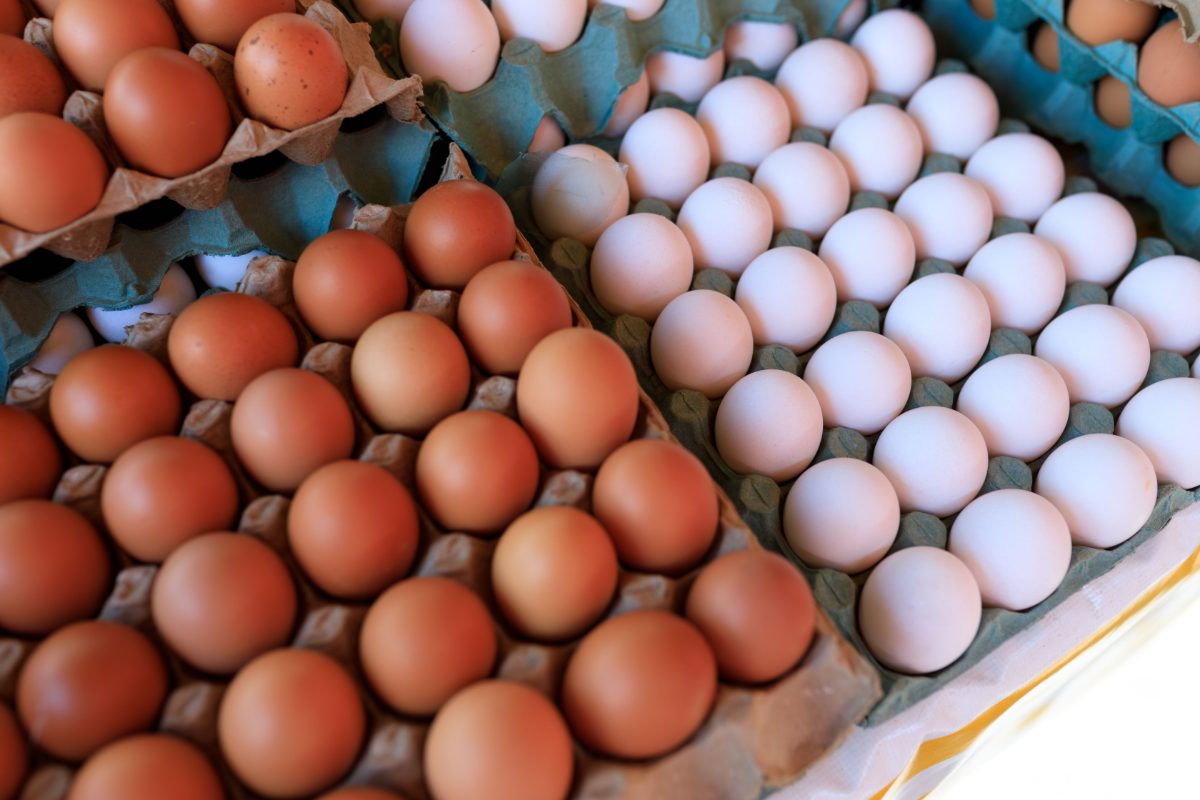
Sourcing reliable supplies is essential for any successful poultry farm or chicken farming venture. You can conveniently procure all necessary inputs through these direct resources:
Stock your pens with healthy live chickens and chicks.
Provide balanced nutrition using quality chicken feeds.
Maintain flock health with essential vitamins and supplements.
Equip your facility with durable poultry equipment and heavy-duty egg trays.
For diversifying your stocks, explore this guide on livestock animals, or connect with commercial egg suppliers if you are scaling up bulk distribution.
Sell Your Chickens and Eggs on FarmyHub
Do you raise broilers, layers or native chickens? You can reach buyers across the Philippines on FarmyHub. There are two ways to start:
List your products yourself, for free. Create a free account in seconds with your Google or Facebook account, then post your listing in a few minutes. Once approved, your listing is visible to buyers, who can message or call you directly.
🌱 List your products for freeBecome a FarmyHub supplier. Tell us about your farm or business, your products and how much you can supply. Our team will contact you to learn about your business, and when a bulk buyer is looking for what you sell, we can recommend you.
🤝 Become a supplierPrefer using your phone? Download the free FarmyHub app to post listings and reply to buyers on the go.
📱 Get the app on Google PlayRegistered agriculturist, higher education instructor, and hands-on farmer. I write practical farming and agribusiness guides based on my work in the field and in the classroom.