

10 Livestock Animals in the Philippines: Types, Examples and Uses (2026)
Livestock are the animals farmers raise for food, work and income: pigs, cattle, carabao, goats, chickens, ducks and more. In Tagalog they are usually called mga alagang hayop or mga hayop sa bukid, and in Filipino school lessons they are part of the country's yamang hayop (animal resources). This guide explains the 10 livestock animals in the Philippines you are most likely to meet, with their Tagalog names, what each one is raised for, the latest numbers from the Philippine Statistics Authority (PSA), and local farms that raise them. You can see every animal on FarmyHub in the Livestock category.
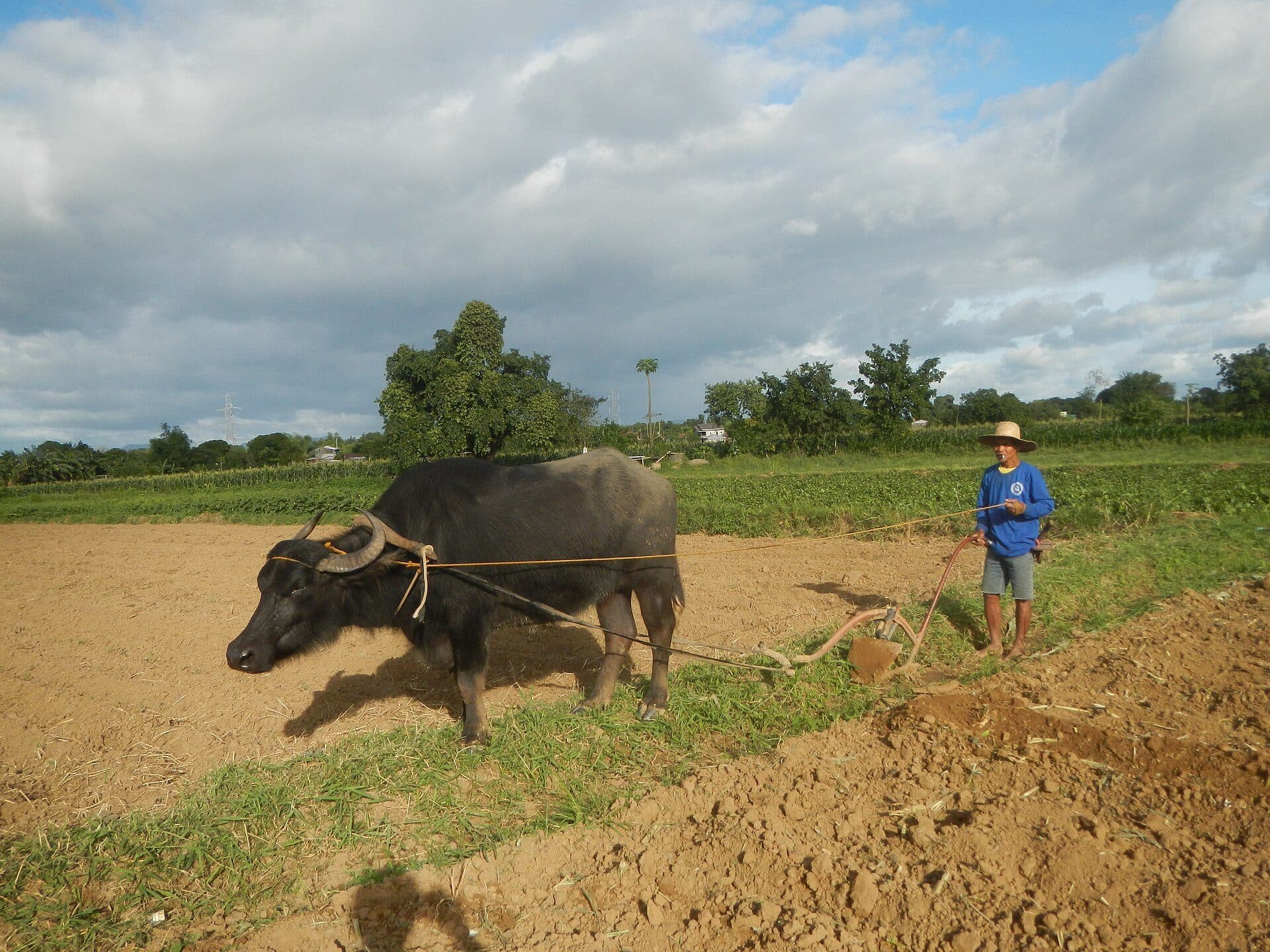
The short answer: livestock means farm animals raised for meat, milk, eggs, work or fiber. The biggest in the Philippines are pigs (8.93 million head), goats (3.49 million), carabao (2.54 million) and cattle (2.48 million), plus poultry such as chickens (228 million birds) and ducks (14 million). The carabao, or kalabaw, is widely known as the pambansang hayop, the national animal of the Philippines.
In this guide | Short answer |
|---|---|
All 10 animals with their Tagalog names, uses and FarmyHub farms. | |
Livestock are mostly four-legged farm animals; poultry are farm birds. The PSA counts them separately. | |
Pigs, cattle, carabao, goats, sheep, chickens, ducks, turkeys, rabbits and pigeons. | |
Baboy, baka, kalabaw, kambing, tupa, manok, itik, pabo, kuneho and kalapati. | |
8.93 million pigs, 2.54 million carabao and 228 million chickens (PSA, June 2026). | |
What livestock means, alagang hayop in English, the national animal and more. |
Livestock Animals at a Glance
Tap an animal to jump to it:
Animal | Tagalog | Group | Raised for | On FarmyHub |
|---|---|---|---|---|
Baboy | Livestock | Pork, lechon, young pigs for fattening | Princess Isiah Guisaguis (Sarangani) | |
Baka | Livestock | Beef, breeding | Hanie Marot and Mohaimin Awal (Maguindanao del Sur) | |
Kalabaw | Livestock | Plowing and hauling, milk, meat | Hanie Marot (Maguindanao del Sur) | |
Kambing | Livestock | Meat, milk | LeonPhilippe Farms (Lipa City, Batangas) | |
Tupa | Livestock | Meat | Not listed yet | |
Manok | Poultry | Meat, eggs | Kristalyn Marie Sasi (Bago, Negros Occidental) | |
Itik | Poultry | Eggs for balut and salted eggs, meat | ||
Pabo | Poultry | Meat | Paborite Pabohan (Compostela, Cebu) | |
Kuneho | Small livestock | Meat | Jose Abella (Cagayan de Oro) | |
Kalapati | Farm birds | Racing, white doves for events, squab | Jeems Llorente (Santo Tomas, Davao del Norte) |
Livestock vs Poultry: What Is the Difference?
In everyday English, livestock can mean every animal raised on a farm, chickens included. Philippine statistics keep the two apart: the PSA reports livestock (carabao, cattle, goats and pigs) and poultry (chickens and ducks) as separate groups. Livestock are mostly four-legged animals raised for meat, milk and farm work; poultry are birds raised for meat and eggs.
Group | Animals in PSA statistics | Raised for | Count on 30 June 2026 |
|---|---|---|---|
Livestock | Pigs, goats, carabao, cattle | Meat, milk, farm work | 17.44 million head |
Poultry | Chickens, ducks | Meat, eggs | 242.58 million birds |
Not counted separately | Sheep, turkeys, rabbits, pigeons, horses | Meat, racing, events | Not reported in the quarterly bulletin |
Source: PSA Livestock and Poultry Quarterly Bulletin, April to June 2026. If you are choosing which kind of farm to start, our piggery vs poultry farming guide compares the two.
 |
1. Pigs (Baboy)
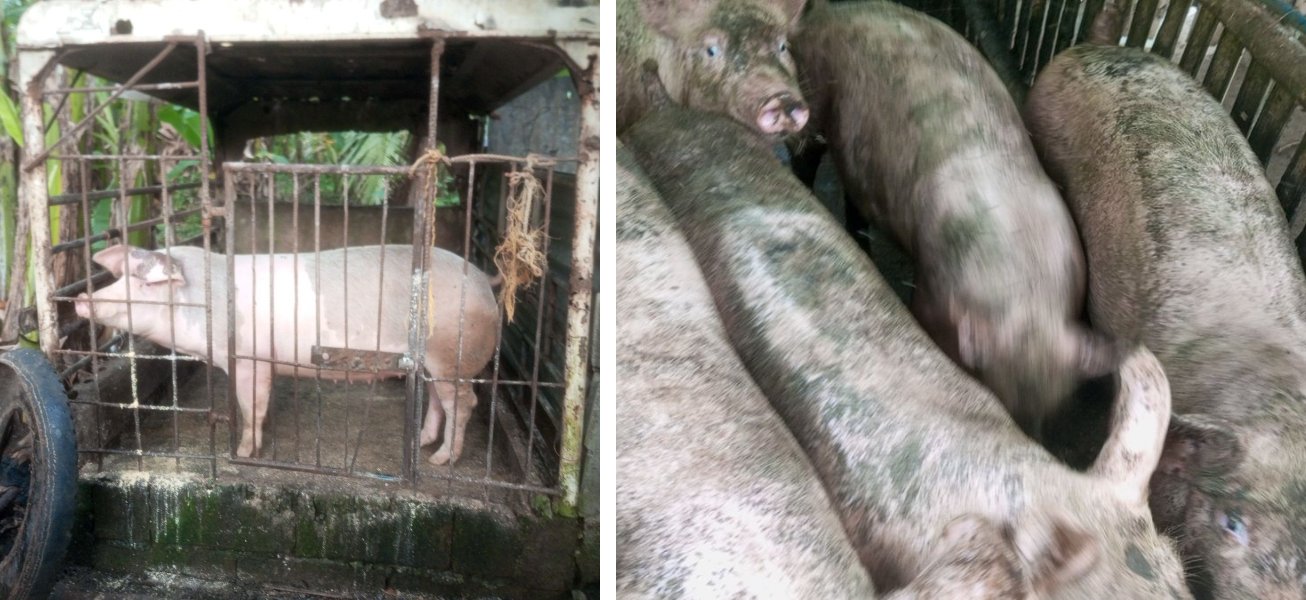
Pigs are the most important livestock animal in the Philippines, because pork is the meat Filipinos eat most. The PSA counted 8.93 million pigs on 30 June 2026, 1.0% fewer than a year earlier. Most are still raised in backyards: 79.3% were on smallhold farms, 19.0% on commercial farms and 1.7% on semi-commercial farms.
Since African swine fever (ASF) reached the country in 2019, hog raisers have had to keep strict farm biosecurity. Pigs are raised for pork and lechon, and many farms sell young pigs for fattening. For pig farms around the country, see our list of pig farms in the Philippines.
Tagalog name: baboy
Raised for: pork, lechon, young pigs for fattening
PSA count: 8.93 million head (30 June 2026)
On FarmyHub: Princess Isiah Guisaguis in Sarangani raises pigs for lechon. Find more in Pigs and Piglets, and feed in Pig Feed.
 |
2. Cattle (Baka)
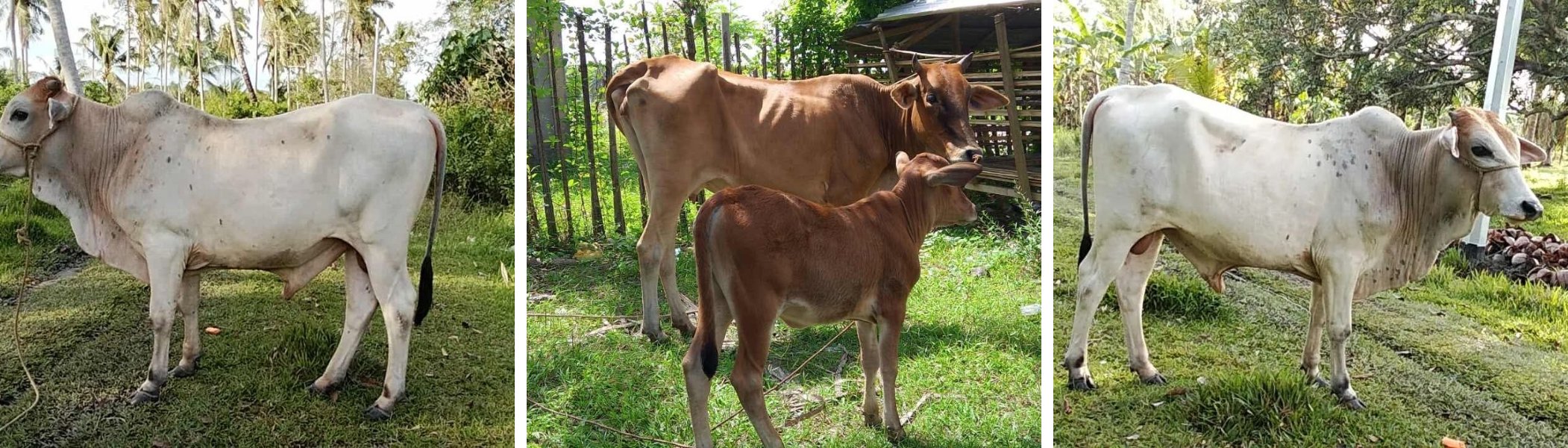
Cattle are raised in the Philippines mainly for beef. The PSA counted 2.48 million head on 30 June 2026, 1.6% fewer than a year earlier, and 87.6% were on smallhold farms, where a family keeps a few heads that graze near the house. Many local cattle are crosses of native cattle with Brahman and other breeds, which sellers often call mestizo or mistiso.
Cattle also give milk, but dairy cattle are few: they made up 25.9% of the country's 165,860 dairy animals in June 2026, behind the dairy carabao.
Tagalog name: baka; a calf is a guya
Raised for: beef, breeding
PSA count: 2.48 million head (30 June 2026)
On FarmyHub: Hanie Marot and Mohaimin Awal in Rajah Buayan, Maguindanao del Sur list young bulls, heifers and a cow with her calf. Find more in Cattle.
 |
3. Carabao (Kalabaw)
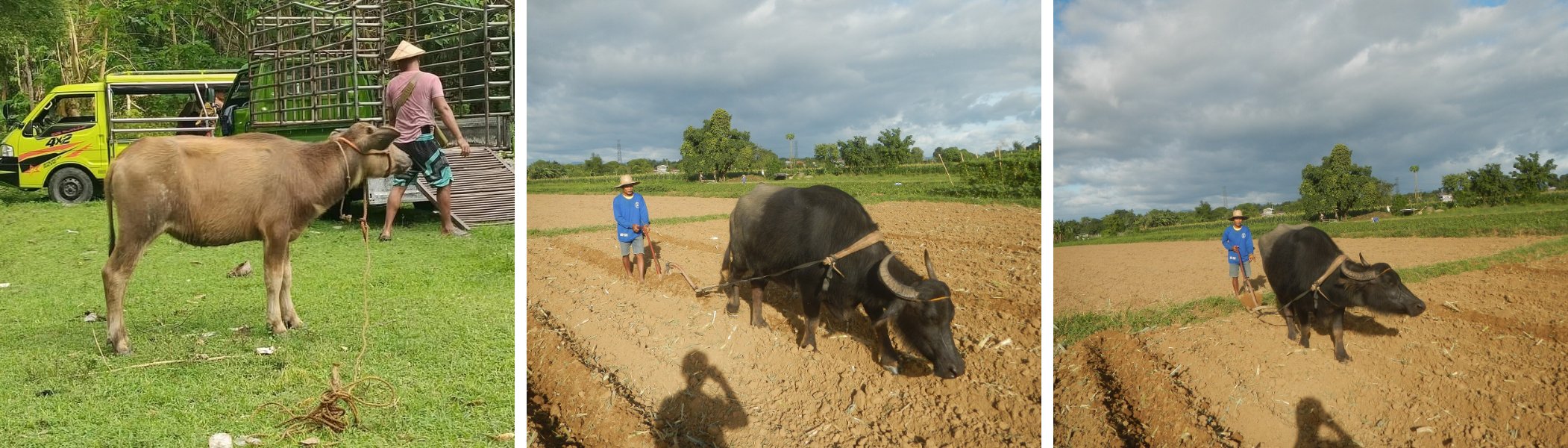
The carabao, or kalabaw, is the Philippine water buffalo and the animal most Filipinos picture on a farm. It pulls the plow in rice fields and hauls carts, and it is widely known as the pambansang hayop, the national animal of the Philippines. That title comes from tradition and school lessons: the National Commission for Culture and the Arts notes that no Philippine law makes the carabao an official national symbol.
The PSA counted 2.54 million carabao on 30 June 2026, 3.0% fewer than a year earlier, and 99.3% were on smallhold farms. Carabao also give milk, the traditional milk for kesong puti: dairy carabao made up 49.2% of the country's dairy animals, the largest share.
Tagalog name: kalabaw
Raised for: plowing and hauling, milk, meat
PSA count: 2.54 million head (30 June 2026)
On FarmyHub: Hanie Marot in Rajah Buayan, Maguindanao del Sur lists a young female carabao. Find more in Carabaos.
 |
4. Goats (Kambing)
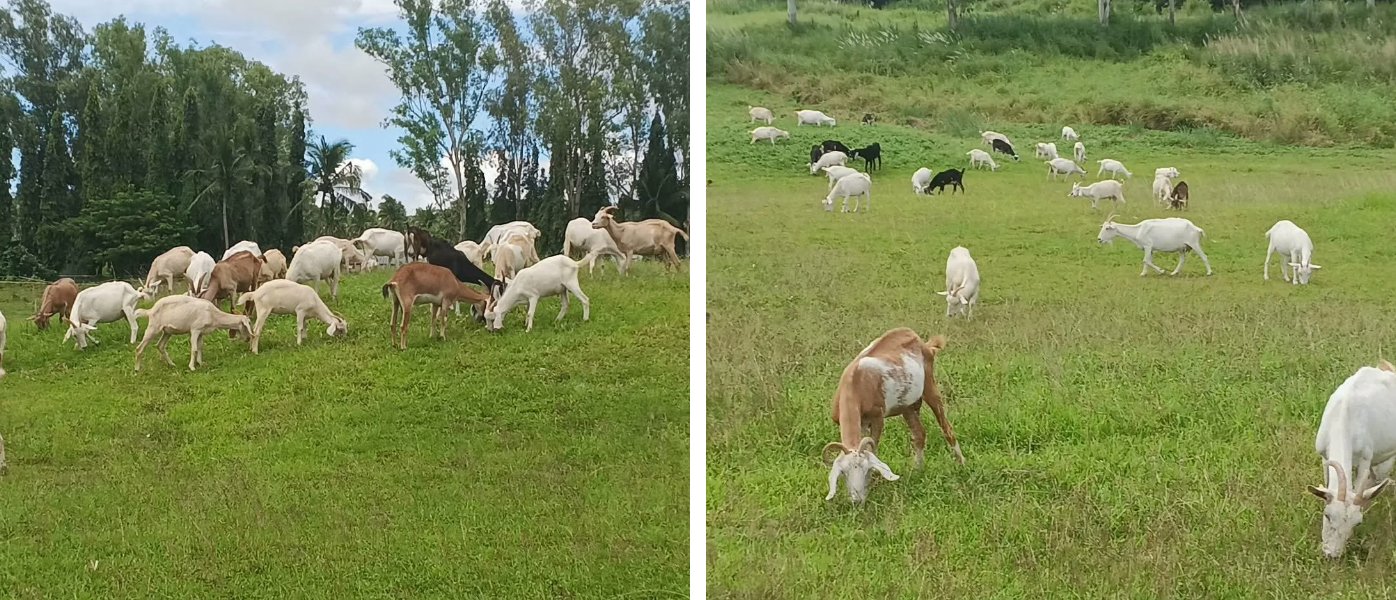
Goats are the second most numerous livestock animal in the Philippines after pigs: 3.49 million head on 30 June 2026, 4.0% fewer than a year earlier, and almost all of them (99.7%) on smallhold farms. Many raisers start with goats because they need little space and feed mostly on grass and leaves.
Goat meat goes into kalderetang kambing, kilawin and papaitan, and dairy goats make up about a quarter (24.9%) of the country's dairy animals. Our goat farms guide covers the goats raised on local farms.
Tagalog name: kambing
Raised for: meat, milk
PSA count: 3.49 million head (30 June 2026)
On FarmyHub: LeonPhilippe Farms in Lipa City, Batangas raises Anglo-Saanen crossbred goats. Find more in Goats, and feed in Goat Feed.
 |
5. Sheep (Tupa)
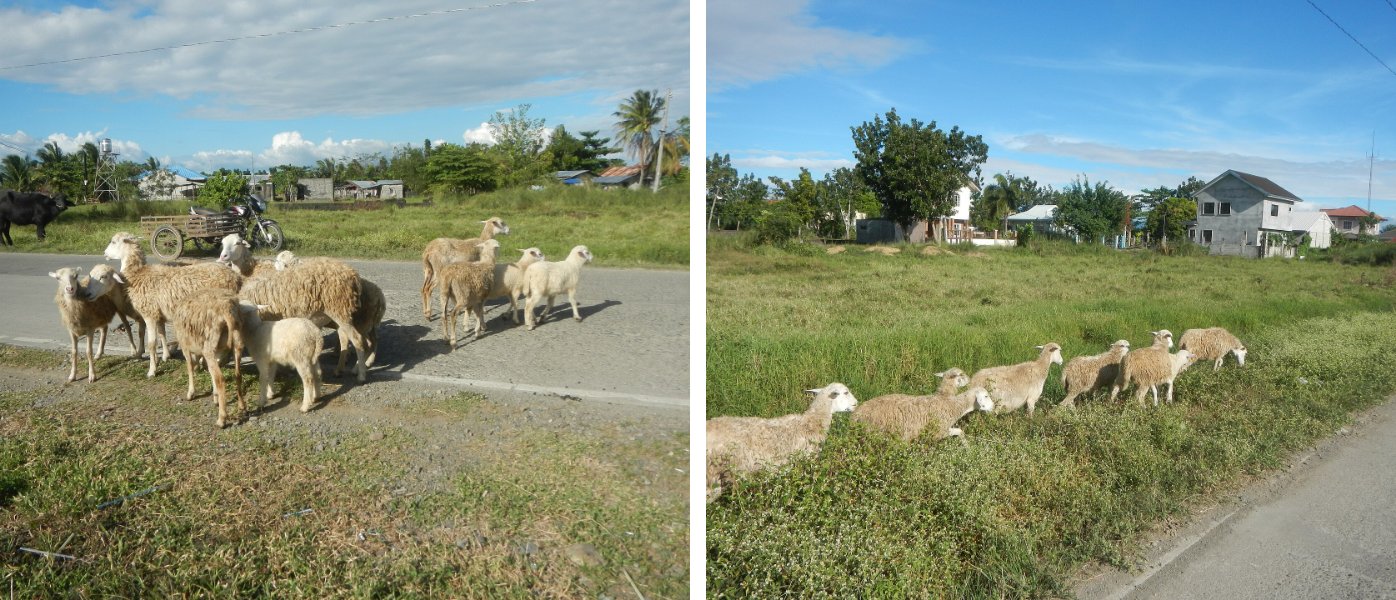
Sheep look a lot like goats but are far less common in the Philippines, and the PSA quarterly bulletin does not count them separately. Where they are raised, sheep graze on open grassland, often next to goats or cattle, and they are kept for meat. Sheep eat mostly grass, while goats prefer leaves and shrubs, so the two can share a farm.
Tagalog name: tupa
Raised for: meat
PSA count: not reported separately
On FarmyHub: no sheep listed yet. If you raise sheep, you can list them for free.
 |
6. Chickens (Manok)
Chickens are by far the most numerous farm animals in the Philippines: 228.49 million birds on 30 June 2026, 7.4% more than a year earlier. Native and improved chickens made up 35.2% of them, broilers (meat chickens) 34.9%, layers (egg chickens) 25.8% and gamefowl kept for breeding 4.1%.
In PSA statistics chickens are poultry, not livestock, but in everyday English many people call them livestock too (see livestock vs poultry). Backyard flocks of native chickens roam free and give both eggs and meat.
Tagalog name: manok
Raised for: meat, eggs
PSA count: 228.49 million birds (30 June 2026)
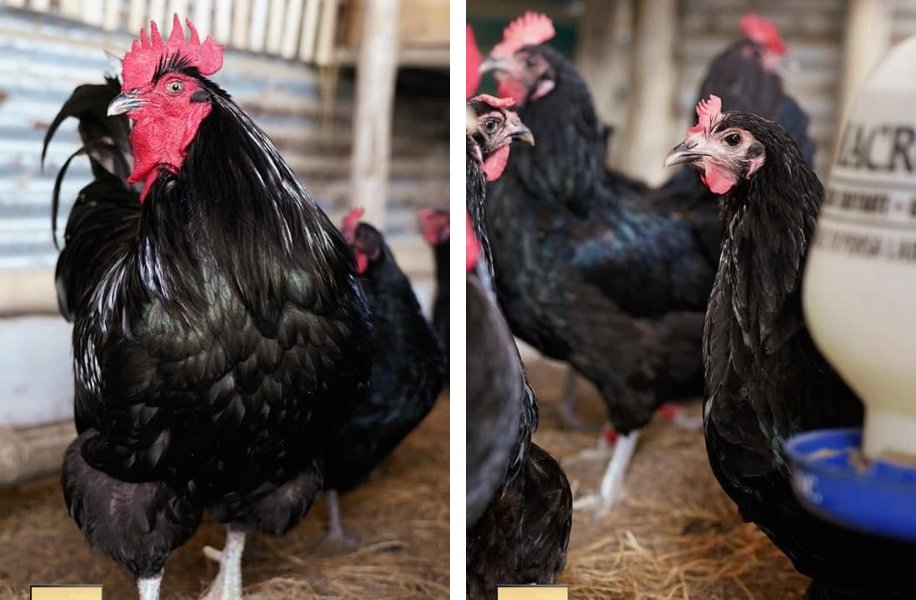
On FarmyHub: Kristalyn Marie Sasi in Bago, Negros Occidental has Black Australorp laying hens. Find more in Poultry, and feed in Chicken Feed.
 |
7. Ducks (Itik)
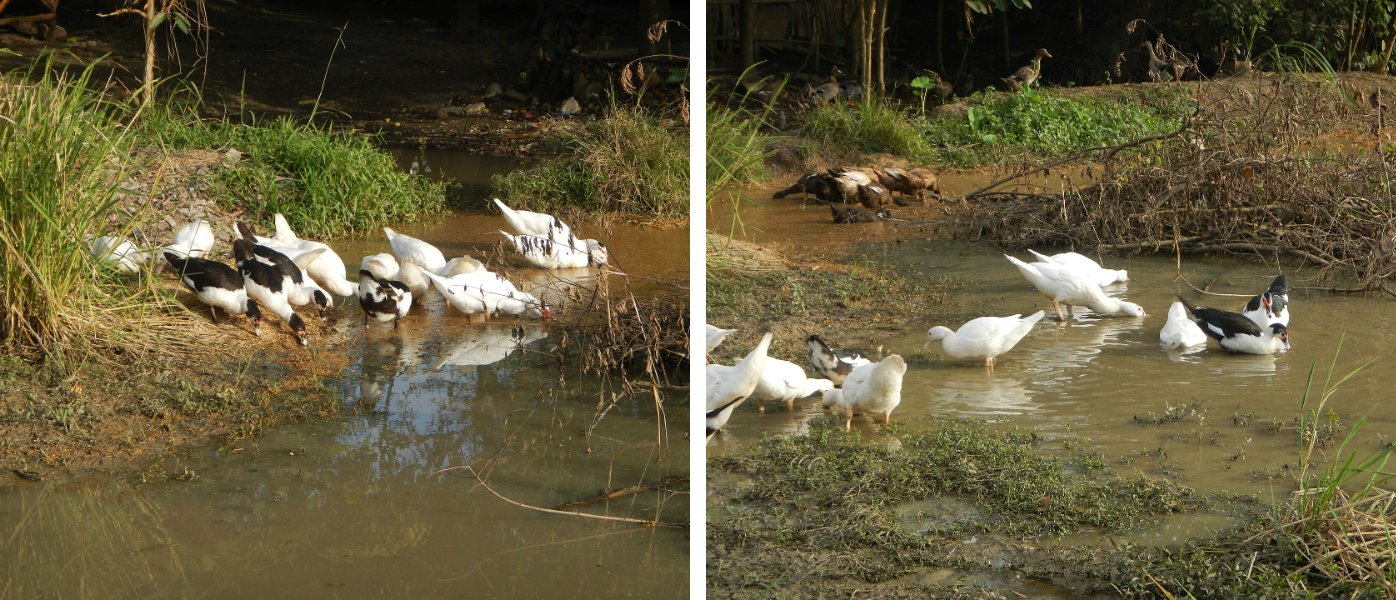
Ducks are the second biggest poultry group in the Philippines: 14.09 million birds on 30 June 2026, 71.0% of them on smallhold farms. Filipino duck raisers mostly keep itik, laying ducks, for their eggs, which become balut and itlog na maalat (salted eggs). Pateros in Metro Manila has long been known for its balut.
Laying ducks numbered 7.78 million in June 2026, a little over half of all ducks.
Tagalog name: itik
Raised for: eggs for balut and salted eggs, meat
PSA count: 14.09 million birds (30 June 2026)
On FarmyHub: see the Duck category.
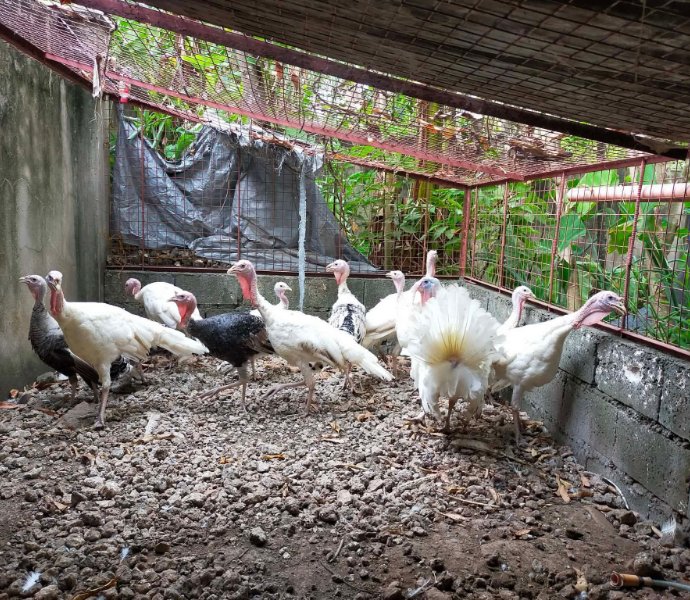 |
8. Turkeys (Pabo)
Turkeys are a small niche in the Philippines, raised in backyards and on small farms for meat. They grow bigger and more slowly than chickens and need more space, so most raisers keep only a small flock.
Tagalog name: pabo
Raised for: meat
PSA count: not reported separately
On FarmyHub: Paborite Pabohan in Compostela, Cebu raises organic turkeys. Find more in Turkeys.
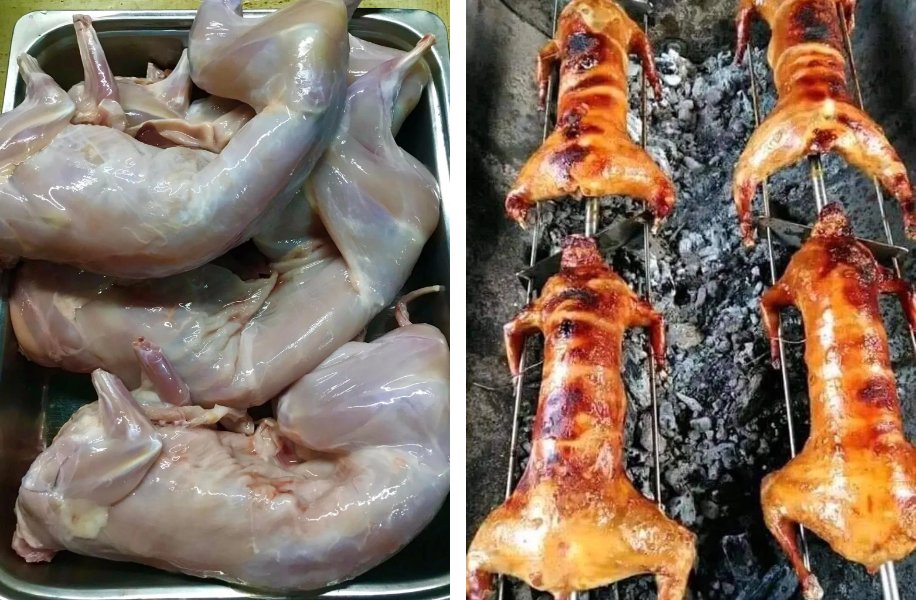 |
9. Rabbits (Kuneho)
Rabbits are a newer kind of livestock in the Philippines. Small farms raise them in cages for their meat, which is lean and white, and many families also keep rabbits as pets.
Tagalog name: kuneho
Raised for: meat; also kept as pets
PSA count: not reported separately
On FarmyHub: Jose Abella of CdeO Integrated Farm in Cagayan de Oro sells fresh rabbit meat. Find more in Rabbits.
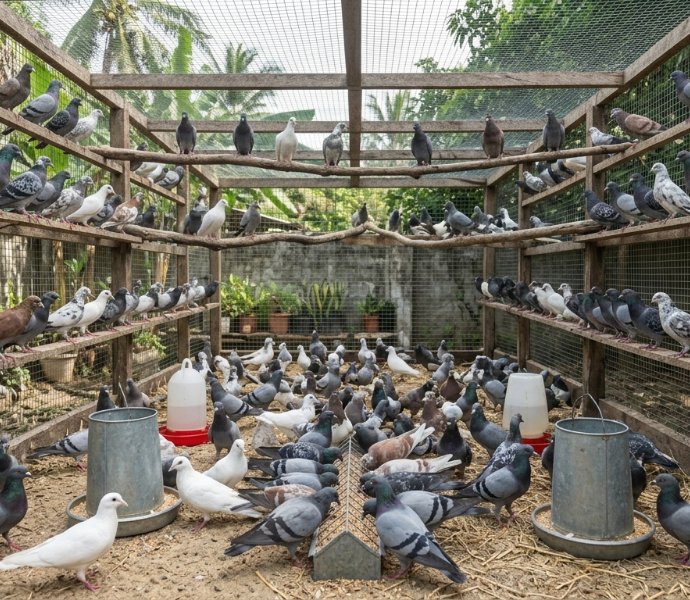 |
10. Pigeons (Kalapati)
Pigeons are raised in lofts for racing, as white doves released at weddings and events, and for squab, the meat of young pigeons. They are farm birds like poultry, but the PSA does not count them.
Tagalog name: kalapati
Raised for: racing, white doves for events, squab
PSA count: not reported separately
On FarmyHub: Jeems Llorente in Santo Tomas, Davao del Norte has rock doves and white doves. Find more in Pigeons.
Livestock Names in Tagalog and English
Livestock in Tagalog is usually translated as mga alagang hayop (raised animals) or mga hayop sa bukid (farm animals), and raising them is called paghahayupan. Here are the names of the common farm animals:
English | Tagalog | Note |
|---|---|---|
Livestock | Mga alagang hayop, mga hayop sa bukid | Paghahayupan is the raising of livestock |
Animal | Hayop | |
Pig | Baboy | |
Cattle, cow | Baka | A calf is a guya |
Carabao (water buffalo) | Kalabaw | Widely known as the pambansang hayop |
Goat | Kambing | |
Sheep | Tupa | |
Horse | Kabayo | |
Chicken | Manok | |
Laying duck | Itik | |
Turkey | Pabo | |
Rabbit | Kuneho | |
Pigeon, dove | Kalapati |
Alagang hayop on its own usually means a pet or a domestic animal. On a farm, the alagang hayop are the livestock.
Livestock in the Philippines in Numbers (2026)
The PSA counts the country's farm animals every quarter. These are the inventories on 30 June 2026, from the Livestock and Poultry Quarterly Bulletin, April to June 2026:
Animal | Count on 30 June 2026 | Change from June 2025 | Share on smallhold farms |
|---|---|---|---|
Chickens | 228.49 million birds | +7.4% | Not given |
Ducks | 14.09 million birds | −0.6% | 71.0% |
Pigs | 8.93 million head | −1.0% | 79.3% |
Goats | 3.49 million head | −4.0% | 99.7% |
Carabao | 2.54 million head | −3.0% | 99.3% |
Cattle | 2.48 million head | −1.6% | 87.6% |
Most Philippine livestock still comes from smallhold (backyard) farms: almost all goats and carabao, and four in five pigs. The country also had 165,860 dairy animals: 49.2% carabao, 25.9% cattle and 24.9% goats.
Frequently Asked Questions About Livestock
What is livestock?
Livestock are animals raised on farms for food, work, fiber or income, such as pigs, cattle, carabao, goats and sheep. In everyday English the word often includes poultry too, but Philippine statistics count poultry separately.
What are examples of livestock animals?
Common examples in the Philippines are pigs, cattle, carabao, goats and sheep, and poultry such as chickens, ducks and turkeys. Rabbits, pigeons and horses are also raised on some farms. See the 10 livestock animals at a glance.
What is livestock in Tagalog?
Livestock is usually translated as mga alagang hayop or mga hayop sa bukid (farm animals). Raising livestock is paghahayupan. The animals themselves are baboy (pig), baka (cattle), kalabaw (carabao), kambing (goat), tupa (sheep) and manok (chicken).
What is alagang hayop in English?
Alagang hayop means an animal someone takes care of: a pet or a domestic animal. On a farm, the alagang hayop are the livestock.
Is chicken livestock or poultry?
In Philippine statistics, chicken is poultry: the PSA counts chickens and ducks separately from livestock. In everyday English, many people still call chickens livestock, because they are farm animals.
What is the most common livestock in the Philippines?
By number, chickens: 228.49 million birds in June 2026. Among four-legged livestock, pigs lead with 8.93 million head, followed by goats, carabao and cattle.
Which livestock animals give milk in the Philippines?
Carabao, cattle and goats. In June 2026 the country had 165,860 dairy animals: 49.2% carabao, 25.9% cattle and 24.9% goats.
Ano ang pambansang hayop ng Pilipinas?
Ang kalabaw ang kilalang pambansang hayop ng Pilipinas. Katuwang ito ng magsasaka sa pag-aararo at paghahakot sa bukid, at nagbibigay rin ng gatas at karne. Ayon sa National Commission for Culture and the Arts, walang batas na opisyal na nagtatakda nito; nagmula ang titulo sa tradisyon at sa mga aralin sa paaralan.
Related guides: pig farms in the Philippines, goat farms in the Philippines, piggery vs poultry farming and starting a livestock farm.
Sell Your Livestock on FarmyHub
Do you raise or trade livestock? FarmyHub connects Filipino farmers and suppliers with buyers across the country. There are two ways to start:
List your products yourself, for free. Create a free account in seconds with your Google or Facebook account, then post your listing in a few minutes. Once approved, your listing is visible to buyers, who can message or call you directly.
🌱 List your products for freeBecome a FarmyHub supplier. Tell us about your farm or business, your products and how much you can supply. Our team will contact you to learn about your business, and when a bulk buyer is looking for what you sell, we can recommend you.
🤝 Become a supplierPrefer using your phone? Download the free FarmyHub app to post listings and reply to buyers on the go.
📱 Get the app on Google PlayRegistered agriculturist, higher education instructor, and hands-on farmer. I write practical farming and agribusiness guides based on my work in the field and in the classroom.