

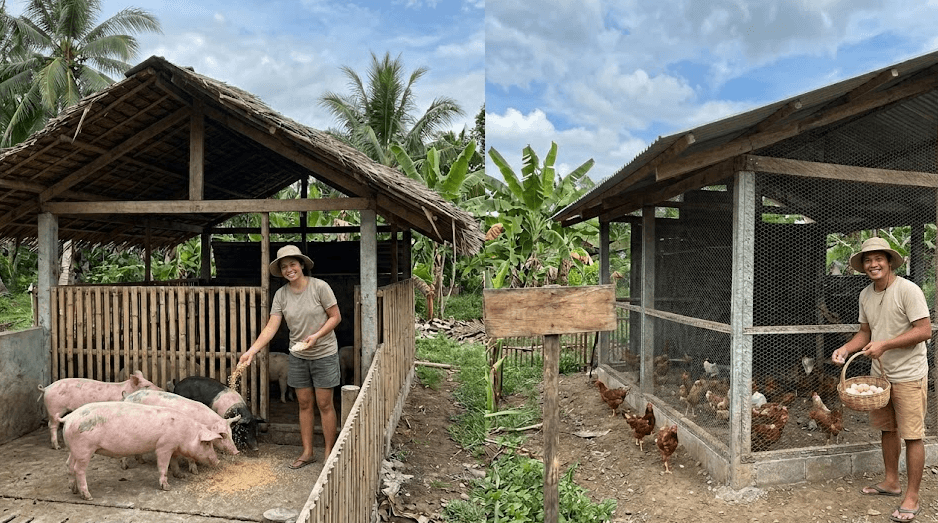
Piggery vs Poultry Farming in the Philippines: Which Business Is More Profitable?
Choosing the right business to start is a very big decision, especially when you are putting your hard-earned savings into it. In the Philippines, farming is one of the most reliable ways to earn a living because people always need to eat. Every day, families look for pork and chicken to put on their dinner tables.
However, many beginner farmers make the mistake of jumping into a business without knowing the daily reality. They see their neighbors making money and think it is easy. To help you avoid losing your money, let us take a very detailed look at the differences between starting a piggery and starting a poultry farm.
Piggery vs Poultry: Which Is More Profitable?
Neither one is always more profitable. It depends on your land, your water supply, your time and how you want the money to come in. Poultry returns money faster: broilers are ready in 35 to 42 days, and layers give eggs to sell every day once they start laying. A piggery takes 4 to 5 months per batch, but it pays one large sum when the pigs are sold.
Factor | Piggery | Poultry |
|---|---|---|
Time to first income | 4 to 5 months: a piglet reaches 90 to 100 kg market weight | Broilers: 35 to 42 days. Layers: eggs start after 18 to 20 weeks |
How the money comes in | One large payment when the pigs are sold | Broilers: 6 to 8 batches a year. Layers: eggs to sell every day |
Building cost | Higher: concrete, hollow blocks and steel bars | Lower: bamboo, coco lumber and nets, plus feeders, drinkers and heat lamps |
Daily work | Heavy cleaning and feeding, mostly morning and afternoon | Lighter work, but checks from morning until night |
Main challenge | Waste and smell; needs plenty of water and distance from neighbors | Heat, cold and disease; needs good airflow and strict biosecurity |
Best fit | You want a lump sum after a few months | You want faster or daily cash flow |
The Piggery Business: The Long-Term Investment
Raising pigs is often compared to a "living piggy bank." You do not see money coming in every day. Instead, you put a lot of money into the pigs for several months by buying their food and medicine. Then, you receive a large sum of money all at once when they are grown and sold to the market.
Feeding and Growth
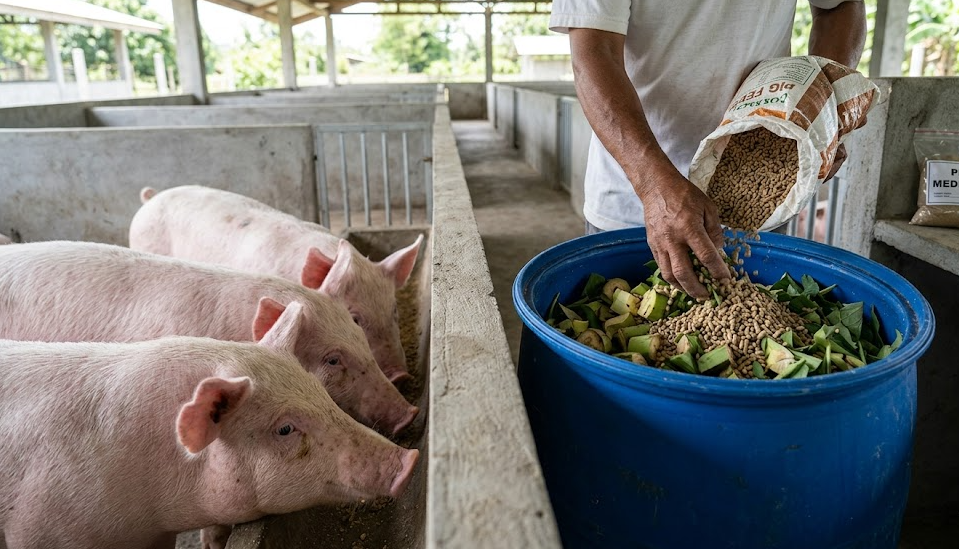
Pigs are excellent at converting food into meat, which means they grow very big and heavy in a short amount of time. A small piglet can grow to a market weight of 90 to 100 kilograms in just four to five months. But to reach that weight, they need to eat a lot. They have very big appetites.
The cost of commercial pig feed is the biggest expense in this business. It can take up to 70% of your total budget. To save money and protect your profits, many successful Filipino farmers mix commercial feeds with local resources. You can use rice bran (locally called darak), chopped banana trunks, sweet potato leaves (kamote tops), and leftover food from local restaurants. However, you must make sure the food is clean so your pigs do not get sick.
Feed quality matters as much as price. See our guide to piggery feeds and the pig feeding guide for common brands and what to feed at each stage.
Waste Management and Smell
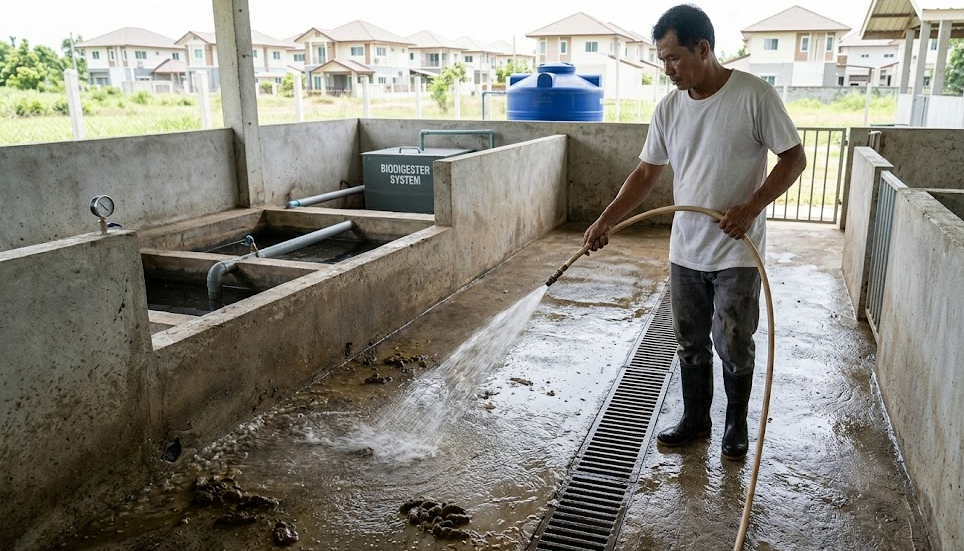
This is the most critical and challenging part of running a piggery. Pigs produce a large amount of waste every single day. Their waste is heavy, wet, and carries a very strong odor. Because of this, you cannot build a piggery just anywhere. If your farm is too close to other houses, the smell will bother your neighbors, and they might complain to your local barangay officials.
To prevent problems, you must have a good source of flowing water and a smart drainage system. You need to wash the concrete pens at least once or twice a day. Many modern small farmers are now building "biodigesters." This is a special underground tank that collects pig waste and turns it into gas that you can use for cooking, which helps you save on LPG costs. Another option is the "babuyang walang amoy" (odorless piggery) system, where the floor is made of rice hulls and soil instead of concrete, which helps absorb the smell.
Market Demand and Profit
Pork is a major part of Filipino food culture. There is always a high demand for it. Think about your local public market—the pork section is always busy. Demand goes even higher during graduation season, Christmas, New Year, weddings, and local fiestas where lechon (roasted pig) is the star of the table.
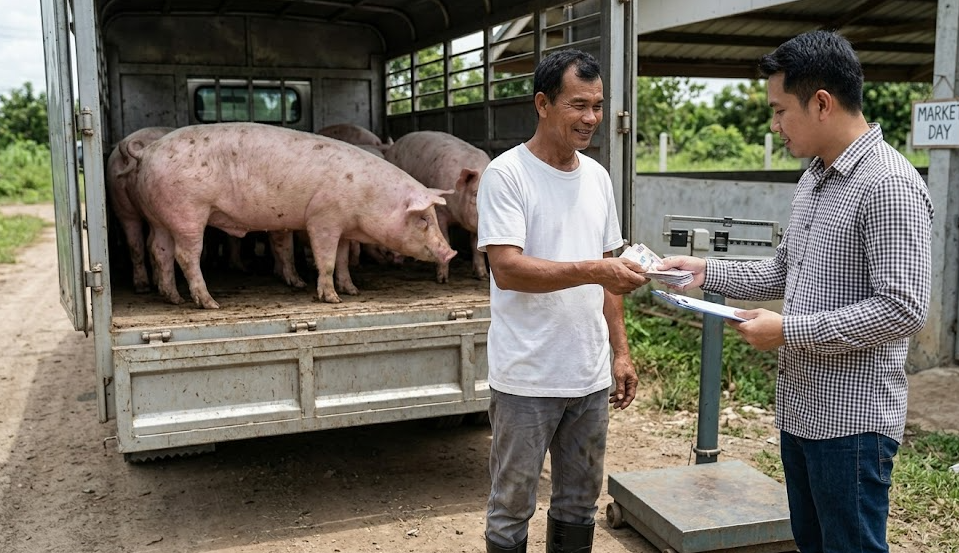
When you sell your pigs, you usually sell the whole animal based on its live weight. Buyers called "biyaheros" will come to your farm with a truck, weigh the pigs, and pay you in cash. Because you receive the money in one large amount, it is much easier to track your total profit and see how much you earned after subtracting your expenses.
Ready to start a batch? See piglets for sale and pigs for sale from raisers on FarmyHub.
The Poultry Business: The Fast-Paced Income
If a piggery is like a slow-moving piggy bank, poultry farming is like a fast-moving factory. Everything happens very quickly. You start with tiny chicks, and in just a matter of weeks, you are already selling them or collecting eggs.
Quick Turnaround for Meat (Broilers)
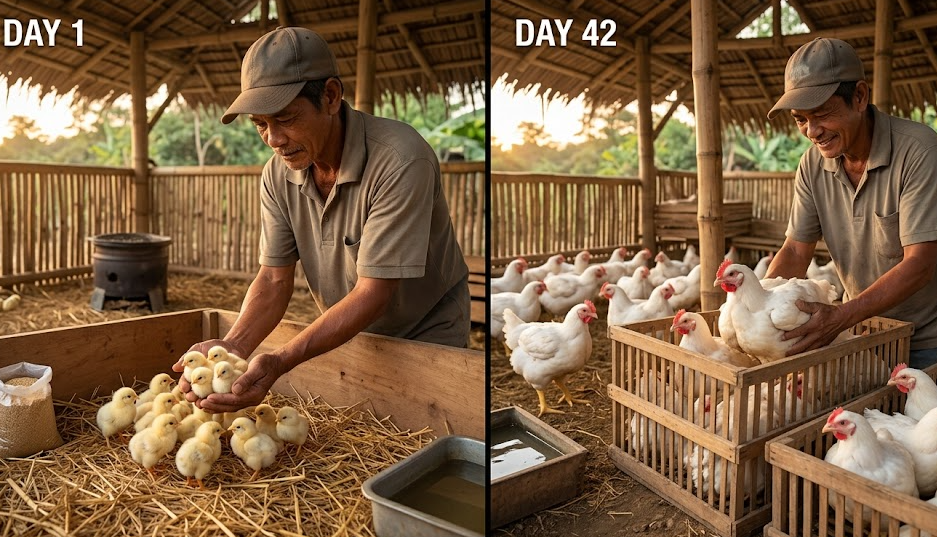
If you choose to raise chickens for meat, these are called broilers. Broiler chickens are bred to grow incredibly fast. From the day the one-day-old chicks arrive at your farm, you only need to feed them for about 35 to 42 days (around six weeks) before they are ready for the market.
Because the cycle is so short, you do not have to wait long to get your money back. In fact, you can run your business 6 to 8 times in a single year. If one batch suffers from low prices, you can quickly recover your losses in the next batch a few weeks later.
Egg Production for Daily Cash (Layers)
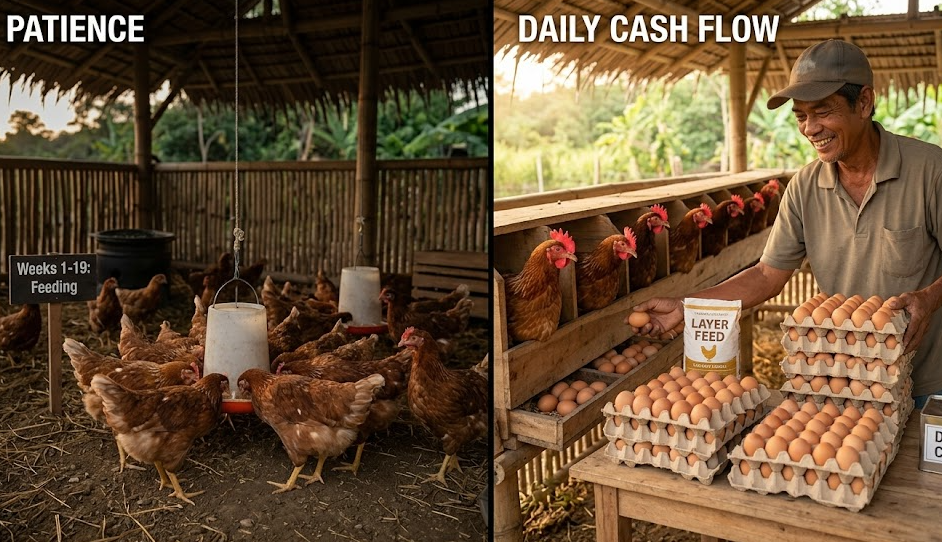
If you do not want to sell meat, you can choose to raise layers. These are chickens kept specifically to lay eggs. This path requires more patience at the beginning. You have to feed the chickens for about 18 to 20 weeks before they grow old enough to start laying eggs. During these five months, you will only spend money without earning anything.
However, once they start laying, the rewards are wonderful. A healthy layer chicken can lay one egg almost every day for more than a year. This means you will have boxes of eggs to sell every single morning. This gives your family a steady, daily cash flow that you can use to buy groceries or pay for daily household bills.
Sensitivity and Health Care
The biggest risk in poultry farming is that chickens are very delicate creatures. They are easily stressed by loud noises, sudden changes in weather, and diseases.
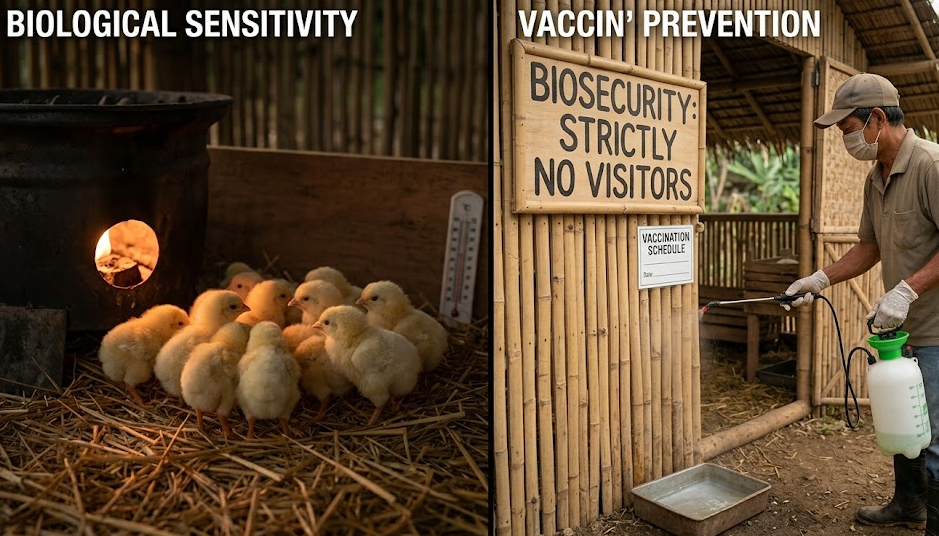
Temperature control is a life-or-death matter for chicks. When they are newly hatched, they do not have enough feathers to stay warm. If they get too cold, they will huddle together in a pile to get warm, and the chicks at the bottom will get crushed and die. You must use electric heat lamps or charcoal heaters to keep them warm. On the other hand, if the weather is too hot, chickens will get heat stroke, stop eating, and die.
Diseases can also wipe out an entire poultry house in just a few days. You must be very strict about biosecurity. This means you cannot allow neighbors or visitors to enter your poultry house because they might bring virus germs on their slippers or clothes. You also need to follow a strict vaccination schedule to protect your birds from deadly diseases like bird flu.
Looking for birds to start with? See live poultry for sale on FarmyHub.
Key Factors to Consider
Before you buy your first animal, you must look at your personal situation. What works for your neighbor might not work for you. Here are three main things you need to think about carefully.
1. Your Daily Schedule and Labor
You need to consider how much physical effort and time you can give to the farm every day.
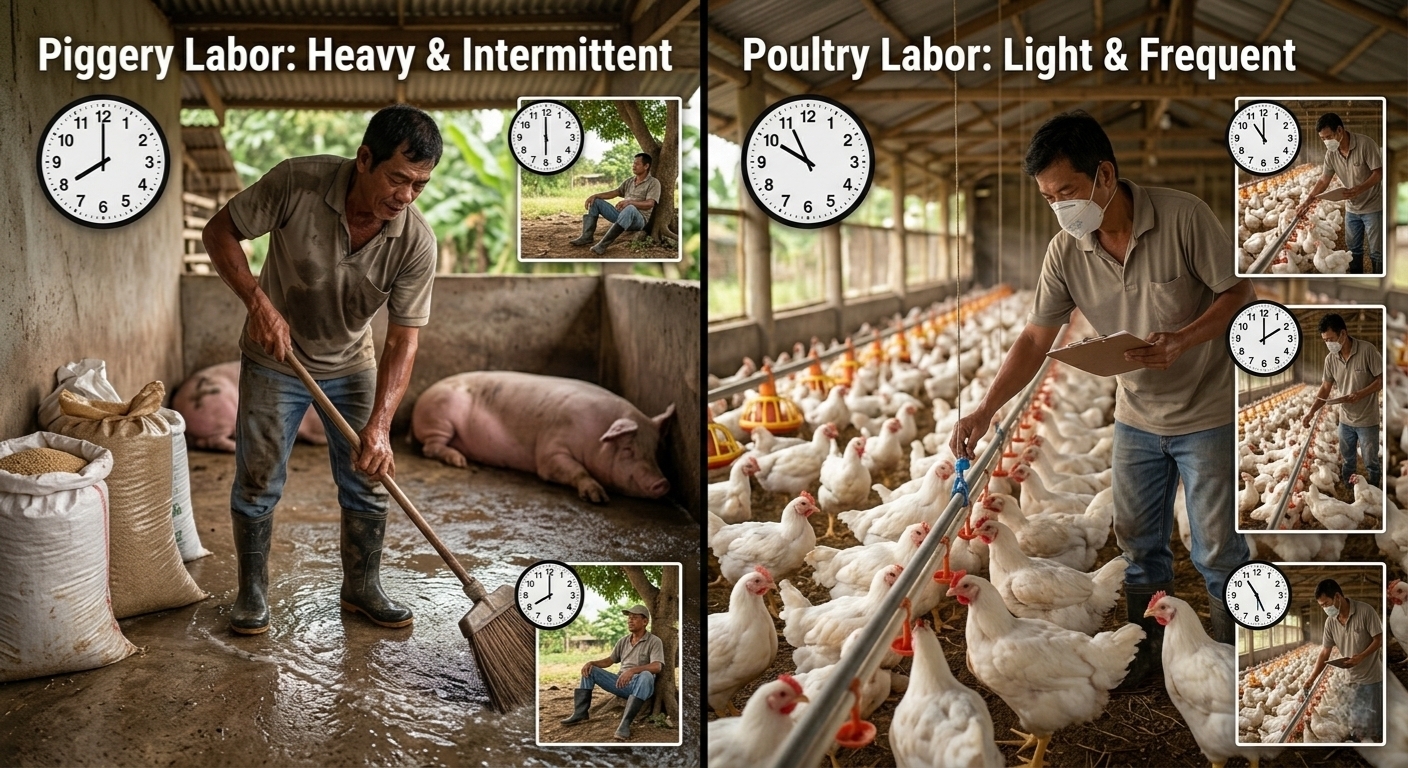
Piggery Labor: Pigs require heavy physical work but for a shorter period of time. Cleaning the pens involves scrubbing concrete floors, lifting heavy bags of feed, and moving heavy animals. However, once the morning cleaning and feeding are done, you can usually leave the pigs alone until the afternoon feeding.
Poultry Labor: Chickens require lighter physical work but much more frequent attention. You do not need to lift heavy things all day, but you must check on the chickens multiple times from morning until night. You have to constantly check if their water drinkers are clean, if they have enough feed, and if the temperature inside the house is comfortable. It is a job that requires you to stay close to the farm all day long.
2. Your Local Environment and Resources
Look around your piece of land and check your local resources before making a choice.
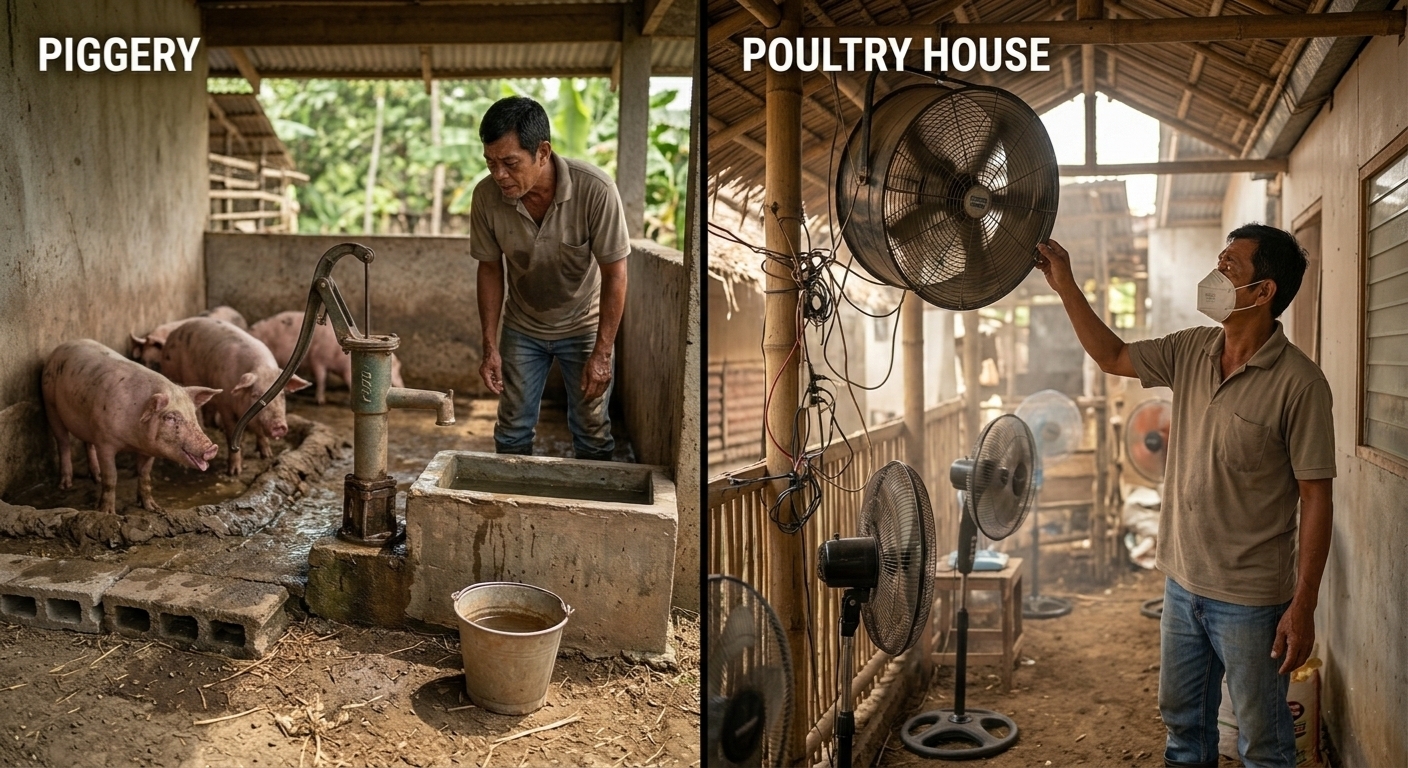
Water Needs for Pigs: A piggery consumes a massive amount of water. Pigs need to drink a lot, and you need even more water to wash away their manure and pee every day. If your area has water shortages, or if you rely on a manual hand pump (poso) that runs dry during the summer, a piggery will be a nightmare.
Airflow Needs for Chickens: Chickens need excellent ventilation. Their waste produces a gas called ammonia which can hurt their eyes and lungs if it stays inside the house. If your land is located in a crowded area with no breeze, or if the weather is always very hot and humid, you will need to spend a lot of money on electricity to run big electric fans 24 hours a day to keep the chickens alive.
3. Initial Capital and Building Costs
How much money do you have in your hands right now to start the construction?
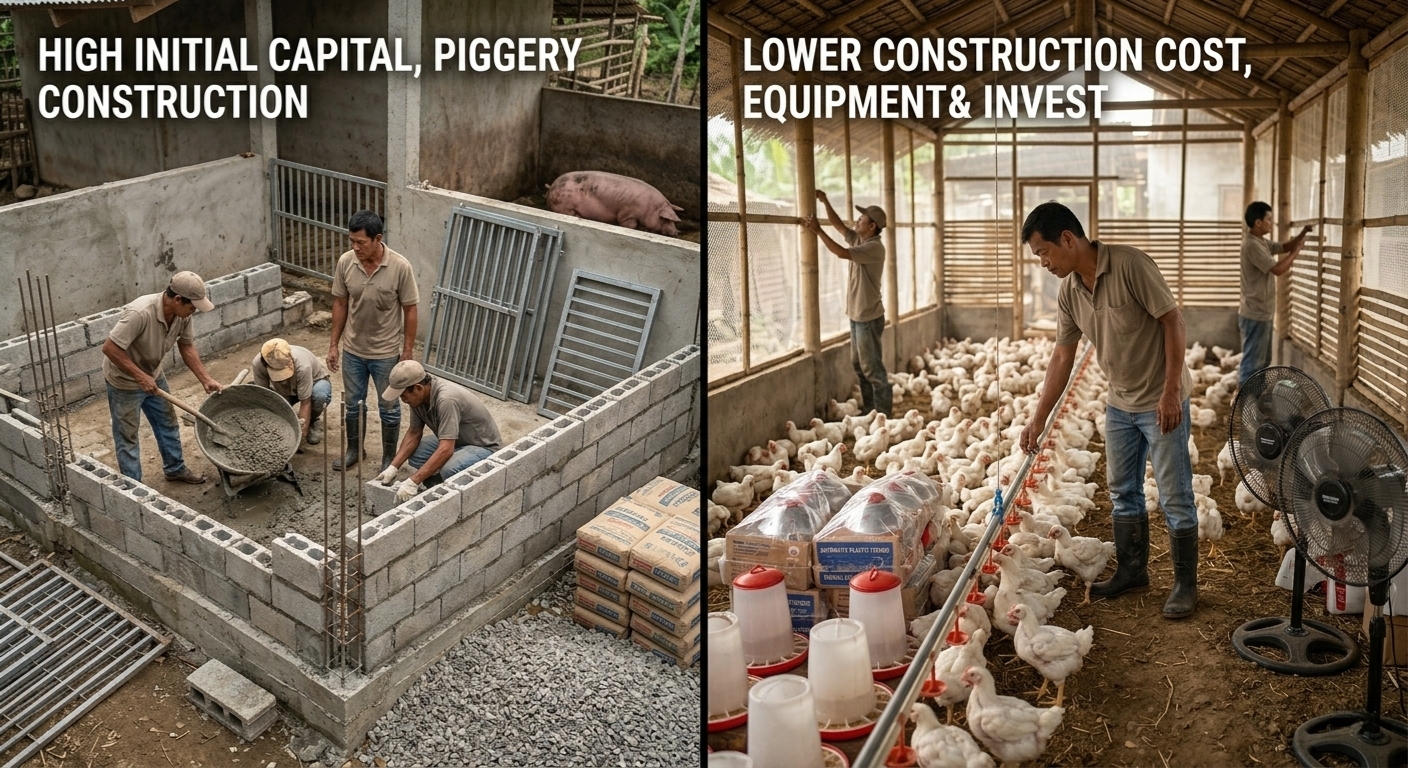
Piggery Construction: Building a piggery is usually more expensive at the start. Pigs are very strong animals. If you build their pens out of weak wood or bamboo, they will easily chew through it, break it, and escape. You must build the walls and floors using strong concrete, hollow blocks, and steel bars. This means you will need a bigger budget for cement, gravel, and hiring skilled carpenters.
Poultry Construction: A poultry house can be built using lighter and cheaper local materials. You can use bamboo slats for the flooring, coco lumber for the posts, and plastic nets for the walls. This makes the building much cheaper to construct. However, you will need to spend money on equipment inside the house, such as plastic feeders, automatic water drinkers, and heating lamps for the baby chicks.
Where to Find Feeds on FarmyHub
Whichever you choose, feed is something you will buy again and again. Sellers on FarmyHub list both kinds (as of October 2026):
Pig feeds: hog starter and grower pellets and other hog feeds, from sellers in Cagayan de Oro, General Santos, Cebu City and Bulacan.
View pig feed listings →Chicken feeds: chick booster, broiler starter, grower and layer crumbles, plus gamefowl feeds.
View chicken feed listings →Listings are posted by the sellers. Check the current price and stock with the seller before you order.
The Bottom Line
Both the piggery and poultry businesses are excellent ways to make a profit in the Philippines, but they serve different financial needs and personal styles.
If you have a smaller piece of land, want to see money coming in every single day, and have the patience to monitor delicate animals closely, then a Poultry Farm is likely your best choice. It allows you to start small, learn quickly, and get your investment back in a matter of weeks.
If you have a strong source of water, live far away from angry neighbors, have the physical strength for heavy cleaning, and prefer to get a large lump sum of money after a few months of waiting, then a Piggery is a great match for you. It functions as a secure, long-term savings plan that rewards you heavily at harvest time.
Are you planning to start with just a few animals in your backyard to test the waters, or are you looking to invest a larger amount of money to build a commercial facility right away?
Piggery and Poultry FAQs
Which is more profitable, piggery or poultry?
It depends on your situation. Poultry gives faster returns, with broilers ready in 35 to 42 days and layers producing eggs daily. A piggery takes 4 to 5 months but pays a large sum in one sale. Compare your land, water, time and budget before choosing.
Is a piggery business profitable in the Philippines?
It can be, because pork is in steady demand, especially around fiestas, Christmas and graduations. Profit depends mostly on feed, which can take up to 70% of the budget, and on the live-weight price when you sell. Many raisers lower their feed cost by mixing commercial feeds with rice bran and other local feed materials.
How long before a piggery or poultry farm earns money?
Broilers earn in about 6 weeks. Layers start laying after 18 to 20 weeks and then give eggs every day. Pigs are sold after 4 to 5 months, when they reach 90 to 100 kg.
Can I run a piggery and a poultry farm together?
Yes, some farms raise both. Keep them in separate buildings, because they need different housing: concrete pens and plenty of water for pigs, and light, well-ventilated housing for chickens. Follow biosecurity for the poultry house and limit who goes in.
What is a piggery?
A piggery is a farm or building where pigs are raised for meat or breeding. In Tagalog it is called a babuyan. A poultry farm, where chickens and other birds are raised for meat or eggs, is called a manukan.
If chickens are poultry and pigs are piggery, what is it called for cows?
A farm that raises cows is a cattle farm or ranch, and one that keeps cows for milk is a dairy farm. In Tagalog it is called a bakahan.
Alin ang mas kumikita: pag-aalaga ng baboy o manok?
Depende sa lupa, tubig, oras at puhunan mo. Mas mabilis ang balik ng pera sa manukan: 35 hanggang 42 araw lang ang broiler, at araw-araw ang itlog kapag nangingitlog na ang layer. Sa babuyan, 4 hanggang 5 buwan bago maibenta ang baboy, pero isang bagsakan ang bayad.
Sell Your Pigs, Poultry or Feeds on FarmyHub
Do you raise pigs or poultry, or sell feeds? FarmyHub connects Filipino farmers and suppliers with buyers across the country. There are two ways to start:
List your products yourself, for free. Create a free account in seconds with your Google or Facebook account, then post your listing in a few minutes. Once approved, your listing is visible to buyers, who can message or call you directly.
🌱 List your products for freeBecome a FarmyHub supplier. Tell us about your farm or business, your products and how much you can supply. Our team will contact you to learn about your business, and when a bulk buyer is looking for what you sell, we can recommend you.
🤝 Become a supplierPrefer using your phone? Download the free FarmyHub app to post listings and reply to buyers on the go.
📱 Get the app on Google PlayRegistered agriculturist, higher education instructor, and hands-on farmer. I write practical farming and agribusiness guides based on my work in the field and in the classroom.