

Feeds for Chicken Philippines: A Complete Guide to Poultry Nutrition
Success in poultry farming, whether you are managing a small backyard flock in your village or a large commercial warehouse, depends on one major factor: what your birds eat. In the Philippines, the environment presents unique challenges like high humidity and tropical heat. Because of this, knowing how to choose the right feeds for chicken Philippines farmers can rely on is the difference between a profitable farm and a losing one.
Nutrition is more than just filling their bellies. It is about providing the right fuel for growth, egg production, and disease resistance. If you want your chickens to be the best in the market, you must understand the science of feeding them in a way that is simple, practical, and affordable.
Why High-Quality Feed is Your Best Investment
Many beginner farmers try to save money by buying the cheapest feed available or by relying solely on household leftovers and corn. While this might keep the chickens alive, it will not make them productive. High-quality feed is designed by experts to contain the exact balance of proteins, fats, carbohydrates, vitamins, and minerals.
When you invest in better feeds for chicken Philippines suppliers offer, you get several benefits:
Faster Turnaround: Broilers reach their market weight in 30 to 35 days instead of 45 or 60.
Consistent Egg Production: Layers will give you an egg almost every day, rather than just two or three times a week.
Natural Resistance: Stronger chickens don't get sick as easily when the weather changes or when a virus hits the neighborhood.
Better Meat Quality: The meat is firmer and tastier, which your customers will surely notice.
In short, "cheap" feed often becomes expensive because you have to feed the birds for a longer time and spend more on medicine.
The Life Stages of a Chicken: What to Feed and When
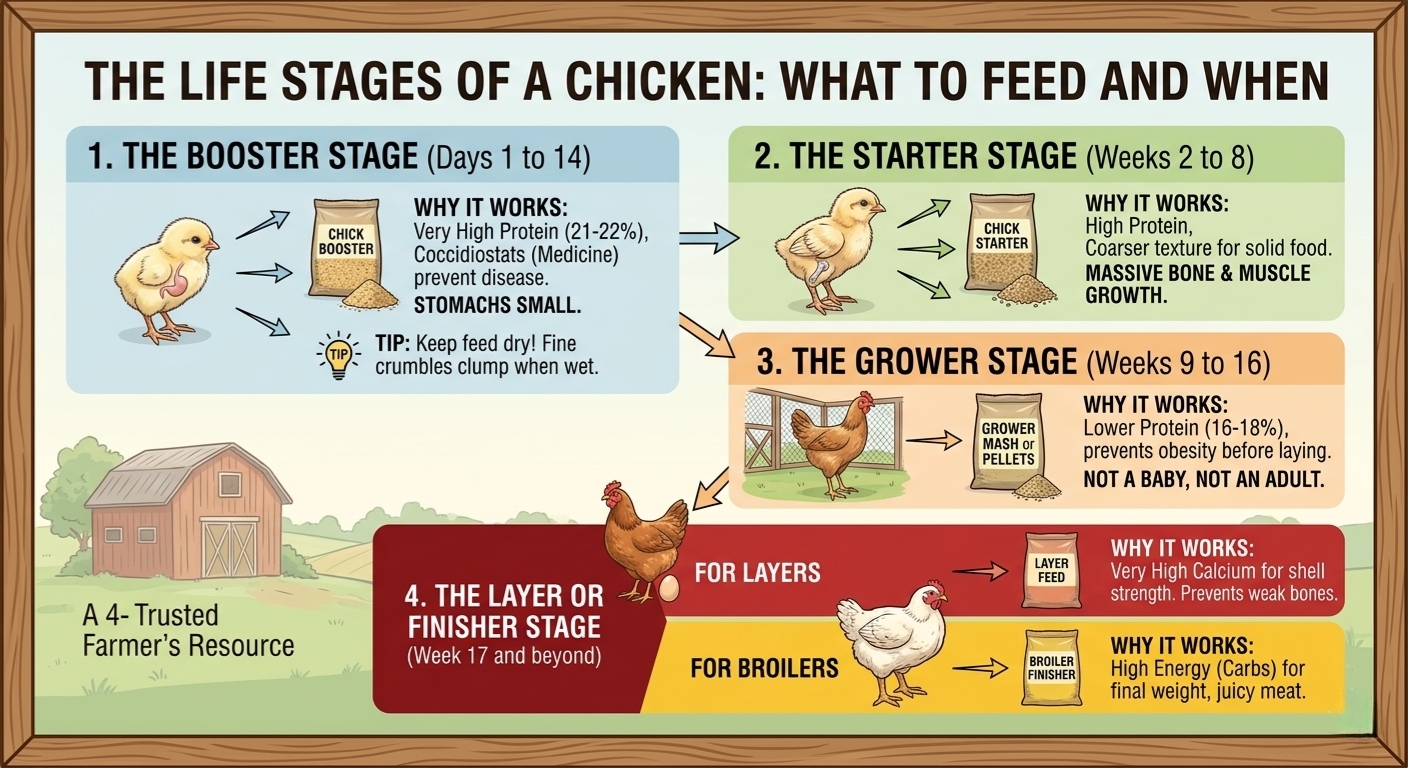
A chicken’s body changes rapidly. A chick that just hatched today has very different needs than a hen that is laying eggs. To be a successful farmer, you must change their diet as they grow.
1. The Booster Stage (Days 1 to 14)
The first two weeks are when the chick is most at risk. They are tiny, their stomachs are small, and they are still developing their internal organs.
The Feed: Chick Booster.
Why it works: Booster feed is very high in protein (usually around 21% to 22%). It also contains "coccidiostats," which are medicines that prevent common chick diseases.
Tip: Because the feed is so fine, make sure it stays dry. If it gets clumpy from moisture, the chicks won't be able to eat it.
2. The Starter Stage (Weeks 2 to 8)
Once the chicks have survived the first two weeks, they enter a period of massive bone and muscle growth.
The Feed: Chick Starter.
Why it works: It still has high protein, but the texture is a bit coarser (usually crumbles). This encourages the birds to eat more and start developing their digestive systems for solid food.
3. The Grower Stage (Weeks 9 to 16)
At this stage, the birds are like teenagers. They are not babies anymore, but they aren't ready to lay eggs or be harvested yet.
The Feed: Grower Mash or Pellets.
Why it works: The protein level is slightly lower (around 16% to 18%) to prevent the birds from getting too fat too early. If a layer hen gets too fat, she will have trouble laying eggs later on.
4. The Layer or Finisher Stage (Week 17 and beyond)
This is the "working" stage of the chicken's life.
For Layers: They need Layer Feed which is very high in calcium. Calcium is what makes the eggshell hard. Without it, the hen will pull calcium from her own bones, making her weak and unable to walk.
For Broilers: They need Broiler Finisher. This feed is high in energy (carbohydrates) to help them put on that final weight and fat that makes the meat juicy.
Different Types of Feed Textures

When you visit your local Agrivet store in the Philippines, you will see bags labeled "Mash," "Crumble," or "Pellet." Choosing the right texture helps reduce waste and improves digestion.
Mash: This looks like coarse flour or sand. It is the most affordable form. However, chickens can be "picky eaters" with mash—they might eat the corn bits and leave the vitamin powder at the bottom of the feeder.
Crumbles: These are pellets that have been crushed into smaller chunks. They are perfect for growing chicks that are too big for mash but too small for full pellets.
Pellets: These are small, hard cylinders. Every single pellet contains a complete mix of nutrients. Chickens cannot be picky with pellets; every bite they take is a balanced meal. Pellets are also harder to spill, so you save money on wasted feed.
Feeding Systems and Water Management
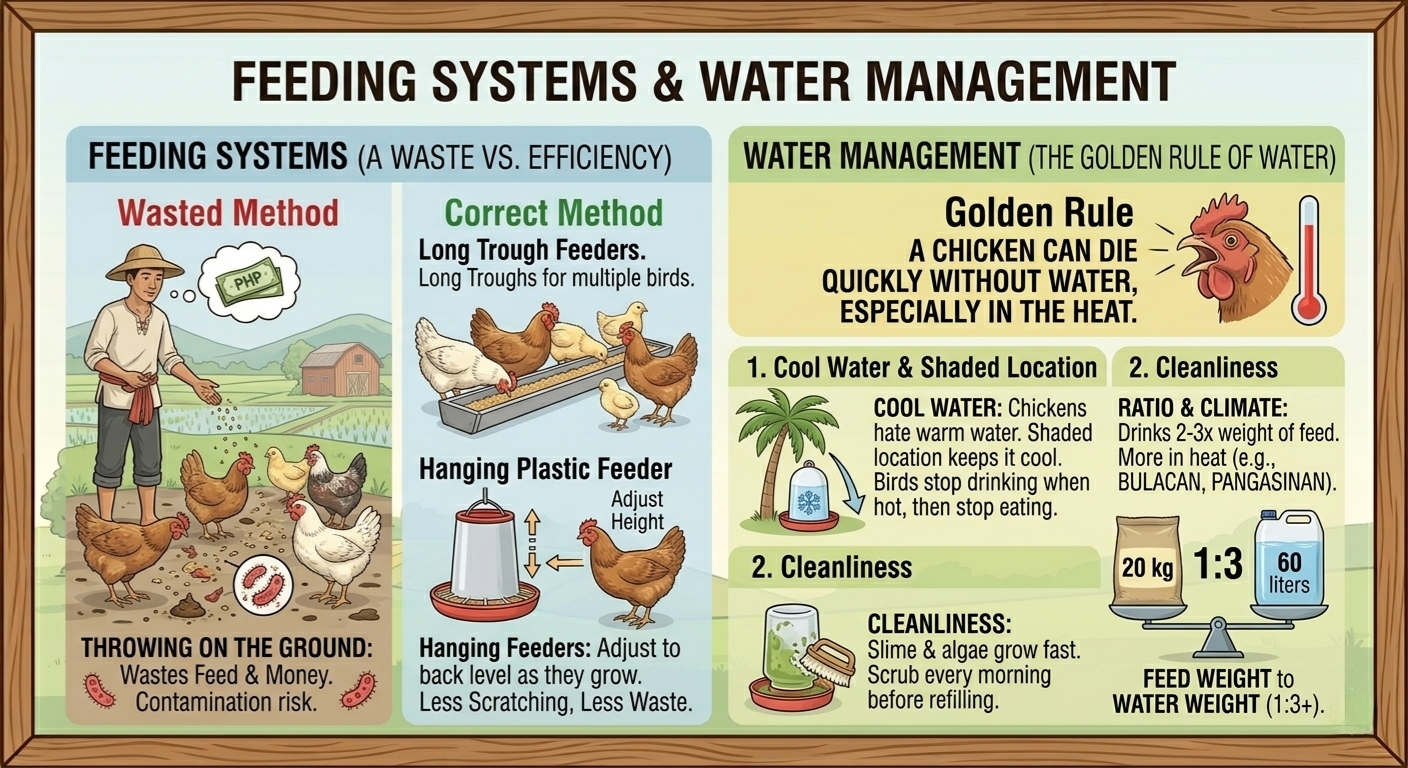
How you give the feed is just as important as what the feed is. In the Philippines, many farmers make the mistake of just throwing feed on the ground.
Use Proper Feeders
Throwing feed on the ground is a waste of money. The feed gets mixed with dirt, poop, and bacteria. Use long troughs or hanging plastic feeders. Hanging feeders are great because you can adjust the height as the chickens grow. If the feeder is at the level of the chicken’s back, they are less likely to scratch the food out onto the floor.
The Golden Rule of Water
A chicken can live for a few days without food, but it will die very quickly without water, especially in the Philippine heat.
Cool Water: Chickens hate warm water. If the waterer is sitting in the sun, the water gets hot, and the chickens stop drinking. If they stop drinking, they stop eating.
Cleanliness: Slime and algae grow fast in plastic waterers. Scrub them every single morning before refilling.
Ratio: Generally, a chicken drinks about 2 to 3 times the weight of the food they eat. On a hot day in Bulacan or Pangasinan, they might drink even more.
Home-Mixed Feeds and Local Alternatives

While commercial feeds are the most reliable, many Filipino farmers want to lower their costs by using local ingredients. This is a great idea, but you must do it carefully so the chickens don't lose their nutrition.
Common local additions include:
Yellow Corn: This is a great source of energy. It also makes the egg yolks a beautiful bright yellow, which customers love.
Rice Bran (Darak): A very common and cheap byproduct in the Philippines. It is good for energy but can be hard for very young chicks to digest if there is too much of it.
Copra Meal: A byproduct of coconut oil. It is high in protein but should only make up a small part of the diet (about 10%) because it can be hard on the chicken's stomach if they eat too much.
Kangkong and Madre de Agua: These are "green" feeds. They provide natural vitamins and keep the chickens' digestive systems moving. Many "Organic" or "Free Range" farmers use these to improve the flavor of the meat.
Managing Feed Costs and Storage
Feed usually accounts for 70% to 80% of the total cost of raising chickens. To make a profit, you must be a good manager of your supplies.
Buy in Bulk: Buying a 50kg sack is always cheaper than buying by the kilo. If you have more than 20 chickens, always buy by the bag.
Proper Storage: Mice, rats, and moisture are the enemies of feed. Store your bags in a cool, dry room. Never put the bags directly on the floor; use a wooden "pallet" or crate to let air circulate underneath. This prevents the bottom of the bag from getting moldy.
The "First In, First Out" Rule: Always use the oldest bag of feed first. Feed has vitamins that lose their strength over time, so you want to keep your stock fresh.
Common Feeding Mistakes to Avoid
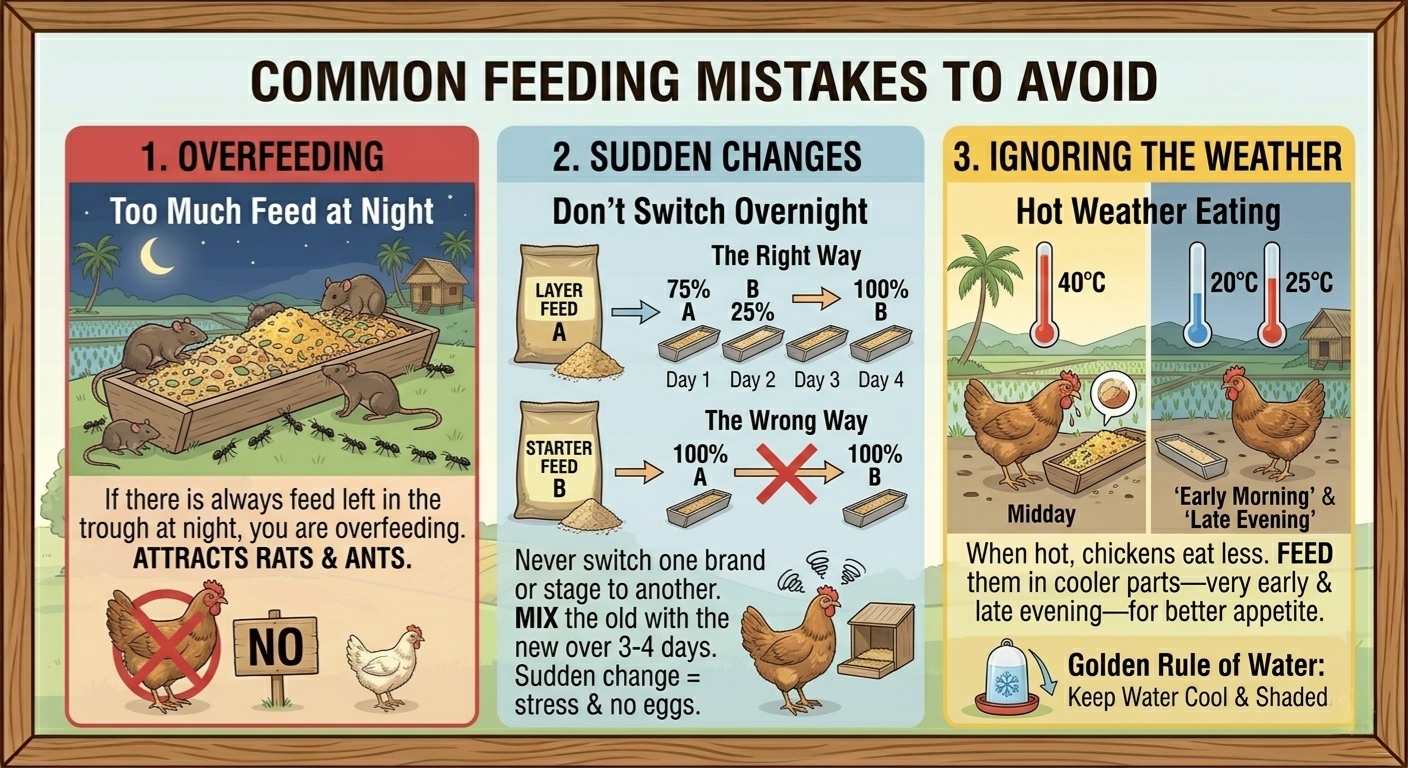
Overfeeding: If there is always feed left in the trough at night, you are overfeeding. This attracts rats and ants.
Sudden Changes: Never switch from one brand to another or one stage to another overnight. Mix the old feed with the new feed over 3 or 4 days. A sudden change can stress the chickens and make them stop laying eggs.
Ignoring the Weather: When it is very hot, chickens eat less. Try to feed them during the cooler parts of the day—very early in the morning and late in the evening—so they have the appetite to finish their meal.
Final Thoughts for the Filipino Farmer
Raising poultry is a journey of constant learning. By understanding the different feeds for chicken Philippines markets provide, you are taking the most important step toward a successful harvest. Remember that your chickens are living beings; they respond to the quality of care you give them.
Keep your feeders clean, your water fresh, and your feed dry. Whether you are using a big brand like B-Meg or Purina, or mixing your own with local ingredients, always prioritize the health of your birds.
At FarmyHub, we believe that every farmer deserves the best information to grow their business. By following this guide, you are not just feeding chickens you are building a future for your farm. Happy farming, and may your next harvest be your biggest one yet!
Registered agriculturist, higher education instructor, and hands-on farmer. I write practical farming and agribusiness guides based on my work in the field and in the classroom.