

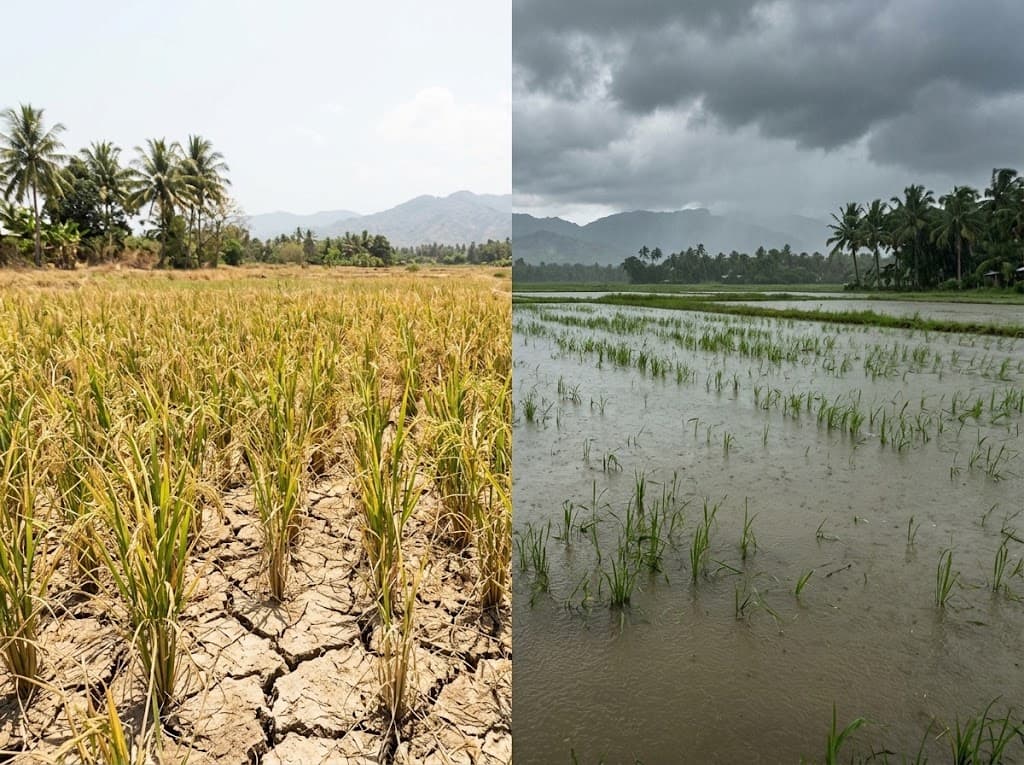
El Niño and La Niña in the Philippines (2026): 7 Ways They Affect Farming and Food Prices
El Niño and La Niña are the two sides of a natural climate pattern in the Pacific Ocean. El Niño usually brings less rain to the Philippines, and La Niña usually brings more. So is there El Niño in 2026 in the Philippines? Yes: as of October 2026, PAGASA says a strong to very strong El Niño is present and may last until the first half of 2027.
In farming, the weather decides almost everything. When it behaves normally, farmers can follow a predictable schedule for planting, fertilizing and harvesting. When it swings to extremes, even the most hardworking farmer can lose a season. This guide explains what El Niño and La Niña are, what PAGASA expects this year, the 7 ways El Niño affects farming, and what to plant, from drought-resistant crops to short-season vegetable seeds.
In this guide | Short answer |
|---|---|
The warm (El Niño) and cool (La Niña) phases of the Pacific, which change how much rain the Philippines gets. | |
Usually dry: less rain, dry spells and drought, though typhoons can still bring heavy rain. | |
Strong to very strong, and may peak before the end of 2026 (PAGASA, October 2026). | |
An episode usually lasts 9 to 12 months; this one may continue until the first half of 2027. | |
1997–98 and 2015–16 were among the strongest; 2023–24 cost farms ₱15.3 billion. | |
Water, crops, planting dates, pests, drying, animals and costs. | |
Save water, adjust planting dates, register in RSBSA and watch PAGASA. | |
Mung bean, peanut, sweet potato, cassava and drought-tolerant rice. | |
Repair your fields and get ready for La Niña rains. | |
Quick answers, plus one question in Tagalog. |
What Are El Niño and La Niña?
El Niño and La Niña are the warm and cool phases of a cycle in the Pacific Ocean that scientists call ENSO (El Niño–Southern Oscillation). Every few years, the ocean surface near the equator turns warmer or cooler than normal, and that changes where rain clouds form, including over the Philippines.
The names are Spanish. According to NOAA, El Niño means “the little boy”: South American fishermen called the warm water El Niño de Navidad because it usually peaks around December. La Niña means “the little girl”. The pair is sometimes searched as El Niño and El Niña, but the cool phase is called La Niña.
What Is El Niño in the Philippines?
Here in the Philippines, El Niño is our dry and hot phase. It happens when the surface waters of the Pacific warm up and rain clouds shift away from our islands. For Filipino farmers, it means longer dry spells, low water in irrigation dams, very hot middays and, in strong years, drought.
What Is La Niña?
La Niña is our wet phase. It happens when Pacific waters turn cooler than usual and more rain clouds form over the Philippines. It can bring months of heavy rain, stronger monsoon rains, overflowing rivers, floods and landslides.
Here is how the two compare on a farm:
Farm area | El Niño | La Niña |
|---|---|---|
Pacific Ocean | Warmer than normal | Cooler than normal |
Rain in the Philippines | Usually below normal | Usually above normal |
Irrigation and water | Canals dry up; dams run low | Canals overflow; floods wash mud and trash into pumps |
Land preparation | Soil is hard, dry and cracked, too tough to plow | Soil stays soaked, too soft and muddy for tractors |
Standing crops | Plants wilt; rice grains can come out empty | Plants drown, roots rot and crops fall flat into the mud |
Pests and plant diseases | Armyworms (harabas) and other insects multiply in the heat | Fungi and bacteria spread, causing leaf blight and stem rot |
Drying the harvest | Fast in the sun, but extreme heat can crack grains | Grain cannot dry outside; wet palay sprouts or molds |
Farm animals | Pigs and chickens suffer heat stress; grass dries up | Wet pens cause foot rot, coughs and sickness |
Bee farming | Flowers dry up with little nectar; hives overheat | Rain keeps bees inside; wet hives grow mold |
Farm expenses | More fuel or power to run water pumps | Replanting seeds, fungicides and machine dryers |
Spanish meaning | “The little boy” | “The little girl” |
Is El Niño Wet or Dry?
Is El Niño wet or dry? For the Philippines, it is usually dry. PAGASA says El Niño raises the chance of below-normal rain, dry spells and drought. But it is not dry everywhere all the time: tropical cyclones and other rain systems can still bring heavy rain during an El Niño, so keep preparing for storms too.
La Niña is usually wet. It brings above-normal rain, and with it a higher risk of floods and landslides, especially in low-lying fields and on slopes.
El Niño in the Philippines 2026: What PAGASA Says
As of October 2026, based on PAGASA El Niño Advisory No. 5 (issued 7 October 2026): “A strong to very strong El Niño is present in the Tropical Pacific. Forecasts predict that El Niño will continue until the first half of 2027 and may reach its peak before the end of 2026.”
What the advisory says about the past month and the weeks ahead:
September 2026: most of the country had below- to near-normal rain, and the Negros provinces had way below-normal rain. 7 provinces had meteorological drought, 3 had a dry spell and 30 had dry conditions.
October 2026 outlook: below-normal rain over most of Luzon, the Visayas and Caraga. Drought or dry spells are likely by the end of October in most of Bicol, Eastern Visayas, Surigao del Norte and the Dinagat Islands, with dry conditions in Abra, Kalinga, Isabela, Quezon, and most of MIMAROPA and Western Visayas.
You may also see “super El Niño 2026” in the news. That is a news word, not an official PAGASA category: PAGASA describes this event as “strong to very strong”.
The Department of Agriculture is preparing too. It is reviewing rainfall and water projections, and says farmers may need to shift to less water-intensive crops such as mung beans, adjust planting calendars and use more solar-powered irrigation.
PAGASA publishes a new El Niño advisory every month, and we update this section after each one. You can always check the latest status on PAGASA’s El Niño monitoring page.
When Is El Niño in the Philippines, and How Long Does It Last?
When is El Niño in the Philippines? There is no fixed year. According to NOAA, El Niño and La Niña come back every two to seven years on average, but not on a regular schedule, and an episode typically lasts nine to 12 months. Some last longer.
The current one has been followed by PAGASA since its first advisory on 9 June 2026. It may peak before the end of 2026 and, according to the latest advisory, continue until the first half of 2027. So, for now, the answer to when El Niño will end in the Philippines is the first half of 2027, but forecasts can change, so check each monthly advisory.
Which El Niño months in the Philippines are hardest on farms? The dry season, roughly December to May, is when rain is normally lowest in most of the country. When an El Niño peaks around the end of the year, the dry season that follows usually becomes even drier, so plan your water for the first months of the year.
Past El Niño Years in the Philippines
El Niño is not new. These are the years with El Niño that farmers still remember, with what official sources say about them:
Years | What official sources say | Source |
|---|---|---|
1997–1998 | One of the strongest El Niño events since 1950 | |
2015–2016 | One of the strongest El Niño events since 1950, and the first major one since 1997–98 | |
2023–2024 | Ended in June 2024. Farm damage reached ₱15.3 billion, affecting 333,195 farmers and fishers in 15 regions | |
2026–2027 | Strong to very strong, and may peak before the end of 2026 |
The 2023–2024 El Niño shows what a strong event can do. According to the Department of Agriculture’s final bulletin, reported by the Philippine Information Agency, 784,344 metric tons of crops were damaged on 270,855 hectares. Corn had the biggest losses (₱5.94 billion), followed by rice (₱5.93 billion) and high-value crops (₱3.27 billion).
7 Ways El Niño Affects Farming in the Philippines
So what is the effect of El Niño in the Philippines on a farm? These are the main effects of El Niño we see on Philippine fields, animals and farm budgets, and what La Niña does to the same farm when the rains return:
1. Water Shortages in Dams and Irrigation
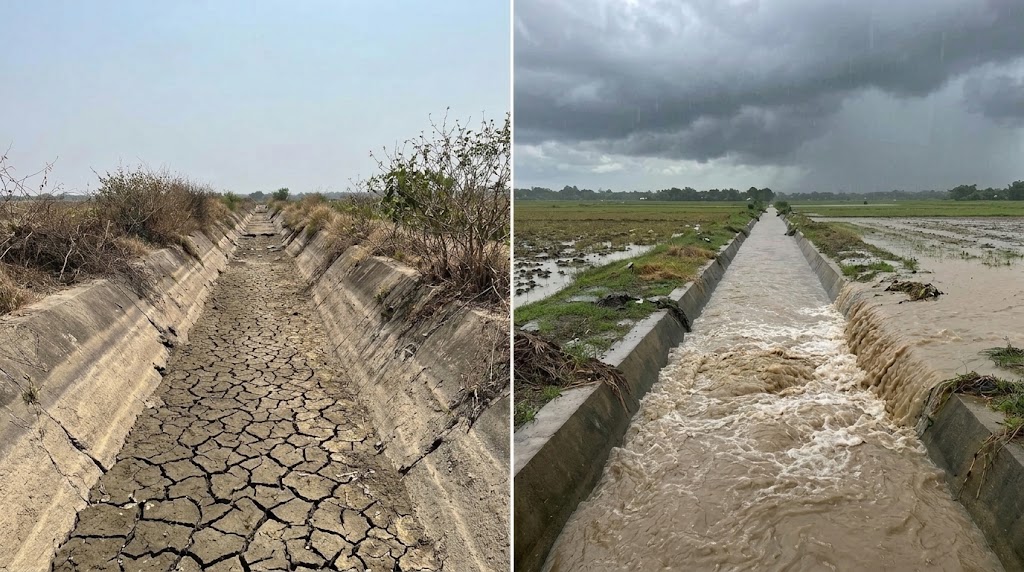
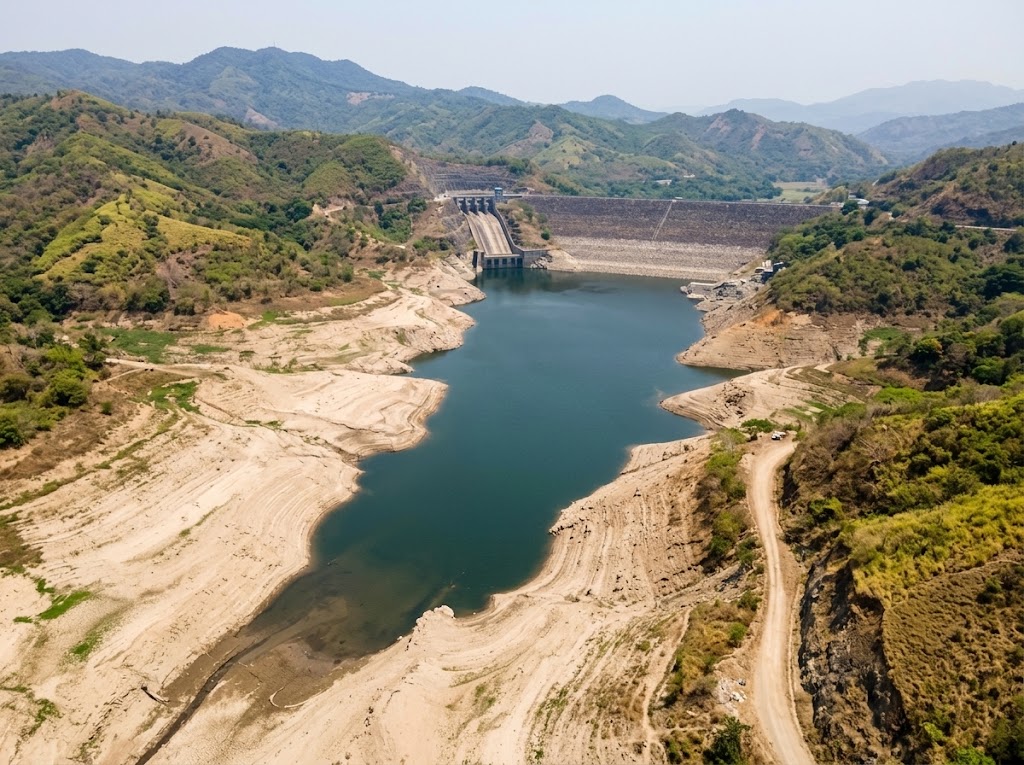
Under El Niño: major reservoirs such as Angat, Pantabangan and Magat can drop to low levels. Irrigation canals run dry, and farms at the tail end of the canal (dulo) get little or no water.
Under La Niña: canals overflow. Heavy runoff washes silt, gravel and trash into irrigation systems and clogs pumps and ditches.
2. Drought and Dry Soil
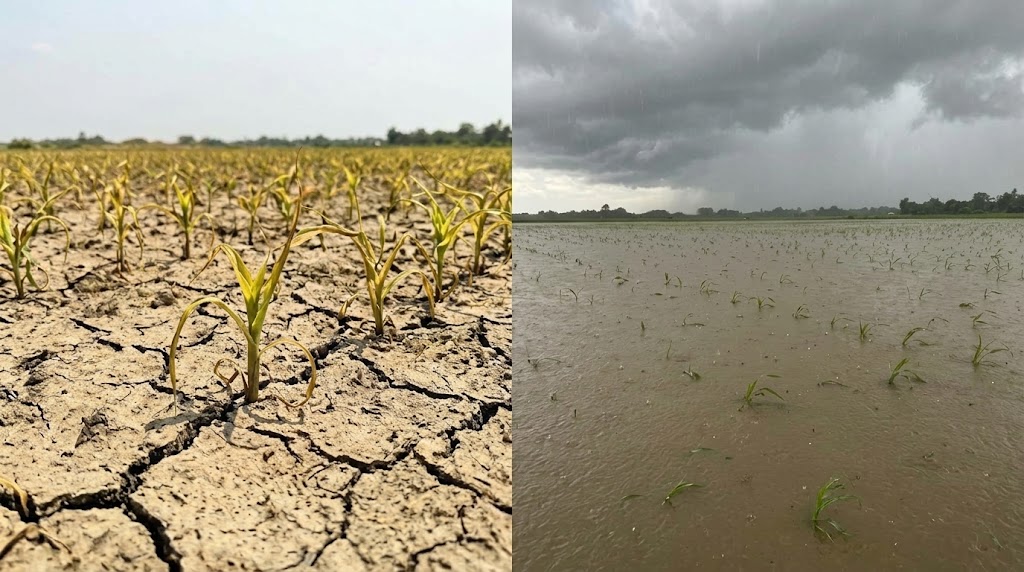
Under El Niño: strong midday heat scorches young rice shoots and tender vegetable seedlings such as sitaw, talong and kamatis. Without soil moisture, plants wilt and die.
Under La Niña: floodwater covers crops and suffocates their roots (root rot). Young seedlings drown, wash away or get buried under mud.
3. Disrupted Planting Calendars
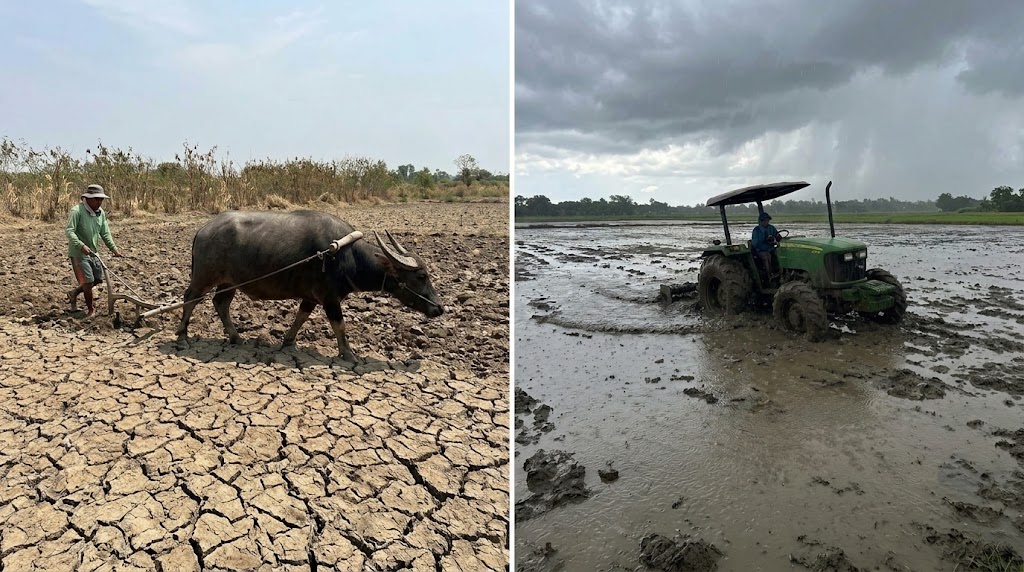
Under El Niño: farmers cannot plow and harrow (araro and suyod) because dry, hardened clay soil cannot be tilled until rain softens it.
Under La Niña: constant rain makes fields too soft and muddy for tractors or carabaos, and storms right before harvest can flatten mature rice into flooded paddies.
4. More Pests and Plant Diseases
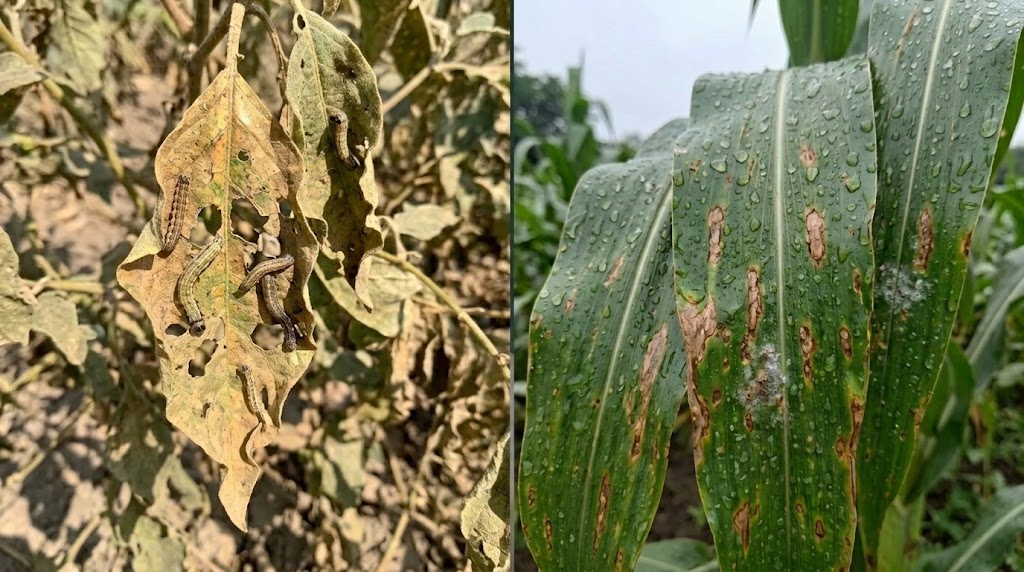
Under El Niño: heat speeds up insect breeding. Pests such as fall armyworm (harabas), stem borers, aphids and planthoppers multiply quickly.
Under La Niña: wet leaves and high humidity help fungi and bacteria spread, leading to bacterial leaf blight, rice blast and root rot.
5. Problems Drying the Harvest
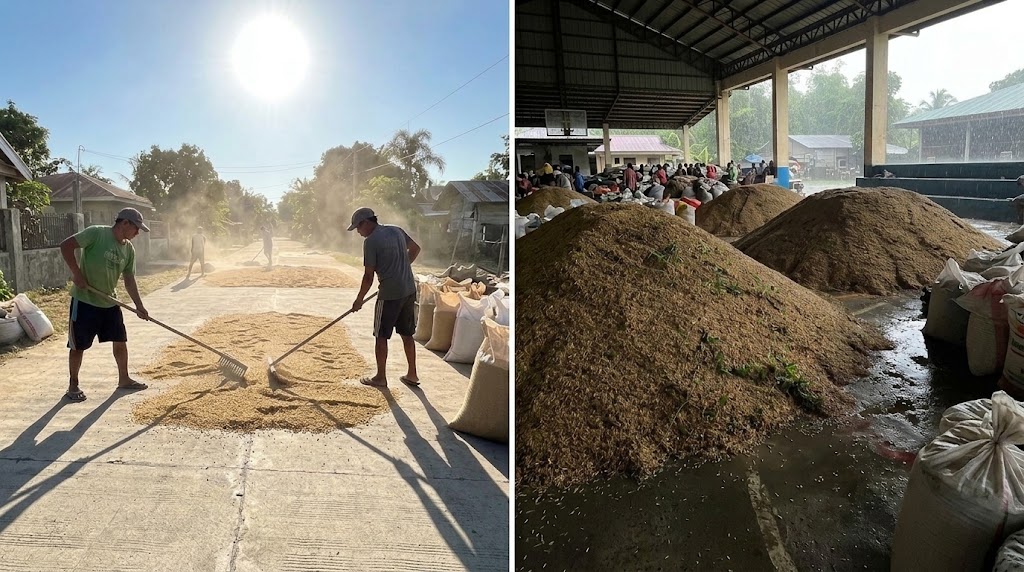
Under El Niño: sun-drying palay on concrete is fast, but extreme heat can crack the grains, which lowers milling quality and the selling price.
Under La Niña: palay cannot dry outside. Wet grain can sprout, turn sour or rot within a few days without a mechanical dryer.
6. Animals, Fishponds and Bees
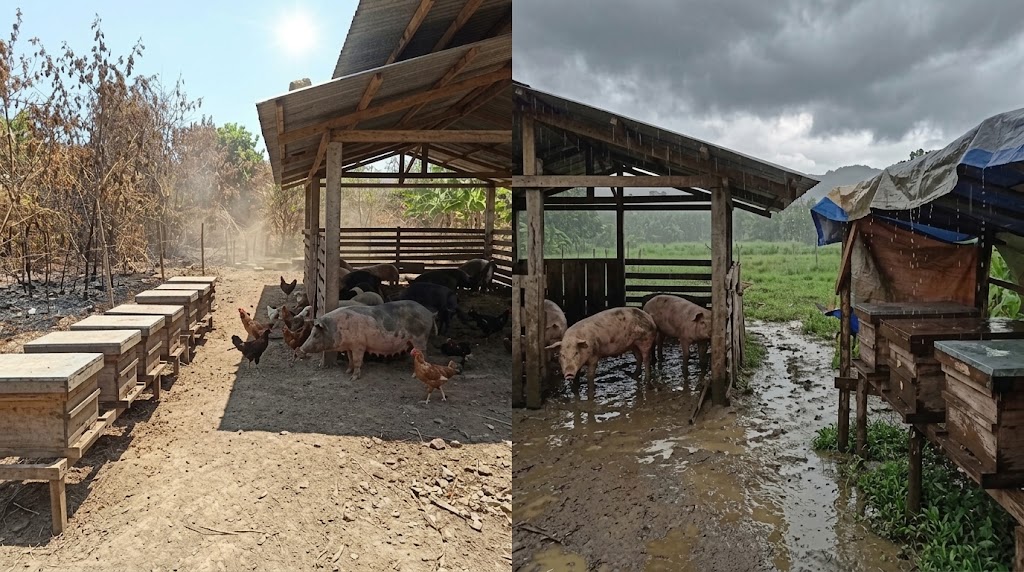
Under El Niño: pigs and poultry suffer heat stress, which lowers egg production and growth. Grass and drinking water for cattle and goats run short, so plan extra animal feed.
Fishponds: ponds lose water in the heat, and warm water holds less oxygen, so fish in aquaculture ponds can get stressed or die.
Bee farming: flowers dry up with little nectar, hives overheat, and bees may leave their boxes.
Under La Niña: muddy pens cause foot rot, coughs and other infections in cattle and pigs. Constant rain keeps honeybees from flying, and colonies can starve.
7. Higher Farm Costs and Food Prices
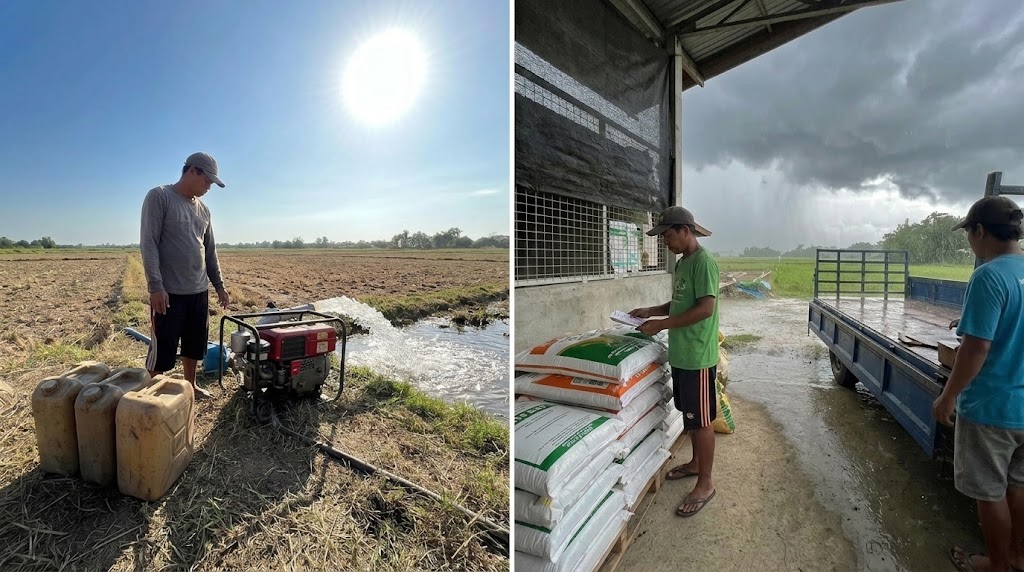
Under El Niño: farmers spend more on fuel or electricity to run deep-well water pumps.
Under La Niña: farmers pay for replacement seeds, fungicides and rented grain dryers.
Food prices: when harvests drop, market prices often rise. See the latest rice prices and vegetable prices in our monthly price report.
When cash runs out, many farmers borrow at high interest. If you are registered in the government’s RSBSA, you can qualify for low-interest emergency loans, farm assistance and free crop insurance from the PCIC after extreme weather. Our RSBSA registration guide explains the steps.
How to Prepare for El Niño: A Farmer’s Checklist
Knowing how to prepare for El Niño before the driest months saves crops and money. Use this checklist:
Save and store water: clean canals, repair small farm reservoirs and drums, and fix leaks before the dry months.
Water at the right time: water early in the morning or in the evening, when less is lost to the heat, and use water hoses or drip lines instead of flooding where you can.
Keep moisture in the soil: mulch with rice straw or dry leaves, and add compost or organic fertilizer so the soil holds water longer.
Shift your planting calendar: plant earlier, or choose short-season crops that are harvested before the worst dry spell. Our guide to fast-growing crops lists options.
Save water in rice fields: try Alternate Wetting and Drying (AWD), a water-saving method promoted by PhilRice and IRRI, where the field is allowed to dry a little between irrigations.
Register and insure: visit your Municipal Agriculture Office (MAO) to register or update your RSBSA record, so you can qualify for PCIC crop insurance and emergency help.
Protect your animals: give shade, clean water and good airflow, and store feed before prices rise.
Watch the advisories: check PAGASA’s monthly El Niño advisory and its farm weather outlooks, and adjust your plans.
Work with your neighbors: talk to nearby farmers and co-ops about buying drought-tolerant seeds together or sharing dryers.
Drought-Resistant Crops in the Philippines: What to Plant During El Niño
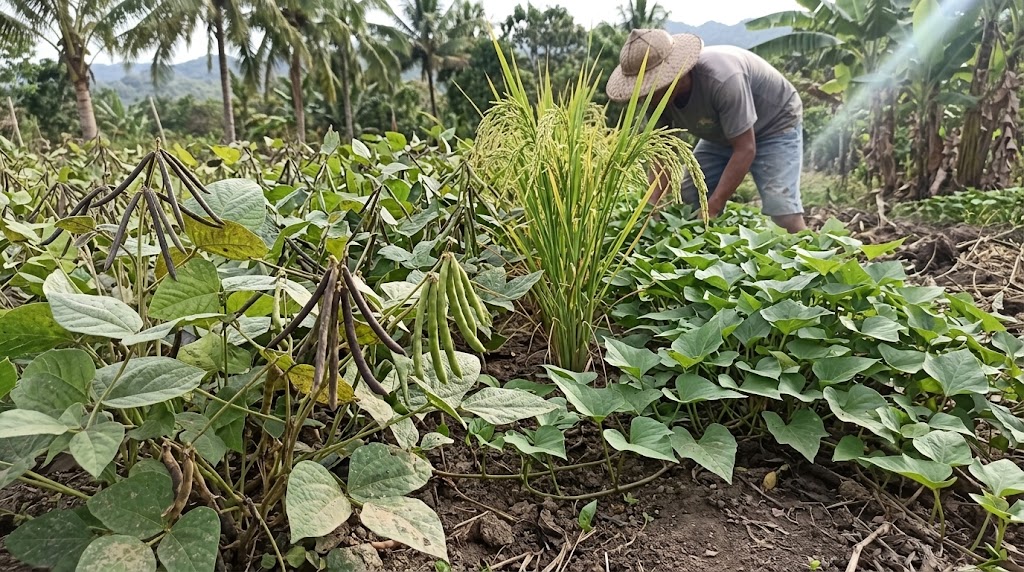
What to plant during El Niño? When water is short, crops that need less of it protect you from losing a whole season. The Department of Agriculture encourages farmers who cannot plant for lack of water to shift to drought-resistant crops such as mung bean, peanut, cassava and sweet potato, according to a DA advisory reported by PIA.
Crop | Why it handles dry weather | About how long to harvest | On FarmyHub |
|---|---|---|---|
Mung bean (monggo) | A short-season legume that needs little water | About 60–70 days | |
Peanut (mani) | Grows well in light, well-drained soil with little rain | About 3–4 months | |
Sweet potato (kamote) | The vines cover the soil and keep it moist; planted from cuttings | About 3–4 months | |
Cassava (kamoteng kahoy) | Survives long dry spells once it is established | About 8–12 months | |
Drought-tolerant rice | PhilRice varieties bred for rainfed fields | Depends on the variety |
For rice, PhilRice has drought-tolerant varieties for rainfed areas. See our guide to rice seed varieties, and ask your local agriculture office which one suits your area.
What to Do After El Niño (and When La Niña Follows)
Knowing what to do after El Niño matters just as much, because El Niño and La Niña often follow each other. Once the rains return:
Repair cracked dikes, canals and small farm reservoirs before the heavy rain comes.
Flush out salt that built up in dry fields with the first good rains, and rebuild the soil with compost or organic fertilizer.
Replant with healthy seed, and keep part of your field in short-season crops until rainfall is back to normal.
Clean your drainage ditches in case La Niña brings heavy rain.
If La Niña Follows
Flood-tolerant rice: PhilRice also has submergence-tolerant rice varieties for flood-prone fields. Ask your agriculture office which one fits your area.
Field drainage: deepen the ditches around your field and clear drainage channels before the peak monsoon months.
Secure drying: reserve a slot early at a DA or cooperative mechanical dryer, so your grain does not spoil in continuous rain.
Frequently Asked Questions (FAQ)
Is El Niño wet or dry?
Usually dry for the Philippines: below-normal rain, dry spells and drought. Typhoons can still bring heavy rain. La Niña is the wet phase, with more rain and flooding.
Is there El Niño in 2026 in the Philippines?
Yes. As of October 2026, PAGASA says a strong to very strong El Niño is present and may peak before the end of 2026 (El Niño Advisory No. 5, issued 7 October 2026).
When will El Niño end in the Philippines?
According to PAGASA’s latest advisory, El Niño is expected to continue until the first half of 2027. Check the monthly advisory, because forecasts can change.
How long does El Niño last?
According to NOAA, an El Niño episode typically lasts 9 to 12 months, and sometimes longer.
What does El Niño mean?
It is Spanish for “the little boy”. La Niña means “the little girl”.
What should I plant during El Niño?
Crops that need less water, such as mung bean (monggo), peanut, sweet potato (kamote) and cassava, and PhilRice’s drought-tolerant rice varieties for rainfed fields.
How can farmers get help after drought or flood damage?
Farmers registered in the RSBSA (Registry System for Basic Sectors in Agriculture) can get free crop insurance from the Philippine Crop Insurance Corporation (PCIC) and claim for damaged crops. See our RSBSA registration guide.
Ano ang epekto ng El Niño sa mga magsasaka?
Kapag may El Niño, mas kaunti ang ulan, kaya natutuyo ang patubig, nalalanta ang mga pananim at tumataas ang gastos sa pagpapatubig. Para maghanda, mag-ipon ng tubig, magtanim ng mga pananim na hindi gaanong nangangailangan ng tubig gaya ng monggo, mani, kamote at kamoteng kahoy, at magparehistro sa RSBSA.
Start Selling on FarmyHub
A hard season is also a good time to plan the business side of your farm. For ideas on growing your income, see our guide to agribusiness in the Philippines, and check current market prices in our monthly Price Report.
FarmyHub connects Filipino farmers with buyers, restaurants, and market vendors across the country. There are two ways to start:
List your products yourself, for free. Create a free account in seconds with your Google or Facebook account, then post your products in a few minutes. Once approved, your listing is visible to buyers, who can message or call you directly.
🌱 List your products for freeBecome a FarmyHub supplier. Tell us about your farm, your products, and how much you can supply. Our team will contact you to learn about your business, and when a bulk buyer is looking for what you grow or raise, we can recommend you.
🤝 Become a supplierPrefer using your phone? Download the free FarmyHub app to post listings and reply to buyers on the go.
📱 Get the app on Google PlayRegistered agriculturist, higher education instructor, and hands-on farmer. I write practical farming and agribusiness guides based on my work in the field and in the classroom.