



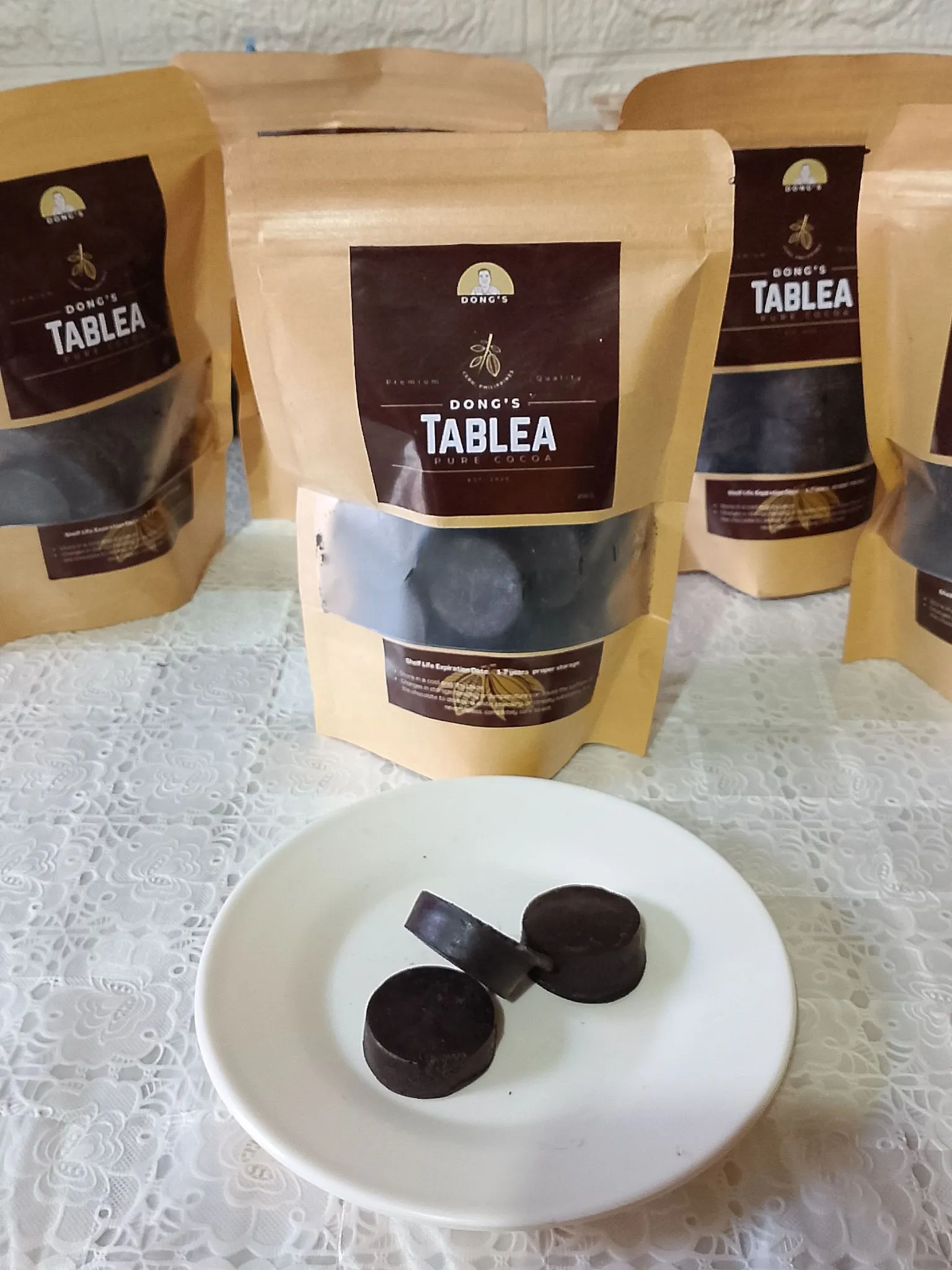


Tablea is roasted cacao, ground and pressed into tablets — nothing added, no sugar, just the bean. It is what Filipino households have used for generations to make tsokolate in the morning, and what Visayan kitchens call sikwati. This section brings together tablea listings from Filipino makers so you can compare price per kilo, form and origin before contacting a seller.
Tsokolate or sikwati — melt the tablets in water or milk and whisk until frothy. A batirol gives the thick, traditional version; more liquid makes the lighter everyday cup.
Champorado — the base for chocolate rice porridge, cooked with malagkit rice and usually eaten with tuyo.
Baking and desserts — grated or melted into cakes, brownies, cookies and ice cream, giving a darker, less sweet flavour than commercial chocolate.
Cooking — a small amount deepens savoury dishes, and some cooks use it in adobo or mole-style sauces.
Makers form tablea differently. Traditional discs are the familiar round tablets, portioned roughly one per cup. Cubes and blocks are increasingly common — easier to weigh out and better suited to baking. Some sellers grind to order rather than holding stock, so ask about lead time before planning around a delivery.
Most tablea listed here is pure cacao with no sugar added, which is why it tastes bitter on its own and why you sweeten the drink rather than the tablet. Some makers do sell a sweetened blend — worth confirming which you are buying.
Tablea is priced per kilo, and the range is wide. It moves with the price of cacao beans, with whether the maker ferments their own crop, and with whether the tablea is pure or blended with sugar. Small-batch pure tablea costs more than a commercial sweetened one, and single-origin tablea from the farm that grew the beans costs more again. Prices here are set by each seller, so compare current listings and confirm pure or sweetened before comparing two makers.
Most Philippine cacao comes out of the Davao Region, and much of the country's tablea is made there or from Davao beans. Batangas has its own long tablea tradition, and small producers work across the Visayas and the rest of Mindanao — often the same families who grow and ferment the beans. Origin is worth asking about: tablea made by the farm that grew the cacao is a single-origin product, and tastes like it.
Households making tsokolate and champorado at home
Cafés and restaurants putting local hot chocolate on the menu
Bakeries and dessert shops using it in place of imported chocolate
Pasalubong sellers and gift shops
Resellers buying by the kilo to repack
FarmyHub is the marketplace, not the maker. We do not roast, grind or mould tablea ourselves — every listing is posted by the producer, with their own price, quantity and lead time. Browse what is posted, compare per-kilo prices, then message the seller directly to agree quantity, pickup or delivery. For bulk orders, ask about sugar content, tablet size and shelf life. Several makers work on preorder, so check processing times before committing to a date.
For raw beans to ferment or grind yourself, see Cacao Beans and Pods. Browse more under Processed Farm Products.
Roasted cacao beans, ground and formed into tablets, discs or cubes. Traditional tablea is pure cacao with nothing added, which is why it is bitter on its own.
The same drink — tsokolate is the Tagalog name, sikwati the Visayan one.
No. Tablea keeps the cocoa butter in; powder has most of it pressed out. Tablea melts into a richer, heavier drink.
It varies by maker, by whether it is pure or sweetened, and by batch size. Compare the current listings rather than working from a fixed figure.
Stored cool, dry and airtight it keeps for months. Ask the maker, since shelf life depends on how it was dried and whether anything was added.

