



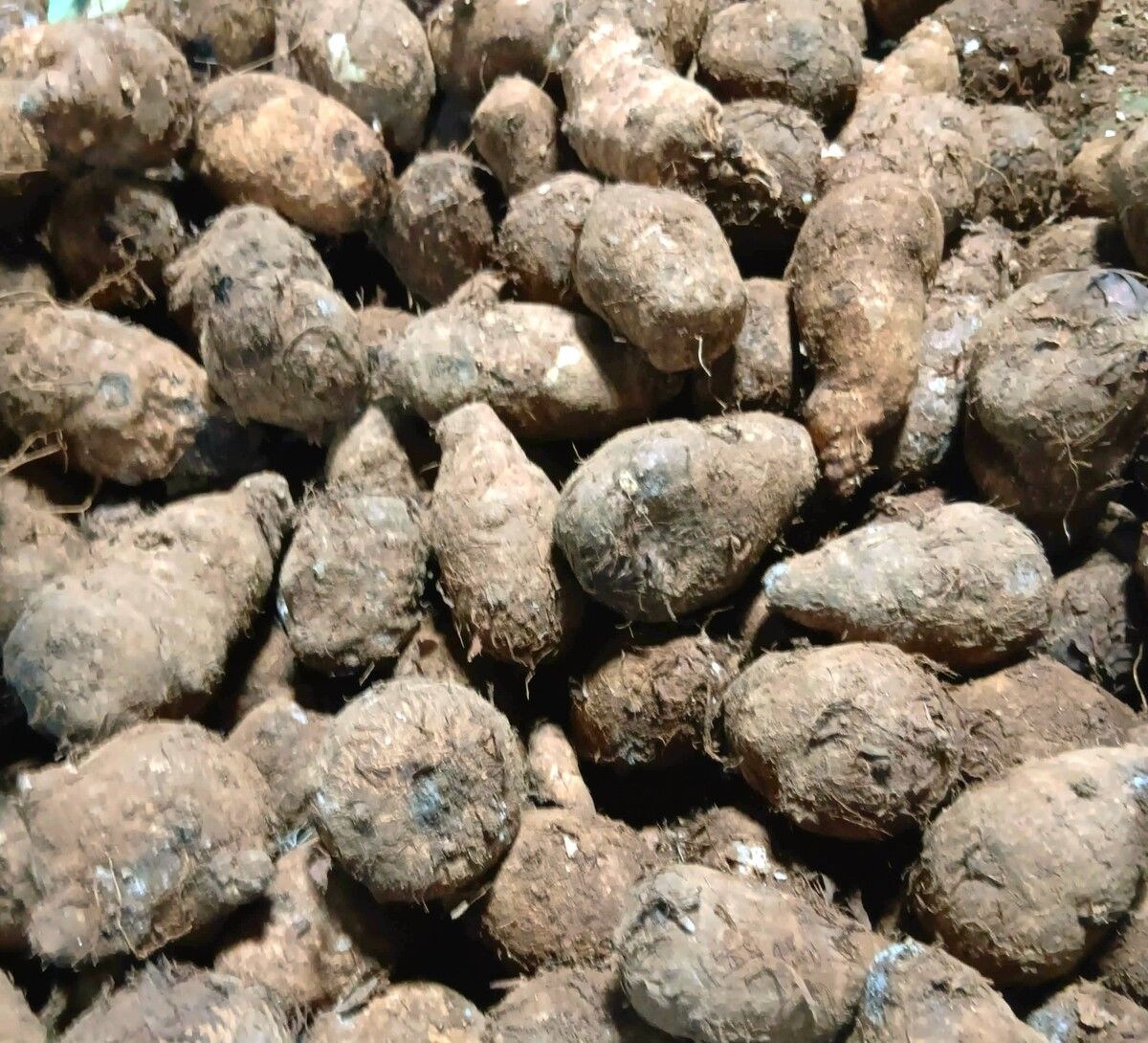
Taro is the root crop that Filipinos call gabi in Tagalog and lutya in Bisaya. On this page, local growers list their taro harvest with the price per kilo and the minimum order, and you message the seller yourself.
Gabi is an important ingredient in traditional Filipino kitchens. It makes pork or shrimp sinigang thick and creamy, it is cooked in coconut milk as ginataang gabi, and some boil it for breakfast or turn it into sweet native desserts. The leaves (dahon ng gabi) are the ones used for laing.
As of October 2026, the two taro listings on FarmyHub both ask ₱50 per kilo. Both sellers are in Misamis Oriental and sell in bulk:
Location | Price per kilo | Minimum order |
|---|---|---|
₱50 | 50 kg | |
₱50 | 80 kg |
At ₱50 per kilo, the smallest order costs ₱2,500 in Claveria (50 kg) and ₱4,000 in Cagayan de Oro (80 kg). Each seller sets the price and it can change, so open the listing or message the seller for today’s price.
Language | Name |
|---|---|
English | Taro, taro root |
Tagalog | Gabi |
Bisaya (Cebuano) | Lutya. Gabi is also used |
Scientific name | Colocasia esculenta |
Parts that are eaten | The root (corm), the leaves (dahon ng gabi) and the stalks, always cooked |
So lutya in English is taro, and lutya in Tagalog is gabi.
In everyday use, yes. Lutya and gabi are two names for taro (Colocasia esculenta): lutya is common in Bisaya-speaking areas, especially in Mindanao, and gabi is the Tagalog name used in most markets. The two sellers on this page are from Misamis Oriental and list their harvest as lutya or taro.
Some people use lutya for one local kind and gabi for another, and this changes from province to province. If the kind matters for your recipe or your customers, ask the seller for a photo of the roots before you order.
Different kinds of buyers look for this root crop on our site. Regular households want small amounts to complete their home-cooked family dinners. Meanwhile, restaurant owners, catering businesses, and market vendors look for larger, steady supplies to use in their daily menus or to resell in local neighborhoods.
Lutya in English is taro. Lutya is the Bisaya name of the root crop, and its scientific name is Colocasia esculenta.
Lutya in Tagalog is gabi. It is the same root crop that is used to thicken sinigang.
Gabi in English is taro, also called taro root. Gabi is a root crop and a vegetable: the root, the leaves and the stalks are all cooked and eaten. In Tagalog, gabi also means night; on this page gabi is always the vegetable.
Taro in Tagalog is gabi. In Bisaya it is called lutya. All three names mean the same root crop, Colocasia esculenta.
Yes. Gabi is the Tagalog name for taro. When Filipinos say gabi for sinigang or ginataang gabi, they mean taro root, and the leaves (dahon ng gabi) come from the same plant.
The scientific name of taro, gabi and lutya is Colocasia esculenta. It belongs to the arum family (Araceae).
No. Taro (gabi) and ube are different plants. Taro is Colocasia esculenta and has white or pale flesh, sometimes with purple specks. Ube is purple yam (Dioscorea alata), has deep purple flesh and is used mostly for desserts.
Raw gabi has tiny needle-shaped crystals of calcium oxalate that can make the skin, mouth and throat itch. Cooking it well takes the itch away, so gabi is always cooked before eating.
The current listings sell the root. If you need fresh or dried gabi leaves (dahon ng gabi) for laing, message the sellers and ask if they can supply them.
Sa FarmyHub, ₱50 kada kilo ang gabi (lutya) sa dalawang listing mula sa Misamis Oriental ngayong Oktubre 2026. Maramihan ang bentahan: 50 kilo ang pinakamababang order. Nagbabago ang presyo, kaya i-message ang seller para sa pinakabagong presyo.
You buy straight from the source here because FarmyHub is a free community notice board, not a retail shop or shipping firm. Local growers and traders run their own small businesses, pick their own prices, and handle their own shipping. When you find what you want, tap the message button to start a chat with the seller, send payment, and plan delivery together.
Looking for other root crops? See Sweet Potato (Camote) and Cassava on FarmyHub.
Do you grow gabi or lutya? List your harvest on FarmyHub for free and reach buyers across the Philippines.


