



Looking for fresh seaweed? Here you’ll find guso and other edible seaweed from local sellers in the Philippines. Compare the listings, check the price per kilo and message the seller directly.
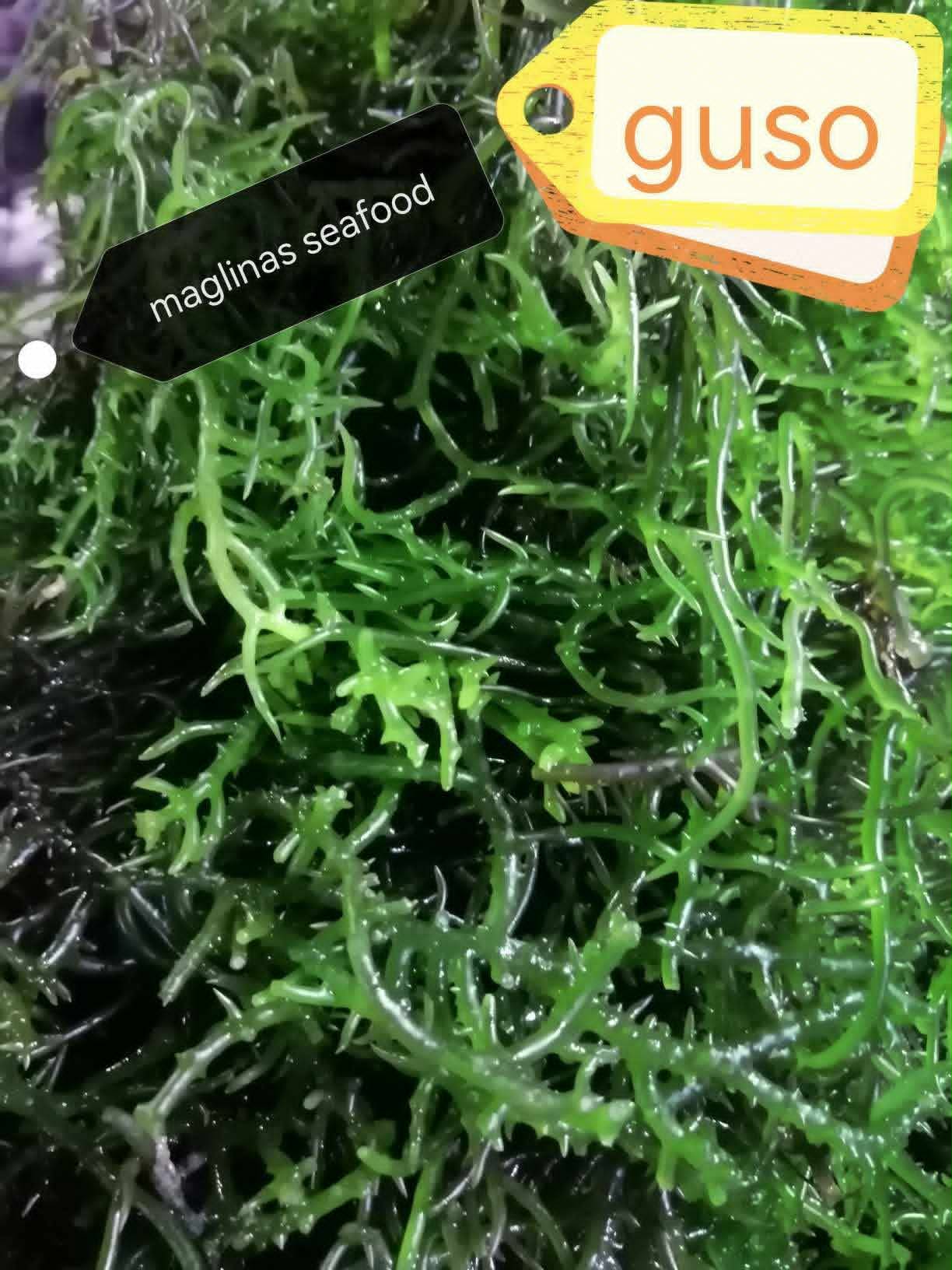
Seaweed in Tagalog is damong-dagat or halamang-dagat. In the market, though, each kind goes by its own name. Guso is the crunchy, branching seaweed from the Visayas and Mindanao, known in English as eucheuma. Lato is sea grapes. Gulaman-dagat is the red seaweed that agar comes from.
These are the edible seaweeds you’ll see most often in Philippine markets:
Local name | English name | How to tell it | Often used for |
|---|---|---|---|
Guso | Eucheuma seaweed | Thick, crunchy branches, green to brown | Salad with vinegar, onion and tomato |
Lato (ar-arosep) | Sea grapes | Tiny green beads on a stem, like small grapes | Eaten fresh with vinegar (ensaladang lato) |
Gulaman-dagat | Gracilaria (red seaweed) | Thin, wiry, reddish-brown strands | Salad, and the source of agar (gulaman) |
Gamet | Laver, the nori family | Thin dark sheets, usually dried, from the Ilocos coast | Soups and omelettes |
Pokpoklo | Codium (green sponge seaweed) | Dark green, soft, velvety branches | Salad with tomato, mostly in the Ilocos region |
Lato has its own page: see sea grapes (lato). Names differ by region, so ask the seller which kind the listing is.
As of October 2026, this is the fresh seaweed listed on FarmyHub and the price per kilo:
Listing | Listed price per kilo | Minimum order | Seller’s city |
|---|---|---|---|
Guso (seaweed) | ₱140 | 1 kilo | Tondo, Manila |
Lato (sea grapes), big | ₱150 | 1 kilo | Tondo, Manila |
Fresh seaweed does not keep long, so message the seller for today’s price and ask when it was harvested before you order.
Look: firm, glossy and brightly coloured. Avoid seaweed that is slimy, pale or falling apart.
Smell: clean, like the sea, never sour.
Clean: rinse it quickly in clean water just before serving to wash off sand. Don’t soak it for long, because it turns soft.
Store: keep it cool and covered, and eat it within a day or two. Lato shrivels in the refrigerator, so keep it at room temperature.
Serve: most fresh seaweed is eaten as a salad with vinegar or calamansi, onion and tomato.
Ask the seller when the seaweed was harvested and how it will be packed.
FarmyHub is a marketplace, not a seafood stall. We don’t harvest, pack or deliver the seaweed. Each seller manages their own listing, price and stock, so message the seller through the listing to confirm the kind, the price and the delivery.
Also browse sea grapes (lato), oysters (talaba), mussels (tahong), clams (halaan), dried fish and all fresh seafood for sale. Looking for a regular supplier? See our list of fresh fish and seafood suppliers in the Philippines.
Guso is eucheuma seaweed in English. It is a crunchy, branching seaweed farmed in the Visayas and Mindanao, and it is also a main source of carrageenan.
Yes. Gulaman, or agar, is made from red seaweed such as gracilaria, which is boiled and dried into bars or powder.
As of October 2026, guso is listed on FarmyHub at ₱140 per kilo and big lato at ₱150 per kilo, both in Tondo, Manila. Prices change with the harvest, so confirm with the seller.
Check the seller’s city on each listing. Right now fresh seaweed is listed from Tondo, Manila. For bigger or regular orders, message the seller or send a bulk order request.
Sa FarmyHub, ₱140 kada kilo ang guso at ₱150 kada kilo ang malalaking lato sa Tondo, Manila ngayong Oktubre 2026. Nagbabago ang presyo depende sa ani, kaya i-message ang seller para sa presyo ngayon.


