



Looking for fresh mussels? Here you’ll find tahong from local seafood sellers in the Philippines. Compare the listings, check the price per kilo and message the seller directly.
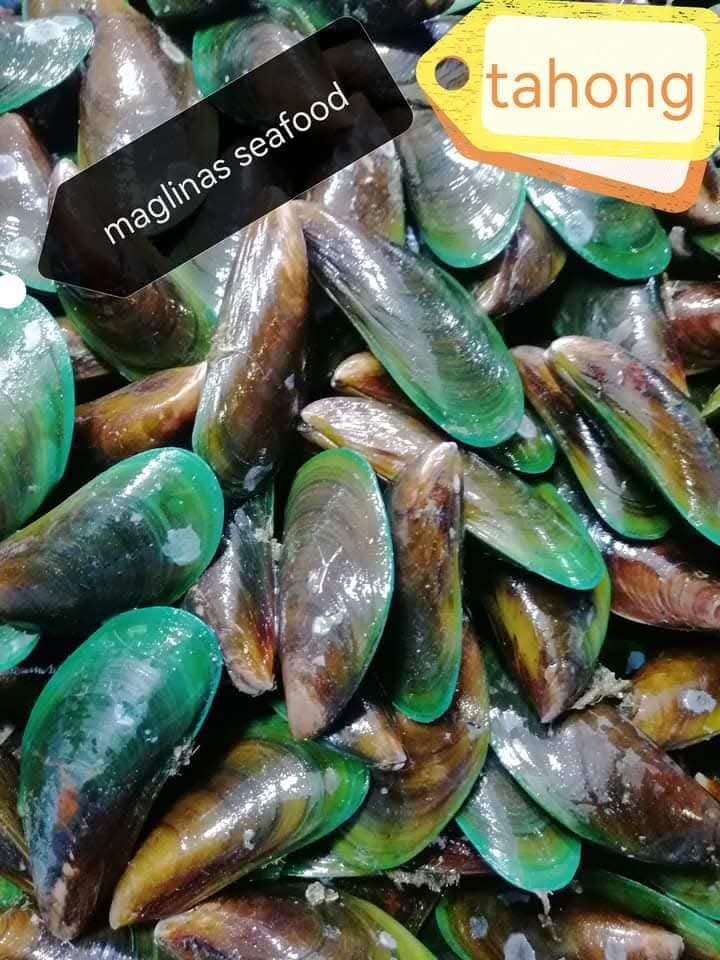
Tahong is mussel in English. The kind sold in most Philippine markets is the Asian green mussel, with a dark shell that turns green toward the edge. In the Visayas, mussels are also called amahong. Like talaba (oysters) and halaan (clams), tahong is a shellfish with two shells, but each one is a different animal.
Mussels, oysters and clams are often sold side by side. This is how to tell them apart:
Shellfish | English name | Shell | How it’s usually cooked |
|---|---|---|---|
Tahong | Mussel | Long and smooth, dark green to black | Steamed, baked, or in soup with ginger |
Talaba | Oyster | Rough, grey and uneven | Steamed, grilled or baked |
Halaan | Clam | Small and rounded, pale with markings | Soup with ginger, or with pasta |
Browse oysters (talaba) and clams (halaan) in their own categories.
Tahong prices depend on the size, the season and where the mussels were harvested. As of October 2026, this is what sellers list on FarmyHub:
Listing | Listed price per kilo | Minimum order | Seller’s city |
|---|---|---|---|
Big tahong (mussels) | ₱160 | 1 kilo | Tondo, Manila |
The listing is for fresh mussels in the shell, so part of each kilo is shell. Message the seller for today’s price and the size before you order.
Choose: the shells should be closed, or close when you tap them. Throw away mussels with broken shells or shells that stay open.
Smell: clean, like the sea, never sour or like ammonia.
Clean: scrub the shells under running water and pull off the beard, the hairy threads on the side of the shell, just before cooking.
Cook: steam or boil until the shells open, which takes only a few minutes. Throw away any that stay closed after cooking.
Store: keep them cold and covered with a damp cloth, not sealed in a plastic bag or soaked in tap water, and cook them within a day. To keep them longer, cook them first and freeze the meat.
Ask the seller when the mussels were harvested and from where.
FarmyHub is a marketplace, not a seafood stall. We don’t harvest, pack or deliver the mussels. Each seller manages their own listing, price and stock, so message the seller through the listing to confirm the size, the price and the delivery.
Also browse scallops, shrimp (hipon), crabs (alimango, alimasag) and all fresh seafood for sale. For amahong in jar and other seafood condiments, see condiments. Looking for a regular supplier? See our list of fresh fish and seafood suppliers in the Philippines.
Mussels are tahong in Tagalog. In the Visayas they are also called amahong.
As of October 2026, big tahong is listed on FarmyHub at ₱160 per kilo in Tondo, Manila. Prices change with the size, the season and the harvest area, so confirm with the seller.
It depends on where the mussels were harvested. The Bureau of Fisheries and Aquatic Resources (BFAR) publishes shellfish bulletins that list the areas where shellfish are not safe to eat because of red tide. Ask the seller where the tahong came from and check the latest BFAR bulletin before you buy.
Check the seller’s city on each listing. Right now tahong is listed from Tondo, Manila. For the big fish ports and seafood markets, see our list of fish ports and seafood markets in the Philippines.
The listing here shows a 1 kilo minimum and 10 kilos available. For bigger or regular orders, message the seller or send a bulk order request.
Sa FarmyHub, ₱160 kada kilo ang malalaking tahong sa Tondo, Manila ngayong Oktubre 2026. Nagbabago ang presyo depende sa laki, panahon at pinagkunan, kaya i-message ang seller para sa presyo ngayon.


