

Top 8 Types of Mango in the Philippines: Carabao, Indian, Pico, Apple Mango & More
Mangga is everywhere in the Philippines, from palengke stalls in Bulacan to farms in Guimaras and Mindanao, but not every mango is the same. This guide explains the 8 types of mango in the Philippines you are most likely to meet: the sweet carabao and its famous Guimaras strain, the crisp Indian mango, the apple mango, the long pico and kabayo, and two native wild mangoes, pahutan and mangga wani. For each one you get the Tagalog and English names, how it looks and tastes, how Filipinos eat it, and where to find it on FarmyHub.
The short answer: carabao is the sweetest and most common Philippine mango, about 80% of the country's harvest. Indian mango is the one Filipinos eat green with bagoong. Pico is a long, flat mango that is sweet when ripe. Pahutan and wani are separate mango species, with smaller or stronger-smelling fruit.
In this guide | Short answer |
|---|---|
All 8 types side by side: other names, look, taste and best use. | |
Carabao, Guimaras, Indian, apple mango, pico, kabayo, pahutan and mangga wani. | |
Mangga, hilaw, manibalang, hinog and the local name of each type. | |
How to pick a ripe mango, and the best one for bagoong. | |
Indian or green carabao, and other ways Filipinos eat mango. | |
Mostly March to June, with mangoes in other months thanks to a Filipino discovery. | |
Ilocos, Zambales, Guimaras, Cebu and Mindanao. | |
National fruit, mango capital, the sweetest mango and more. |
Mango Types at a Glance
Tap a name to jump to that mango:
Type | Other names | Look | Taste | Best for | On FarmyHub |
|---|---|---|---|---|---|
Mangga kalabaw, Manila mango | Kidney-shaped; bright yellow when ripe | Very sweet when ripe; very sour when green | Eating ripe, shakes, mango float | ||
Guimaras Super, Galila | Like carabao | Very sweet | Eating ripe, pasalubong | ||
Katchamita, kachamita | Plump and roundish; green with a yellow blush | Crisp and mildly sweet when green | Green with bagoong | ||
Often Irwin | Round, with a red or orange blush | Sweet, little fiber | Eating ripe | Not listed yet | |
Piko, padero | Long and flat | Sweet; orange flesh | Eating ripe, burong mangga | Not listed yet | |
Cabayo | Long and rounded | Like pico | Eating ripe | Not listed yet | |
Paho, pajo | Small; pale yellow when ripe | Very sweet but fibrous | Eating ripe; green with rock salt | Not listed yet | |
Bayuno, baluno | Large and oval; thin green-brown skin | Soft, strong-smelling, sweet-sour | Eating ripe | Not listed yet |
 |
1. Carabao Mango (Mangga Kalabaw)
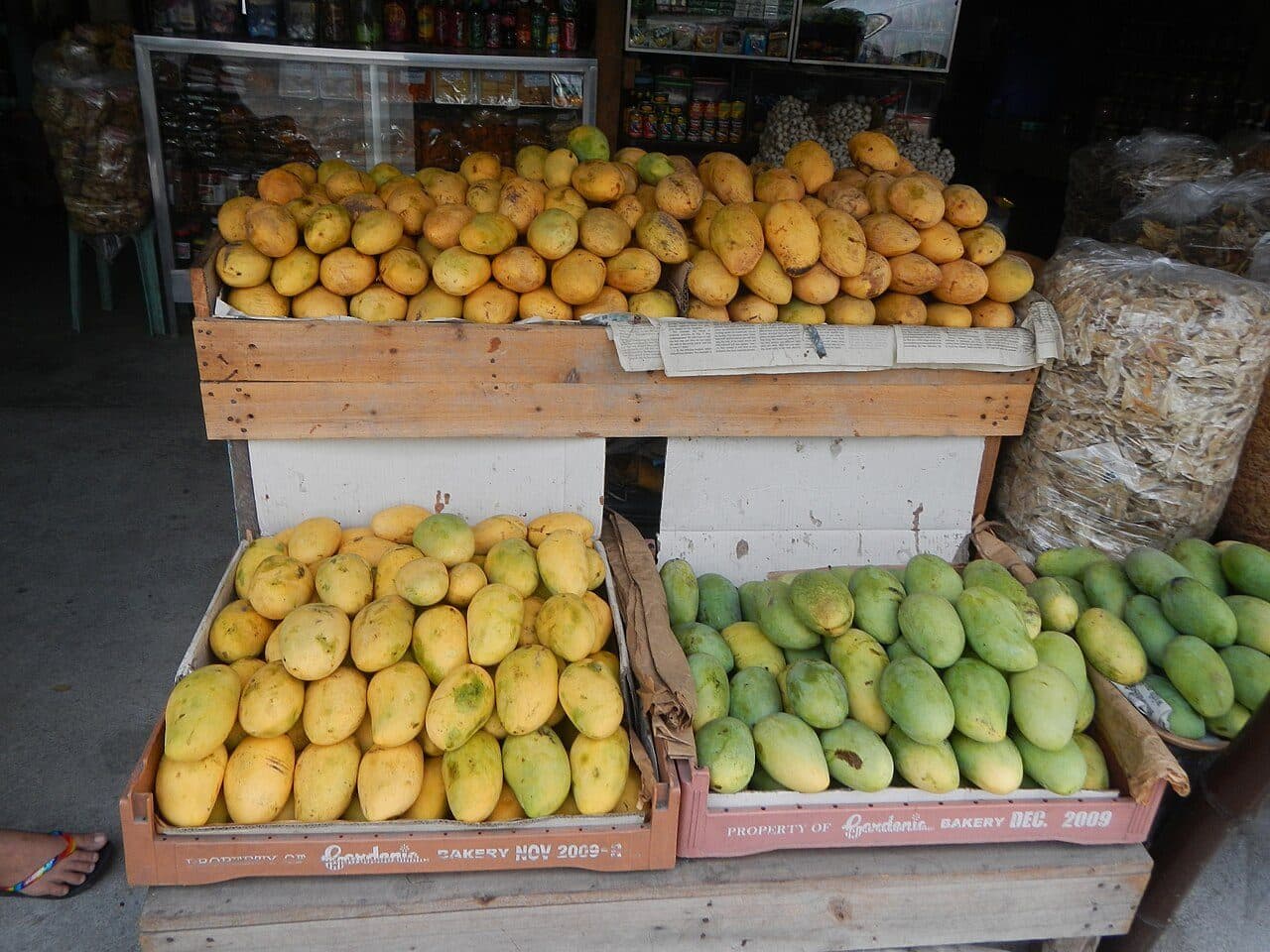
The carabao mango is the mango most Filipinos mean when they say mangga. It is named after the carabao, the water buffalo, and it is the country's most important variety: about 80% of the mangoes harvested in the Philippines are carabao, according to the Philippine Statistics Authority. The fruit is kidney-shaped, about 12.5 cm long and 8.5 cm wide. Ripe, it turns bright yellow and smells sweet, and the deep yellow flesh is soft, juicy and melting.
Green carabao mangoes are very sour, so they are eaten with bagoong, salt, vinegar or soy sauce, or pickled as burong mangga. The National Seed Industry Council has approved 14 strains of carabao, among them Guimaras Super (Galila), Sweet Elena from Zambales and MMSU Gold. Abroad, the carabao is sold as Manila mango, Philippine mango or champagne mango, and the Mexican Ataulfo descends from it through the Manila galleon trade.
Other names: mangga kalabaw, manggang kalabaw, kalabaw mango
English name: carabao mango; abroad also Manila mango, Philippine mango or champagne mango
Look: kidney-shaped, about 12.5 cm long; green, then bright yellow
Taste: very sweet and juicy when ripe; very sour when green
Best for: eating ripe, mango shakes and mango float; green with bagoong; burong mangga; dried mangoes
On FarmyHub: ripe mangoes from Claveria, Davao City, Zamboanga City and Dasmariñas, Cavite; most of these listings do not name the variety.
 |
2. Guimaras Mango (Guimaras Super)
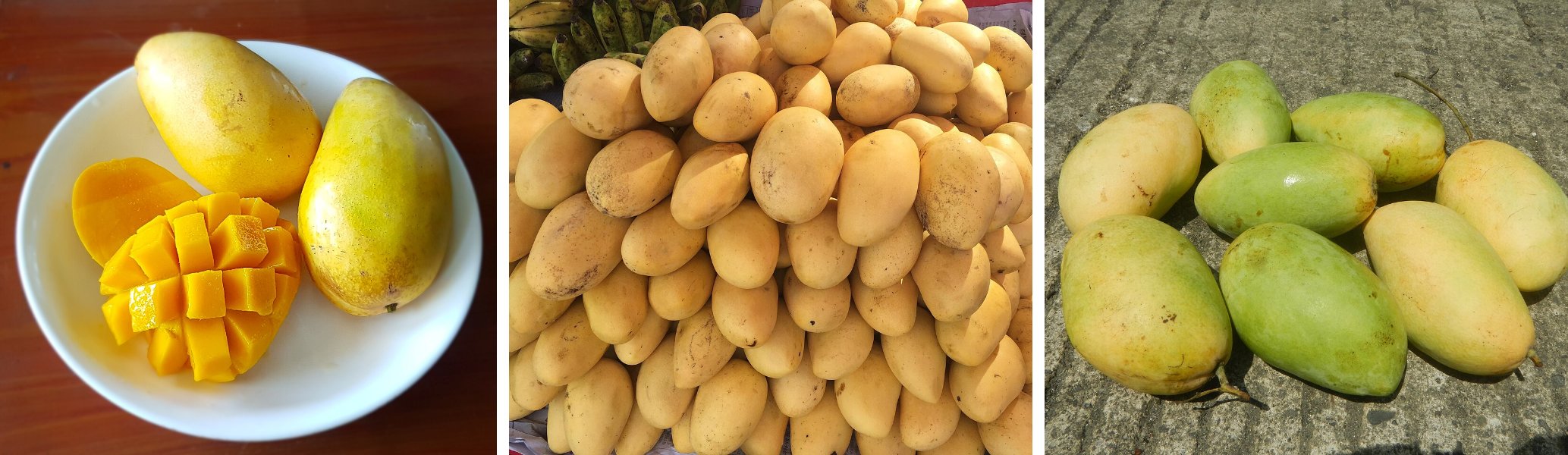
Guimaras, the island province between Panay and Negros, is the place most often called the Mango Capital of the Philippines. Its mangoes are carabao mangoes, and the island's own strain, Guimaras Super (also called Galila), is registered with the National Seed Industry Council. Guimaras grows over 12,000 tonnes of mangoes a year and celebrates them every May with the month-long Manggahan Festival.
Many buyers say Guimaras mangoes are the sweetest in the country. Zambales makes the same claim for its carabao mangoes, and a 2003 Department of Agriculture study rated Zambales' Sweet Elena strain the sweetest, so the title is still argued over. Either way, a Guimaras mango is a ripe carabao at its best: sweet, smooth and fragrant.
Other names: Guimaras Super, Galila, Guimaras carabao
English name: Guimaras mango
Look and taste: like carabao: bright yellow when ripe and very sweet
Season: harvest peaks around May, during the Manggahan Festival
Best for: eating ripe; pasalubong
On FarmyHub: Habitat Mangoes in Sibunag, Guimaras, sells carabao mangoes from the island by the farm lot (1,250 kg minimum).
 |
3. Indian Mango (Katchamita)
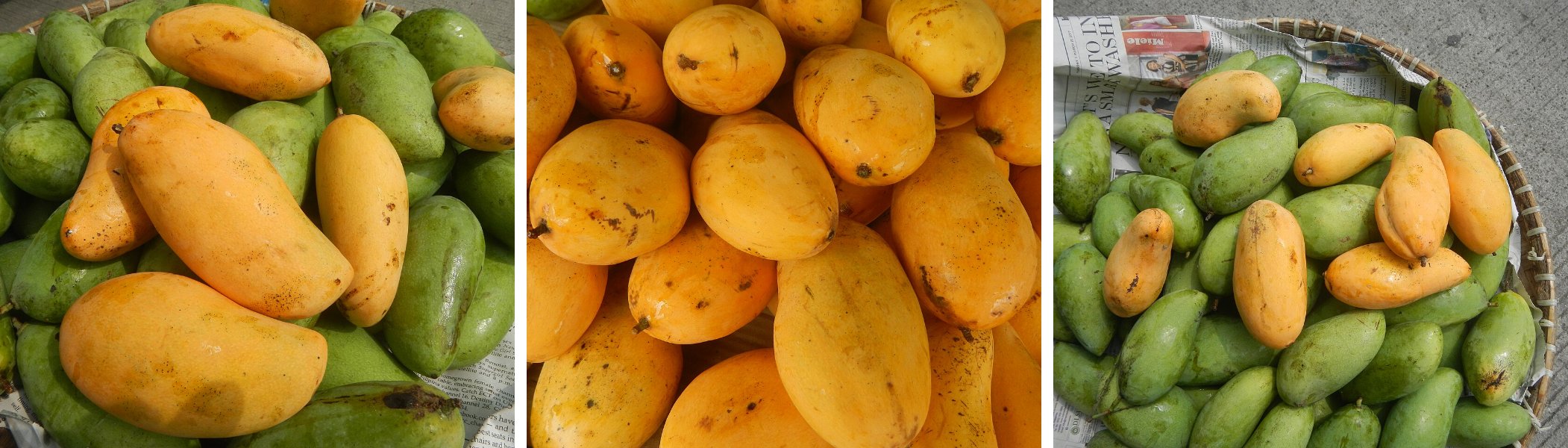
Indian mango is the Filipino name for the katchamita (also spelled katchamitha) mango, a variety that came from India, which is where the name comes from. It has become one of the most common mangoes in the Philippines. The fruit is medium-sized and plumper than a carabao, with green skin that gets a yellow blush when ripe.
Most Filipinos eat it green. Unlike a sour green carabao, a green Indian mango is crisp and mildly sweet, which makes it the favorite for green mango with bagoong. Left to ripen, it turns sweet, with a taste some compare to banana, and its flesh has more fiber than a carabao's.
Other names: katchamita, kachamita, manggang Indian
English name: Indian mango
Look: medium-sized, round to oval; green, with a yellow blush when ripe
Taste: crisp and mildly sweet when green; sweet and softer when ripe
Best for: eating green with bagoong alamang, salt or vinegar; ensalada
On FarmyHub: Angelica Talara in Cebu City sells from 1 kg, and Manong Ed Fresh Fruits and Vegetables in Cagayan de Oro sells small green Indian mangoes from 10 kg.
 |
4. Apple Mango
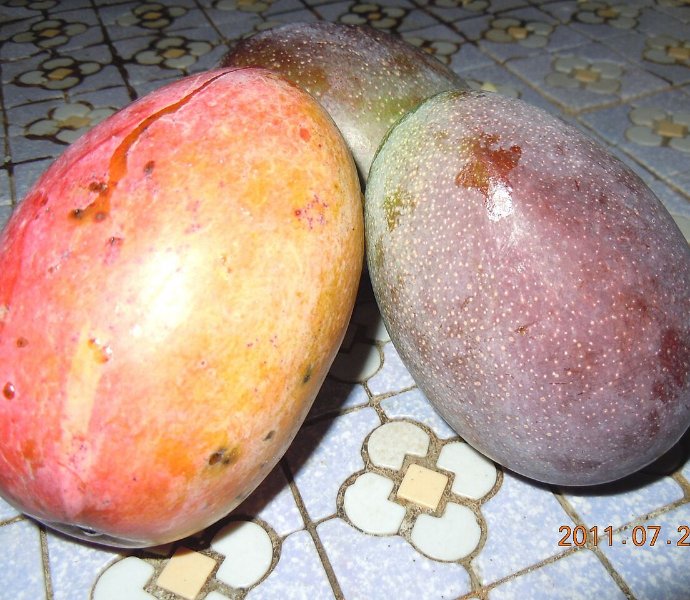
Apple mango is a market name, not one Philippine variety. Shops and sellers use it for round, plump mangoes, often with a red or orange blush, that look a little like an apple. Abroad, the name is used most often for Irwin, a Florida variety that became the favorite mango of Taiwan; the photo shows Irwin mangoes from Taiwan. Irwin is sweet, with little fiber.
Because the name covers different mangoes, ask the seller which variety it is and where it was grown before you order.
Other names: no fixed local name; sometimes sold as Irwin
English name: apple mango
Look: round and plump, often with a red or orange blush
Taste: sweet, usually with little fiber
Best for: eating ripe
On FarmyHub: not listed yet.
 |
5. Pico Mango (Piko)
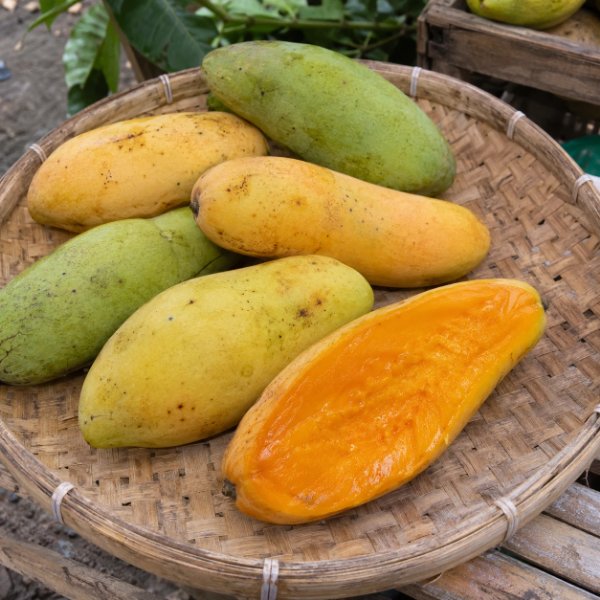
Pico, also spelled piko and called padero, is the other big mango of Philippine farms: along with the carabao, it is one of the two most commonly grown varieties. It is easy to tell apart. The fruit is long and flat, up to 12.5 cm long but only about 8 cm wide, and clearly flatter than a carabao.
Ripe pico is pale yellow to light orange outside. Inside, the flesh is rich orange and often turns reddish near the tip; it is sweet and soft, though a little firmer than carabao. Pico fruits from May to July, and it is also used for burong mangga.
Other names: piko, padero, mangga piko
English name: pico mango
Look: long and flat; pale yellow to light orange when ripe
Taste: sweet, with orange flesh a little firmer than carabao
Season: May to July
Best for: eating ripe; burong mangga
On FarmyHub: not listed yet.
 AI-generated illustration |
6. Kabayo Mango (Cabayo)
Kabayo, also spelled cabayo, is Tagalog for horse, and this native variety is often mixed up with pico because it is also very long. The difference is the shape: kabayo is rounded in cross-section instead of flat, with a sloping back like a carabao, while its flesh is like pico's. Do not confuse it with the horse mango of Malaysia and Indonesia (Mangifera foetida), which is a different species.
Other names: cabayo, mangga kabayo
English name: kabayo mango (literally "horse mango")
Look: very long, rounded rather than flat, with a sloping back
Taste: flesh like pico
Best for: eating ripe
On FarmyHub: not listed yet.
 |
7. Pahutan (Paho)
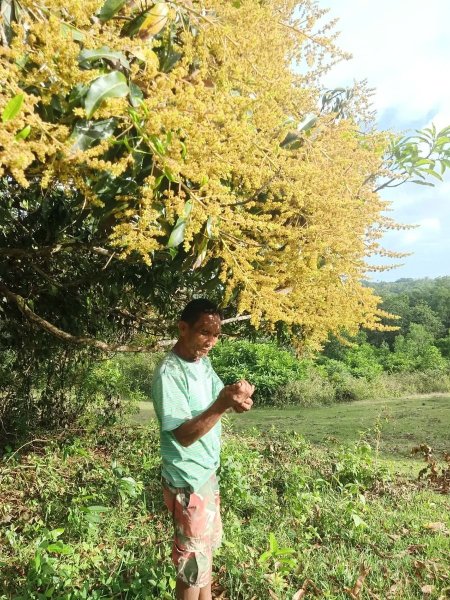
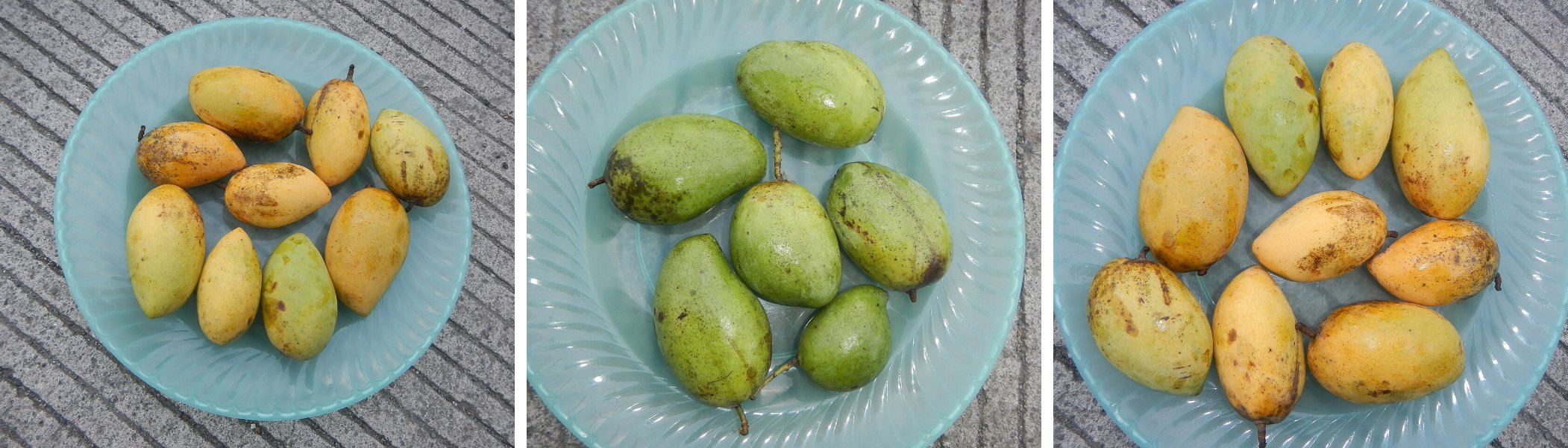
Pahutan, also called paho or pajo, is not a carabao or a pico at all but a separate mango species, Mangifera altissima, native to the Philippines. It is not grown on commercial farms; the fruit is harvested from wild trees, and the species is threatened by habitat loss. The fruits are small and pale yellow when ripe, very sweet but much more fibrous than a carabao.
Ripe pahutan is eaten as it is. Green pahutan is eaten with rock salt or chopped into salads.
Other names: paho, pajo
English name: no common English name; scientific name Mangifera altissima
Look: small; pale yellow when ripe
Taste: very sweet but fibrous
Best for: eating ripe; green with rock salt or in salads
On FarmyHub: not listed yet.
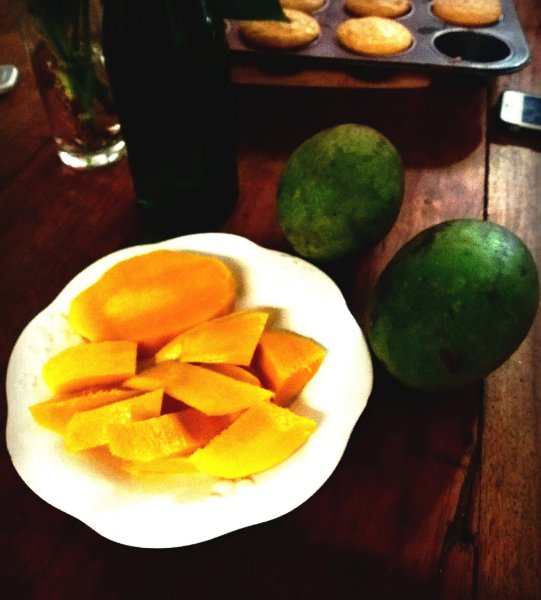 Photo: Alternativity, CC BY-SA 4.0, via Wikimedia Commons |
8. Mangga Wani (Bayuno)
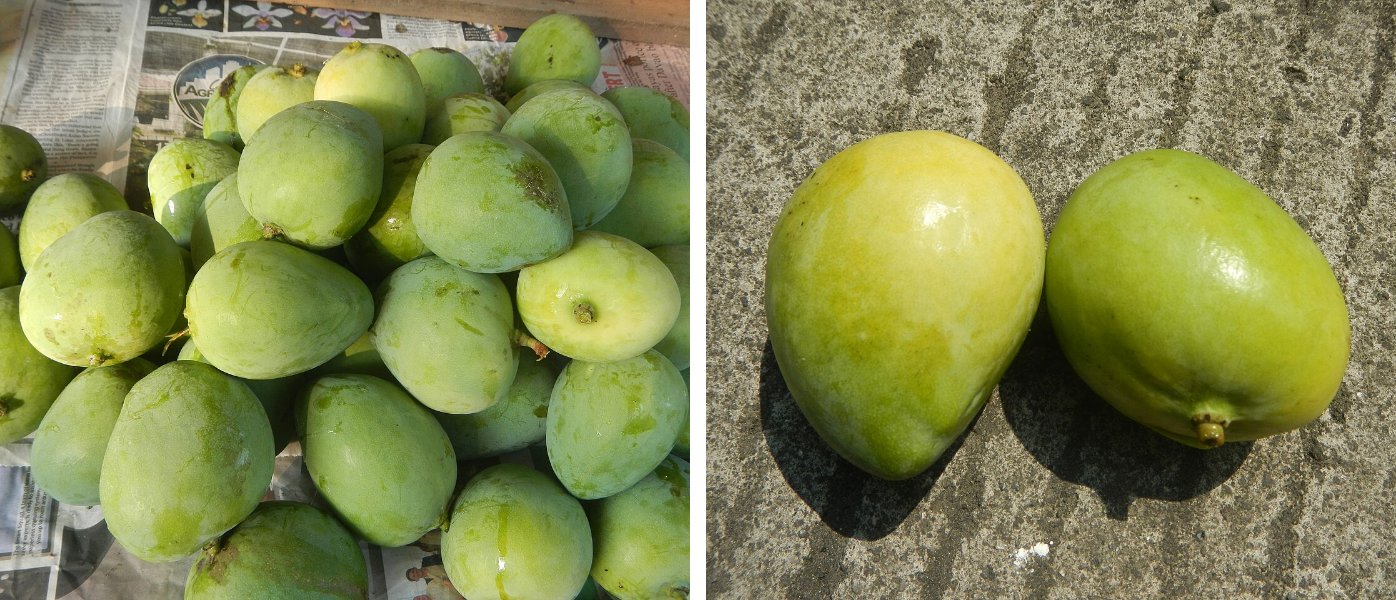
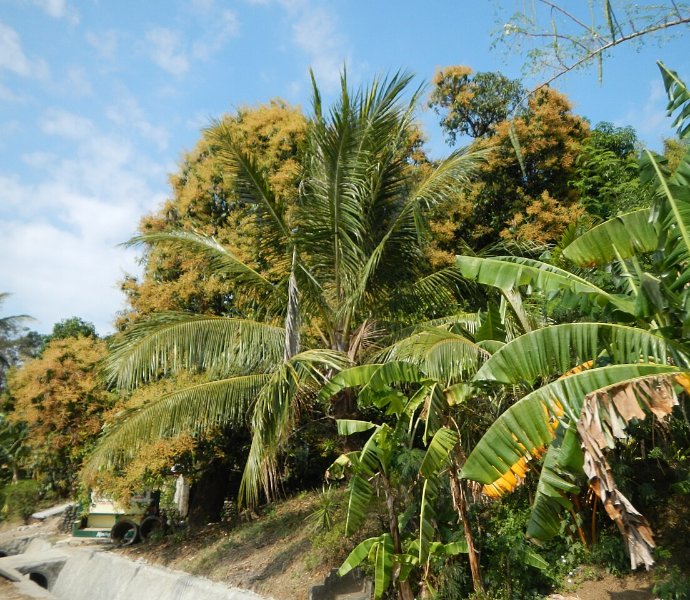
Mangga wani is another mango species, Mangifera caesia, known in English as white mango or binjai. In the Philippines it is called bayuno, baluno or belunok, mangga wani in Cebuano, and gwani by the Subanen of the Zamboanga Peninsula. The fruit is large and oval, 10 to 15 cm long, with thin green to brownish skin. The flesh is whitish yellow, very soft and juicy, with a strong smell and a sweet-sour taste. The tree grows best in wet lowlands, near rivers and marshes.
Other names: bayuno, baluno, belunok, wani, gwani
English name: white mango, binjai (Mangifera caesia)
Look: large and oval; thin green to brownish skin
Taste: soft and juicy, strongly scented, sweet-sour
Best for: eating ripe
On FarmyHub: not listed yet.
Mango Names in Tagalog and English
Mangga is the word for mango in Tagalog, Cebuano and most Philippine languages. These are the other mango words you will hear at the palengke:
Tagalog or local name | In English | Note |
|---|---|---|
Mangga | Mango | The same word in Tagalog and Cebuano |
Manggang hilaw (hilaw na mangga) | Green or unripe mango | Sour; eaten with bagoong or salt |
Manibalang | Half-ripe mango | Turning yellow; sweet and sour |
Hinog na mangga | Ripe mango | Yellow, soft and sweet |
Mangga kalabaw (manggang kalabaw) | Carabao mango | |
Mangga piko | Pico mango | Long and flat |
Mangga kabayo | Kabayo mango | Long and rounded |
Paho, pajo | Pahutan | A wild mango species |
Mangga wani, bayuno | White mango, binjai | Another mango species |
Burong mangga | Pickled mango | Green mango in brine with salt and sugar |
Puno ng mangga | Mango tree | |
Manggahan | Mango orchard | Also the name of Guimaras' mango festival |
How to Choose a Good Mango
Whether you shop at the palengke or order from a farm, these checks help:
To eat ripe: choose mangoes that are yellow all over, smell sweet at the stem end and give a little when pressed gently. Avoid soft dents, wrinkled skin, large black patches and a sour or fermented smell.
For bagoong or ensalada: choose firm, fully green mangoes with no yellow. Pick Indian mango for crunch without much sourness, or green carabao if you like it very sour.
To eat in a few days: buy manibalang (half-ripe) mangoes and let them ripen at room temperature. Wrapping them in newspaper speeds up ripening.
To store: keep unripe mangoes out of the fridge, because the cold stops them from ripening properly. Put ripe mangoes in the fridge to keep them a few more days.
 |
Green Mango with Bagoong and Other Ways to Eat Mango
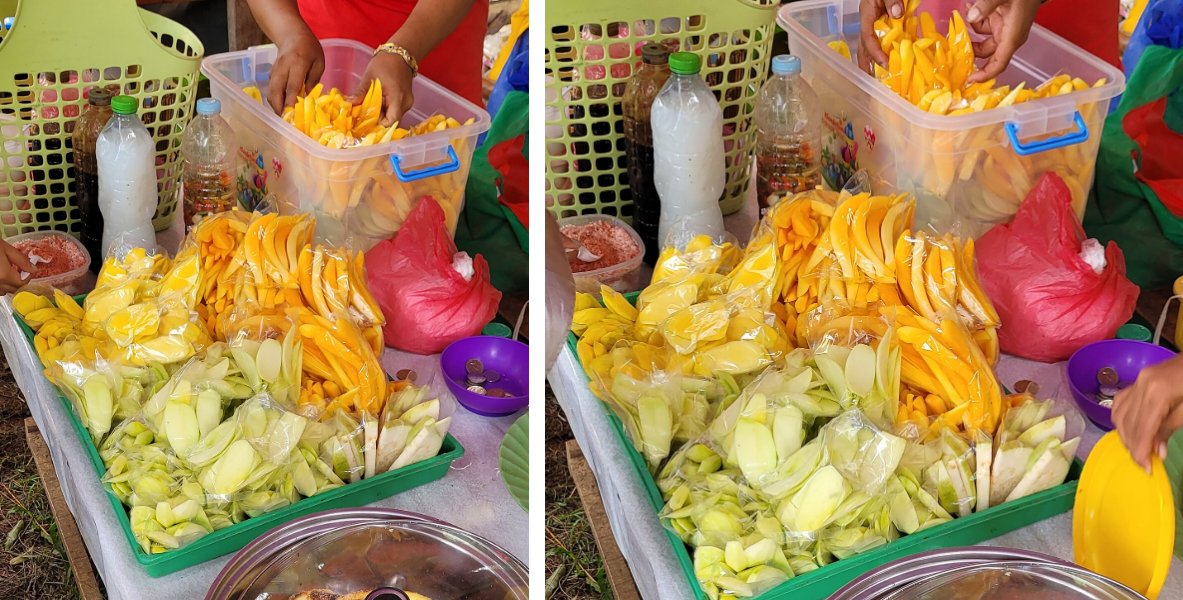
Green mango with bagoong is one of the best-loved Filipino snacks: slices of sour green mango dipped in sautéed shrimp paste (bagoong alamang). Indian mango is the usual pick because it is crisp and not too sour; green carabao gives a sharper, more sour bite.
With salt, vinegar, soy sauce or chili: sold in cups as street food, as in the photos above.
Burong mangga: green or half-ripe carabao or pico halves pickled in brine with salt and sugar.
Ensalada: green mango with tomato, onion and bagoong, served with grilled fish or pork.
Ripe: eaten fresh, blended into shakes, layered in mango float or dried. Cebu is known for dried mangoes; see dried mangoes on FarmyHub.
 |
When Is Mango Season in the Philippines?
The natural mango season follows the dry season. Most mangoes reach the markets from about March to June, the Filipino summer. Zambales mangoes come early, from January to April, pico fruits from May to July, and Guimaras celebrates its harvest with the Manggahan Festival in May.
You can still find mangoes in other months thanks to a Filipino discovery. Mangoes used to be mainly a May fruit. In 1974, horticulturist Ramon Barba showed that spraying potassium nitrate makes mango trees flower out of season, building on the old Filipino practice of smoking mango trees to make them bloom. His paper, Induction of Flowering of the Mango by Chemical Spray, won the Crop Science Society of the Philippines' best paper award that year, and flower induction is now widely used by mango farms. Outside the main season, there are fewer mangoes on the market.
Where Mangoes Are Grown in the Philippines
Mango trees grow in almost every province, but a few areas stand out:
Area | Known for |
|---|---|
Ilocos Region | The top mango-producing region, with 23.3% of the country's 712,553 tonnes in 2022 (PSA) |
Zambales | Sweet carabao mangoes, the Sweet Elena strain and the Dinamulag (Zambales Mango) Festival |
Guimaras | Guimaras Super carabao mangoes and the Manggahan Festival every May; called the Mango Capital of the Philippines |
Cebu | Carabao mangoes for the dried mango industry, grown in Guadalupe and Kalunasan, Cebu City |
Mindanao | Farms in Claveria and Cagayan de Oro (Misamis Oriental), Davao and Zamboanga; 6 of the 9 FarmyHub mango sellers are here |
For farms and traders who sell in bulk, see our list of the 9 mango suppliers in the Philippines.
Frequently Asked Questions
What are the types of mango in the Philippines?
The most common are carabao (with its famous Guimaras strain), Indian mango (katchamita) and pico. Apple mango is a market name for round, red-blushed mangoes, kabayo is a long native variety, and pahutan and mangga wani are separate wild mango species. See the table above for all 8.
Is the mango the national fruit of the Philippines?
The mango is widely known as the national fruit of the Philippines, but no law makes it official. Like the carabao (national animal) and the anahaw (national leaf), it is a national symbol by tradition, not by law. The carabao mango is the one most Filipinos think of.
What is the mango capital of the Philippines?
Guimaras is the province most often called the Mango Capital of the Philippines, for its sweet Guimaras Super carabao mangoes and its Manggahan Festival every May. Zambales, home of the Sweet Elena strain, is also famous for sweet mangoes.
What is the sweetest mango in the Philippines?
The carabao mango. Of its strains, Guimaras Super (Galila) from Guimaras and Sweet Elena from Zambales are the two most often named; a 2003 Department of Agriculture study rated Sweet Elena the sweetest.
What is the difference between carabao and Indian mango?
Carabao is kidney-shaped, turns bright yellow and is eaten mostly ripe, when it is very sweet; green, it is very sour. Indian mango is plumper and roundish and is eaten mostly green, because it stays crisp and mildly sweet. Ripe Indian mango is sweet too, but has more fiber.
Why is it called Indian mango?
Because the variety, katchamita, came from India.
What is mangga in English?
Mangga means mango. Manggang hilaw is green (unripe) mango, manibalang is half-ripe and hinog na mangga is ripe mango. See more mango names.
Is apple mango a Philippine variety?
No. Apple mango is a market name for round mangoes with a red or orange blush, often the Irwin variety. Ask the seller which variety it is and where it was grown.
What is huani or kwini mango?
Huani, also called kwini or Saipan mango, is a related species (Mangifera odorata) grown in the southern Philippines. Its skin has a strong, turpentine-like smell and the flesh is fibrous. In Jolo, a form with yellow skin is called sangay.
Anong mangga ang pinakamasarap sa bagoong?
Ang Indian mango ang karaniwang pinipili dahil malutong ito at hindi masyadong maasim kapag hilaw. Kung gusto mo ng mas maasim, piliin ang hilaw na manggang kalabaw.
When is mango season in the Philippines?
Mostly from about March to June. Thanks to flower induction, discovered by Filipino scientist Ramon Barba in 1974, there are mangoes in other months too, in smaller amounts. See mango season.
More mango pages: mangoes for sale · 9 mango suppliers in the Philippines · dried mangoes · grafted fruit trees
Sell Your Mangoes on FarmyHub
Do you grow or trade mangoes? FarmyHub connects Filipino farmers and suppliers with buyers across the country. There are two ways to start:
List your products yourself, for free. Create a free account in seconds with your Google or Facebook account, then post your listing in a few minutes. Once approved, your listing is visible to buyers, who can message or call you directly.
🌱 List your products for freeBecome a FarmyHub supplier. Tell us about your farm or business, your products and how much you can supply. Our team will contact you to learn about your business, and when a bulk buyer is looking for what you sell, we can recommend you.
🤝 Become a supplierPrefer using your phone? Download the free FarmyHub app to post listings and reply to buyers on the go.
📱 Get the app on Google PlayMimi is a Partnership & Logistics Coordinator at FarmyHub, the online marketplace connecting farmers, suppliers, cooperatives and buyers across the Philippines. She works with sellers nationwide and researches local agricultural products, prices and sourcing options. Her guides help buyers compare Filipino products and sellers, so they can find the right supplier and contact them directly.
Registered agriculturist, higher education instructor, and hands-on farmer. I write practical farming and agribusiness guides based on my work in the field and in the classroom.