

How to Buy Farmland in the Philippines: Requirements, Steps, Taxes and What to Check
📍 Farm lots in Nueva Ecija, Quezon, Cavite, Zamboanga City and Davao del Norte 💰 Listed from ₱570,000 to ₱7.5 million 📄 Titles, tax declarations, DAR clearance and taxes explained
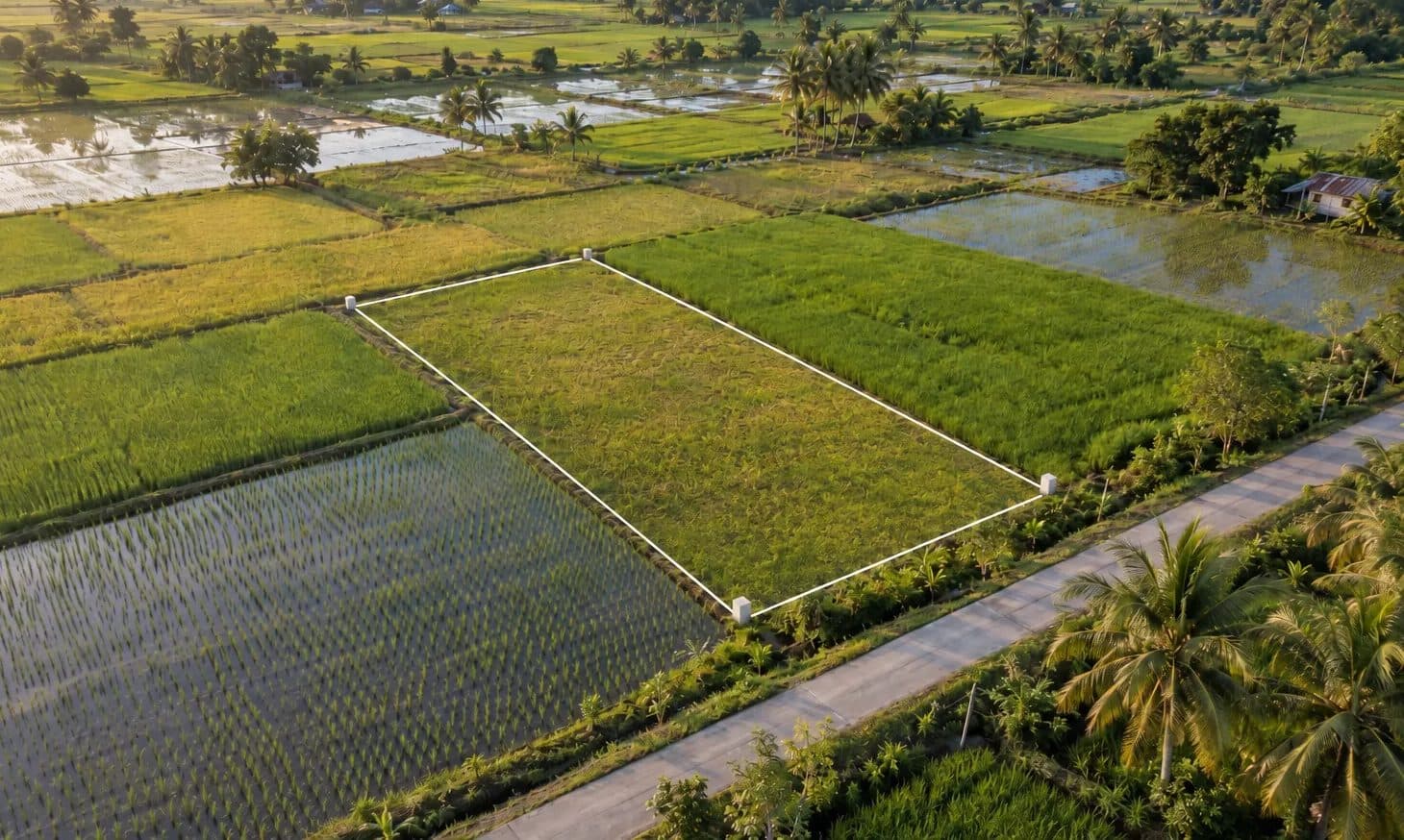
Buying farmland in the Philippines is not hard, but it has more paperwork than buying a house and lot. Before you pay anything, you need to know who is allowed to buy, what papers the land has, and what the government asks for before the title moves to your name.
This guide walks through each step in plain language, then shows six farm lots listed on FarmyHub right now. It is general information, not legal advice, so for a real purchase talk to a lawyer or to the offices named below. Ready to look at land? Browse farmland for sale in the Philippines on FarmyHub.
In this guide | Short answer |
|---|---|
Filipinos and companies at least 60% Filipino-owned, up to 5 hectares per person. Foreigners cannot own land. | |
A land title is the strongest paper. A tax declaration alone does not prove ownership. | |
The title at the Registry of Deeds, the seller, unpaid taxes, tenants and boundaries. | |
From the agreed price to the DAR clearance, the taxes and the new title. | |
What it contains, plus a sample form to download (PDF). | |
6% capital gains tax, 1.5% documentary stamp tax and the local transfer tax. | |
Six warning signs to watch for before you pay. | |
Six listings on FarmyHub, from ₱570,000 to ₱7.5 million. | |
The DAR, LRA and BIR pages you will need. | |
Foreign ownership, DAR clearance, CLOA land, land conversion and more. |
Who Can Buy Farmland in the Philippines
Under the 1987 Constitution, only Filipino citizens and corporations that are at least 60% Filipino-owned can own land in the Philippines. Dual citizens count as Filipinos.
Foreigners: cannot buy or own land, and that includes farmland. They can lease land, own a condominium unit or inherit land as a legal heir. A 2025 law, Republic Act 12252, lets qualified foreign investors lease private land for up to 99 years, subject to conditions.
Former Filipinos: a natural-born Filipino who became a citizen of another country can own a limited area: up to 1,000 sqm of urban land or 1 hectare of rural land for a home, or up to 5,000 sqm of urban land or 3 hectares of rural land for business.
The 5-hectare limit: under the agrarian reform law, one person can own up to 5 hectares of agricultural land in total. If you already own 3 hectares, you can add only 2 more.
Land Papers Explained: Title, Tax Declaration, CLOA and Rights
The papers a seller holds decide how safe the purchase is. These are the four you will meet most often:
Paper | What it is | What it means for a buyer |
|---|---|---|
Land title (TCT or OCT) | The certificate of ownership registered with the Registry of Deeds | The strongest proof of ownership. You still check that it is real and has no claims on it |
Tax declaration only | A record at the assessor’s office of who is declared as paying the real property tax | It shows possession, not ownership. The land may be untitled or may still be public land |
CLOA or emancipation patent | A title given to a farmer-beneficiary under agrarian reform | It cannot be sold for 10 years from the award, except to heirs, the government, Land Bank or other qualified farmers. Later sales still go through DAR |
Rights only | An informal claim over land the seller occupies | No title can be transferred to you. This is the highest risk of the four |
A tax declaration is not a title. Courts treat it as a sign that someone holds the land and pays the tax, not as proof that they own it.
What to Check Before You Pay
Land title verification: ask for a photocopy, then get a certified true copy from the Registry of Deeds or through the LRA eSerbisyo portal and compare the two. Read the back page for mortgages, claims and court cases.
The seller: the name on the title should match the seller’s valid ID. If someone else signs, ask for a notarized special power of attorney. If the owner has died, the heirs must settle the estate first.
Unpaid taxes: ask for a real property tax clearance from the municipal or city treasurer.
Agrarian reform status: ask the Municipal Agrarian Reform Office (MARO) whether the land is covered by agrarian reform, is CLOA land or has tenants.
Tenants and occupants: visit the land. A tenant farmer keeps the right to stay and farm even when the land is sold.
Classification and zoning: ask the municipal or city planning office how the land is classified and what it may be used for.
Boundaries and size: hire a geodetic engineer to find the corner markers and confirm the area written on the title.
Access, water and flooding: check the right of way to a public road, the water source, the electricity line, and whether the land floods in the rainy season.
How to Buy Farmland: 8 Steps
These are the usual steps in buying land in the Philippines, from the agreed price to the transfer of the land title into your name.
Step 1: Agree on the Price and Terms
Agree on the price, the payment schedule and who pays which tax and fee. Put it in writing before any money changes hands.
Step 2: Check the Land and the Papers
Go through the checklist above. Do this before you sign or pay a deposit.
Step 3: Sign and Notarize the Deed of Absolute Sale
The deed of absolute sale is the contract that transfers ownership from the seller to you. Both sides sign it in front of a notary public.
Step 4: Get the DAR Clearance
File the request at the Municipal Agrarian Reform Office where the land is, with the deed and the title. The buyer signs a sworn statement that his or her total agricultural land, including this purchase, is not more than 5 hectares.
Step 5: Pay the Taxes at the BIR
Pay the capital gains tax and the documentary stamp tax at the BIR office that covers the land. The BIR then issues the electronic Certificate Authorizing Registration, or eCAR.
Step 6: Pay the Local Transfer Tax
Pay it at the provincial or city treasurer’s office within 60 days of the deed.
Step 7: Register the Sale With the Registry of Deeds
Bring the deed, the eCAR, the DAR clearance, the tax receipts and the owner’s copy of the title. The old title is cancelled and a new one is issued in your name.
Step 8: Get a New Tax Declaration
Take the new title to the assessor’s office so the tax declaration is also in your name.
Deed of Absolute Sale: What It Contains and a Sample Form
The deed of absolute sale is the paper that the BIR, the treasurer’s office and the Registry of Deeds all work from, so it has to be complete and correct. “Absolute” means the sale is final: the price is paid in full and no conditions are left. If the buyer pays in installments, the two sides usually sign a contract to sell first, and the deed of absolute sale only after the last payment.
A deed of absolute sale for land usually has these parts:
The parties: full names, citizenship, civil status and addresses of the seller and the buyer. The BIR also asks for the TIN of each.
The land: the title number, the Registry of Deeds that issued it, and the technical description copied from the title.
The price: the amount in words and in figures, and a statement that the seller has received it.
The seller’s statements: that he or she owns the land and that it is free from liens and claims.
Taxes and fees: who pays which.
Signatures: the seller and the buyer, the consent of the seller’s spouse if the seller is married, and two witnesses.
Acknowledgment: the part the notary public completes. It turns the deed into a public document.
Here is a sample form you can download and print. It has four pages: one page of instructions and three pages for the deed itself.
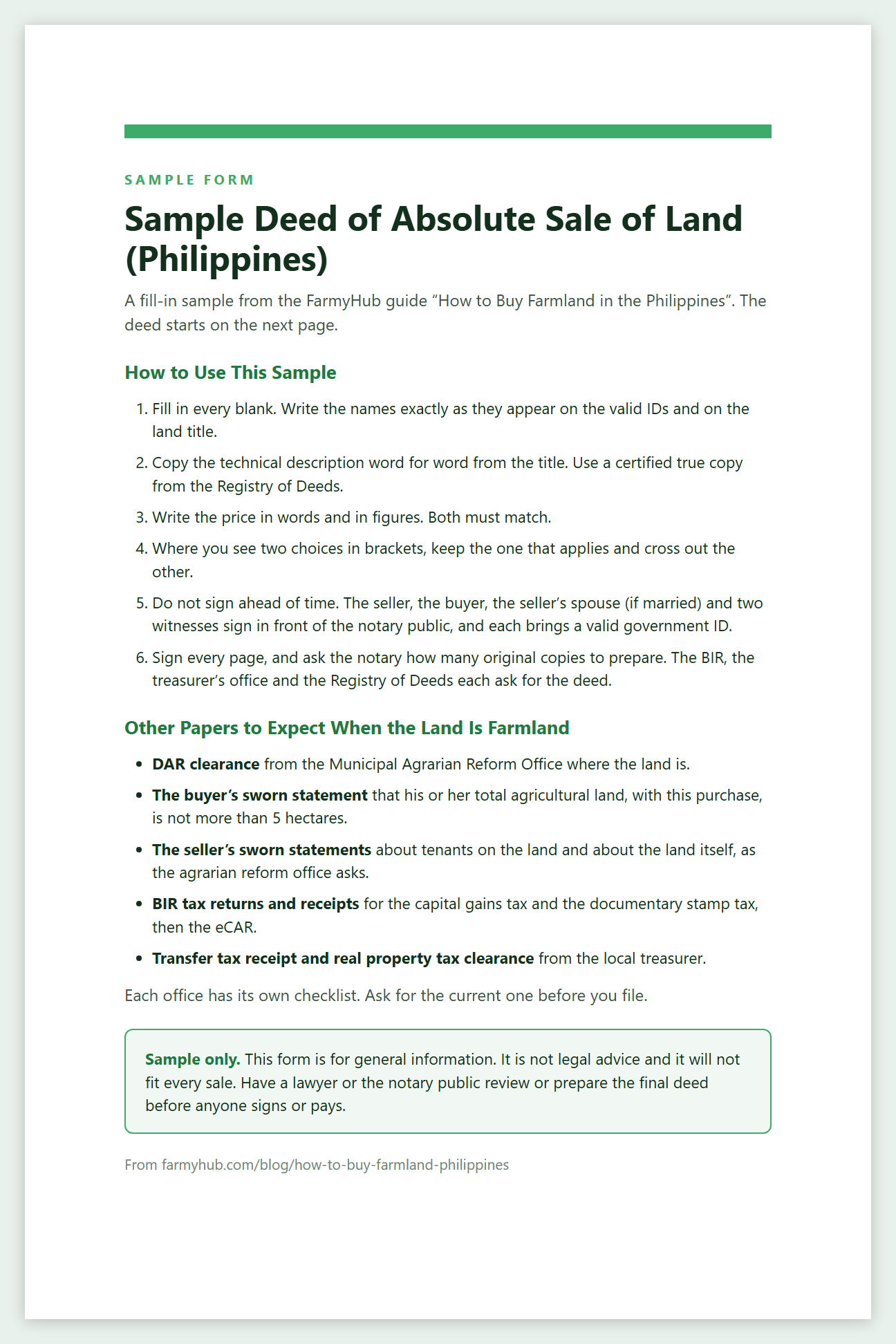
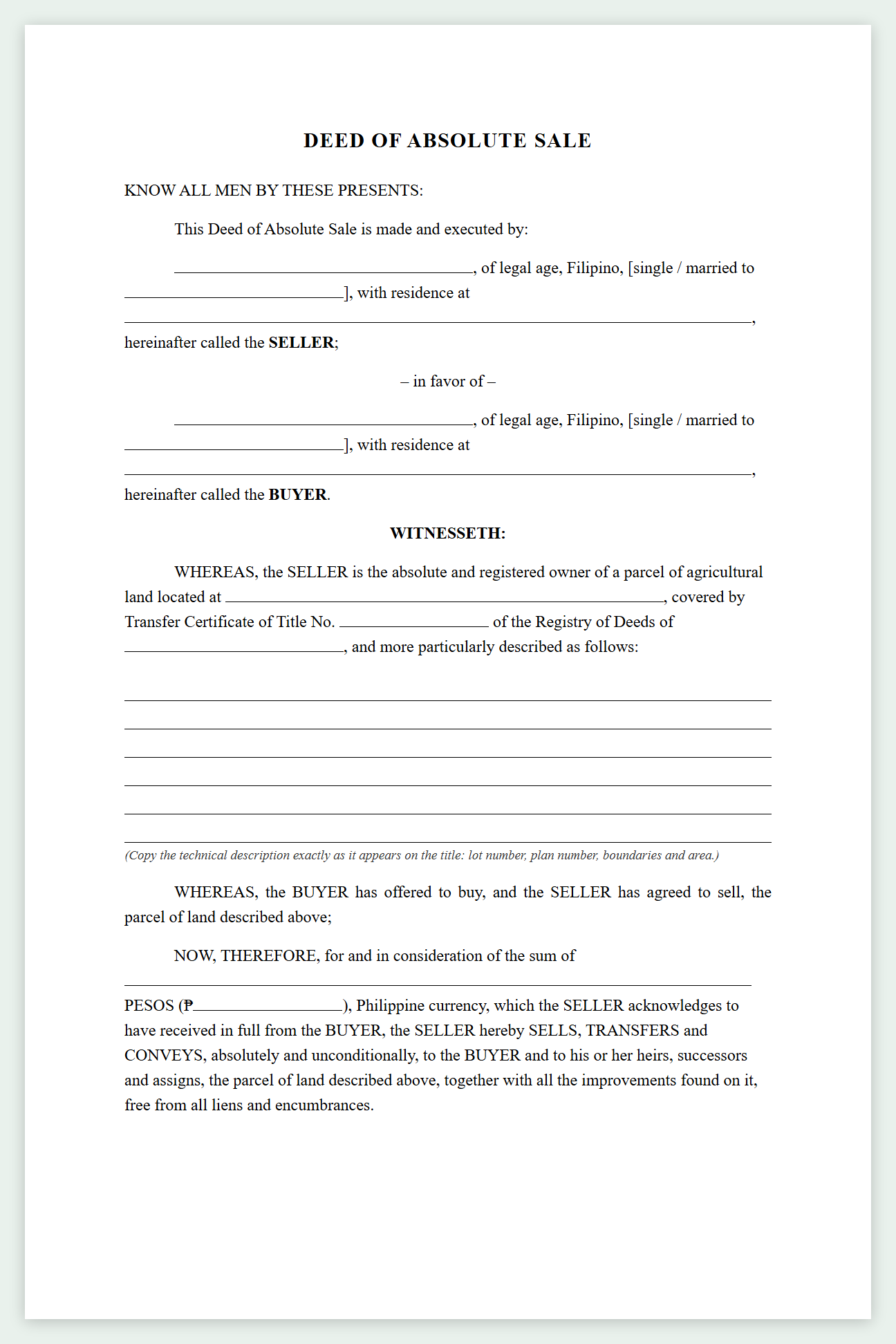
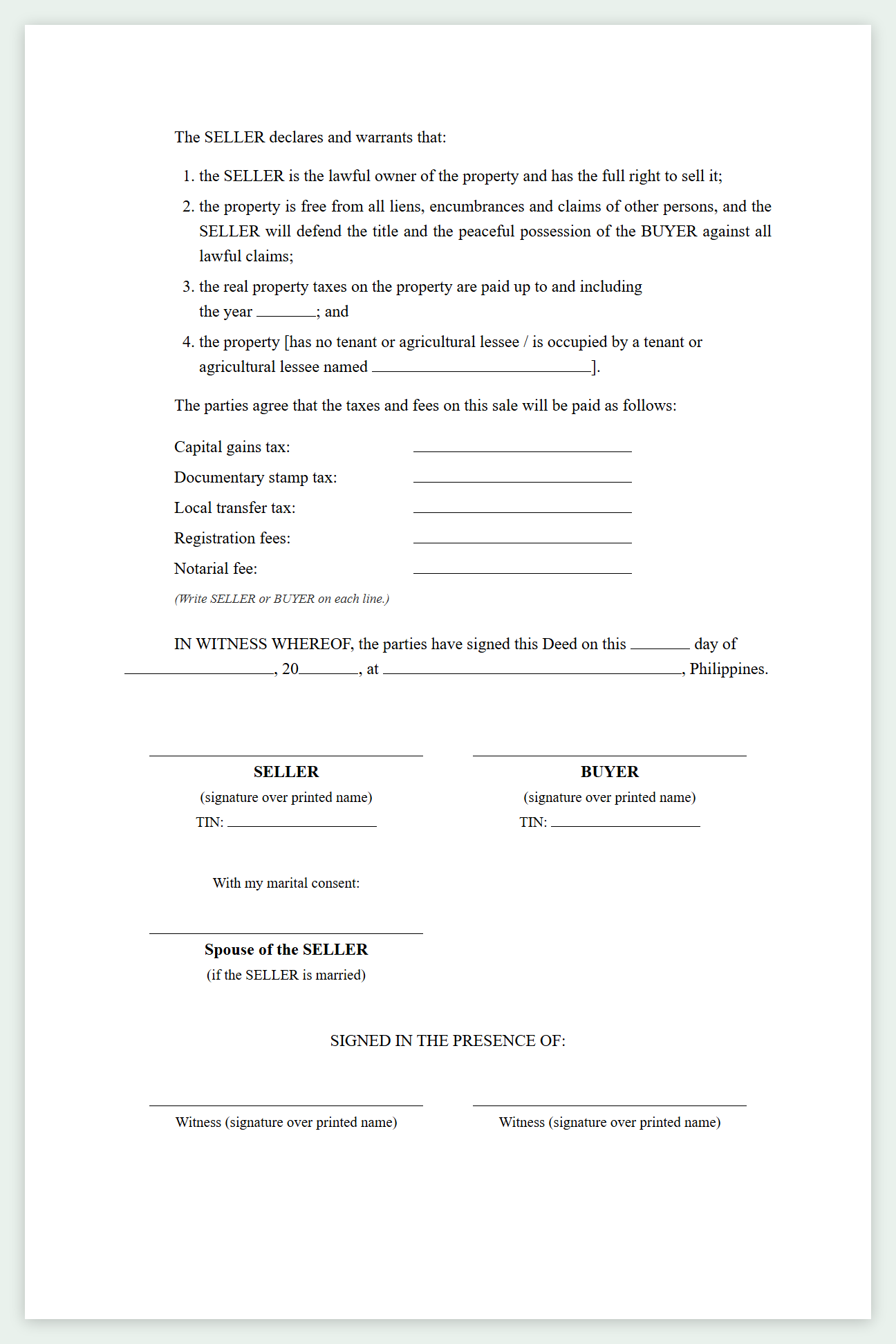
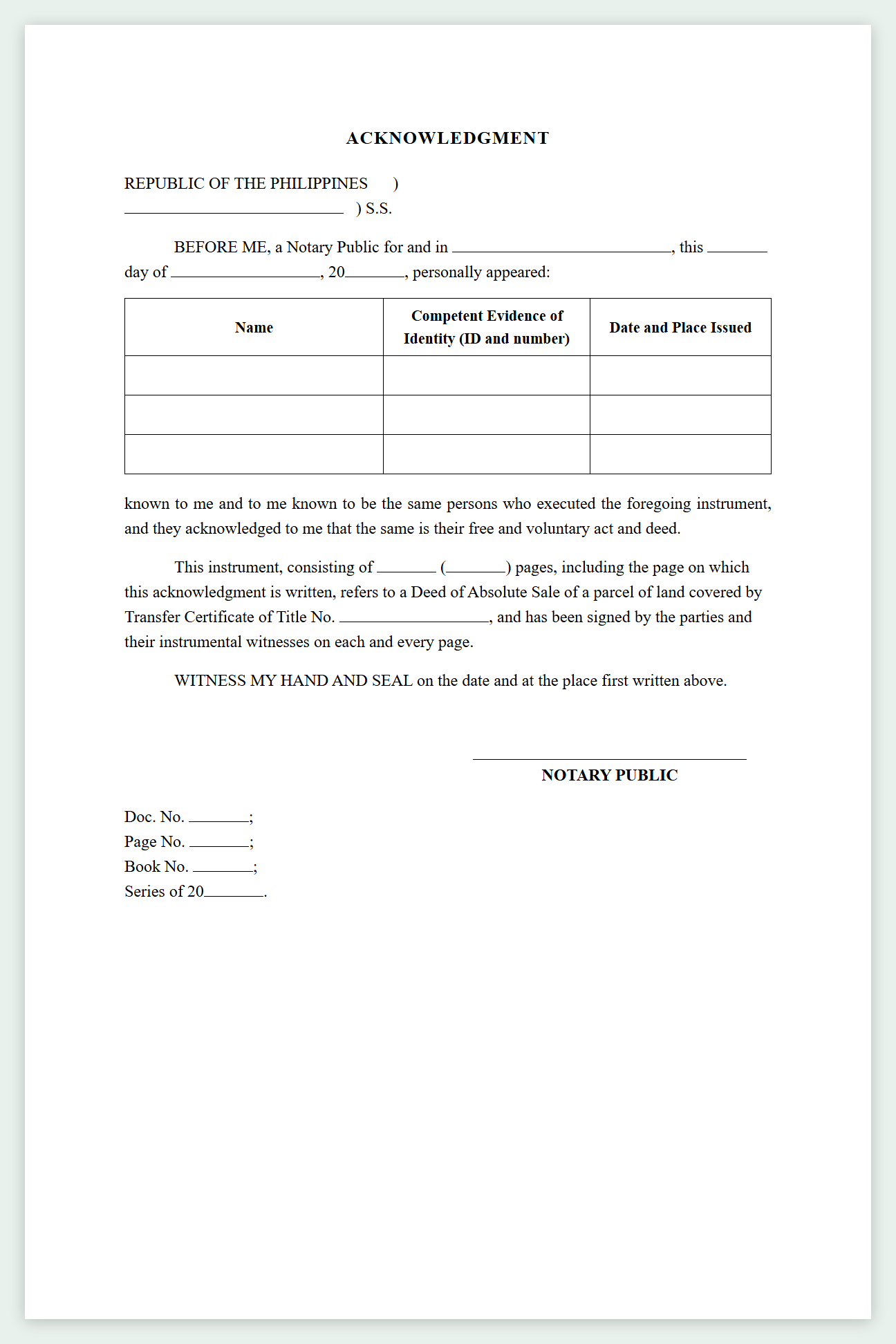
This is a sample only. The right wording depends on the land and on the people involved, so have a lawyer or the notary public review or prepare the final deed.
Taxes and Fees When You Buy Land
Cost | Rate | Usually paid by | Where and when |
|---|---|---|---|
Capital gains tax | 6% of the selling price or the fair market value, whichever is higher | Seller | BIR, within 30 days of the sale |
Documentary stamp tax | 1.5% of the selling price or the fair market value, whichever is higher | Buyer | BIR, within 5 days after the end of the month of the sale |
Local transfer tax | Up to 0.5% in provinces and up to 0.75% in cities | Buyer | Provincial or city treasurer, within 60 days of the deed |
Registration fee | Set by the land registry’s fee schedule, based on the value | Buyer | Registry of Deeds |
Notary, survey and other costs | Varies | As agreed | Notary, geodetic engineer, lawyer |
On a ₱1,000,000 sale, that is ₱60,000 in capital gains tax, ₱15,000 in documentary stamp tax and up to ₱5,000 (province) or ₱7,500 (city) in transfer tax, before the registration and notary fees. Fair market value means the BIR zonal value or the assessor’s value. Who pays what can be changed by agreement, so write it in the deed. Rates and deadlines are as of October 2026, so confirm them with the BIR office that covers the land.
Red Flags When Buying Land
The seller cannot show the owner’s original copy of the title.
The price is far below nearby land and the seller pushes for a quick cash deal.
The seller is not the person named on the title and has no notarized authority to sell.
The land is rights only or tax declaration only, but is offered as titled.
The title has notes on the back that the seller cannot explain.
You are asked for a reservation fee before you have seen any papers or the land itself.
Farm Lots for Sale on FarmyHub: 6 Listings
These six listings were picked because they state the location, the size and the price clearly and show several photos of the land. We have not visited the land or checked the papers, so use the checklist above with every one of them. Details are as listed in October 2026.
Listing | Area | Listed price | Per sqm | Papers stated |
|---|---|---|---|---|
Licab, Nueva Ecija | 29,737 sqm | ₱7,500,000 | About ₱252 | Land title (TCT) |
Talugtug, Nueva Ecija | 29,680 sqm | ₱6,000,000 | About ₱202 | Not stated |
Tiaong, Quezon | 1,000 sqm | ₱1,300,000 | ₱1,300 | Tax declaration; title transfer included, per the seller |
Bailen, Cavite | From 300 sqm | From ₱570,000 | ₱1,900 cash | Not stated |
Zamboanga City | 48,342 sqm | ₱1,200,000 | About ₱25 | Not stated |
Samal, Davao del Norte | 4,665 sqm | ₱4,000,000 | About ₱857 | Clean title, per the seller |

1. Titled Farm With Mango Trees in Licab, Nueva Ecija
Almost 3 hectares along a cemented road, already set up as a small working farm. The listing is named “TCT title”, which means the seller is offering it with a land title.
✅ Key Details:
15 mango trees
Electricity, internet and a water source
Mini piggery and a small stock house
One small pond
A small one-bedroom structure of about 70 sqm, per the listing details
📍 Location: Licab, Nueva Ecija
📐 Area: 29,737 sqm (about 2.97 hectares)
💰 Price: ₱7,500,000, about ₱252 per sqm
📄 Papers Stated: Land title (TCT)
View the Licab Farm on FarmyHub →
2. Overlooking Farm Lot in Talugtug, Nueva Ecija
An open lot of almost 3 hectares on higher ground, right along a cemented road. The seller suggests it for rice, other crops, livestock or a farmhouse.
✅ Key Details:
Along a cemented road
Open land with views of the countryside
Site visits offered by the seller
📍 Location: Talugtug, Nueva Ecija
📐 Area: 29,680 sqm (about 2.97 hectares)
💰 Price: ₱6,000,000, about ₱202 per sqm
📄 Papers Stated: Not stated in the listing. Ask the seller.
View the Talugtug Farm Lot on FarmyHub →
3. Farm Lot in Tiaong, Quezon
A flat 1,000 sqm lot along a barangay road in Tiaong, sold directly by the owner. The listing says the price is all in, including the boundary markers and the title transfer.
✅ Key Details:
Flat land planted with dalandan trees
Electricity, water line, internet and street lights, per the listing
Cash or installment
The listing said two lots were left
📍 Location: Tiaong, Quezon
📐 Area: 1,000 sqm
💰 Price: ₱1,300,000, or ₱1,300 per sqm
📄 Papers Stated: Updated tax declaration. The seller says title transfer is included.
View the Tiaong Farm Lot on FarmyHub →
4. Farm Lots in Bailen, Cavite
Small farm lots in Bailen (General Emilio Aguinaldo), Cavite, sold by the square metre directly by the owner. The seller describes the area as cool and not prone to flooding.
✅ Key Details:
Minimum lot size of 300 sqm
₱1,900 per sqm for cash, ₱2,200 per sqm on installment
A free 4x4 kubo for cash buyers, per the listing
📍 Location: General Emilio Aguinaldo (Bailen), Cavite
📐 Area: From 300 sqm
💰 Price: ₱1,900 per sqm cash, so ₱570,000 for 300 sqm
📄 Papers Stated: Not stated in the listing. Ask the seller.
View the Bailen Farm Lots on FarmyHub →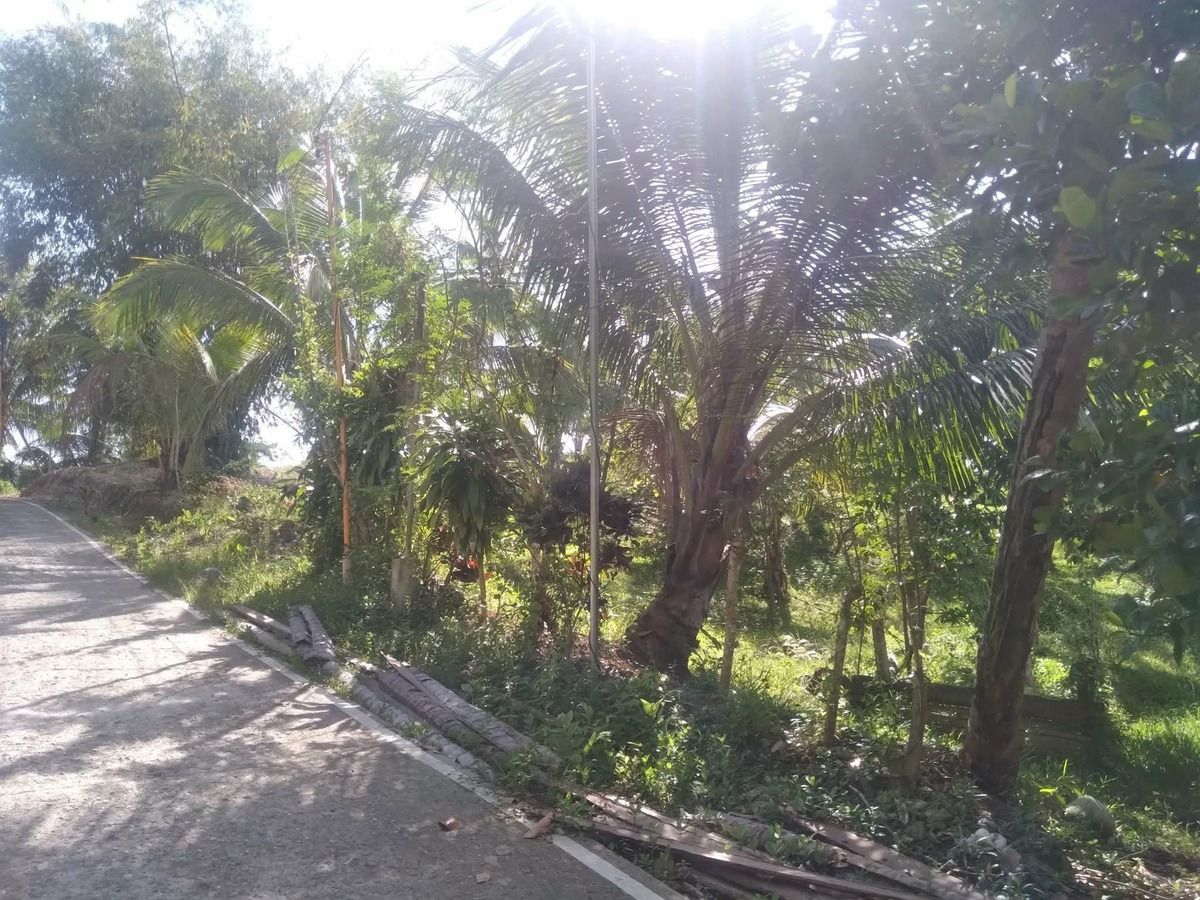
5. 4.8-Hectare Farm Lot in Zamboanga City
A large lot with mature trees along a cemented road in Zamboanga City, near a newly built resort. The listing photos include the survey plan.
✅ Key Details:
Mature trees already planted
Along a cemented road
Survey plan shown in the listing photos
📍 Location: Zamboanga City
📐 Area: 48,342 sqm (about 4.83 hectares)
💰 Price: ₱1,200,000 as listed. That is about ₱25 per sqm, far below the other listings, so confirm the price with the seller.
📄 Papers Stated: Not stated in the listing. Ask the seller.
View the Zamboanga City Farm Lot on FarmyHub →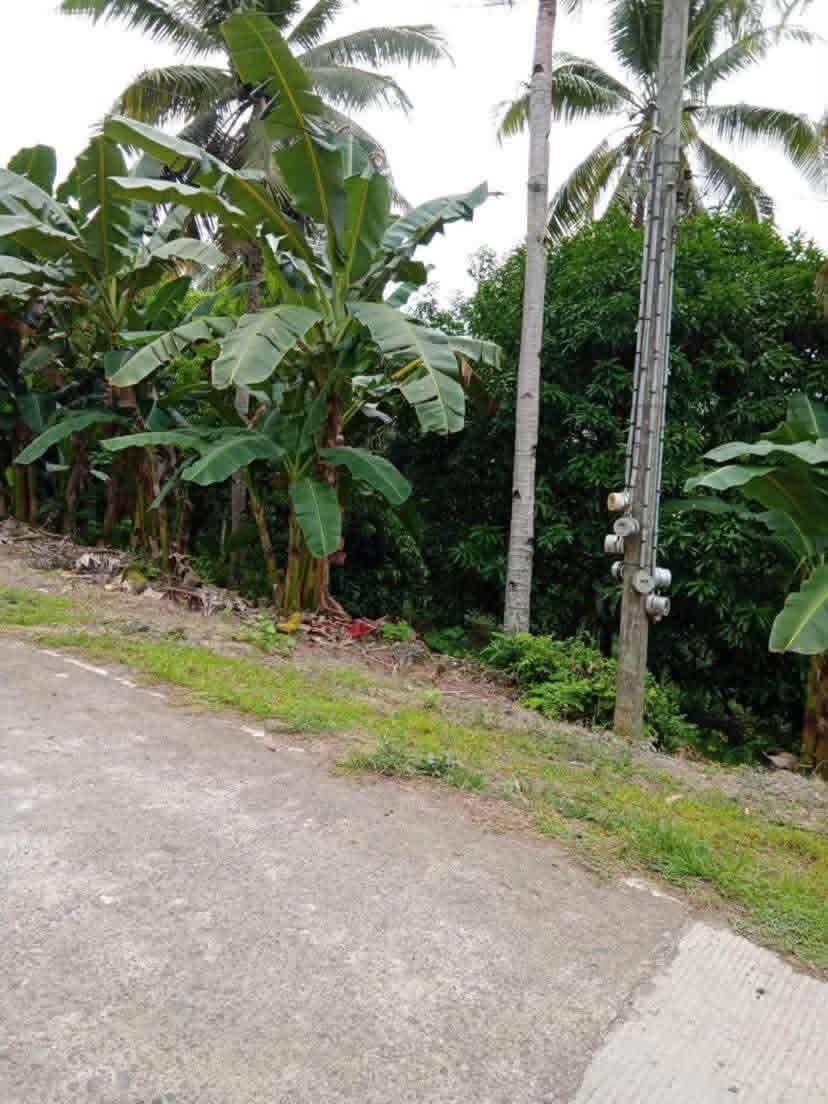
6. Titled Farm Lot in Samal, Davao del Norte
A smaller lot on Samal Island, along a cemented road and planted with fruit-bearing trees. The seller states that it has a clean title.
✅ Key Details:
Fruit-bearing trees
Along a cemented road
Suggested by the seller for farming, a home or investment
📍 Location: Samal, Davao del Norte
📐 Area: 4,665 sqm
💰 Price: ₱4,000,000, about ₱857 per sqm
📄 Papers Stated: Clean title, per the seller
View the Samal Farm Lot on FarmyHub →Browse All Farm Lots on FarmyHub →After You Buy the Land
Once the land is in your name, register as a farmer to reach government farm programs: see our guide to RSBSA registration. Not sure what to plant? Read about high-value crops in the Philippines. For inputs, browse seedlings and saplings, fertilizers and farm equipment and supplies.
Useful Government Links
Department of Agrarian Reform (DAR): dar.gov.ph, for DAR clearance and agrarian reform questions
LRA eSerbisyo portal: eserbisyo.lra.gov.ph, to request a certified true copy of a title online
Land Registration Authority (LRA): lra.gov.ph, for the Registry of Deeds offices
BIR zonal values: bir.gov.ph/zonal-values, to look up the zonal value of land in an area
Farmland FAQs
Can foreigners own land in the Philippines?
No. The Constitution limits land ownership to Filipino citizens and to corporations that are at least 60% Filipino-owned. A foreigner can lease land, own a condominium unit or inherit land as a legal heir.
What is DAR clearance?
It is a clearance from the Department of Agrarian Reform that the Registry of Deeds needs before it registers a sale of agricultural land. DAR uses it to check that the buyer will not own more than 5 hectares of agricultural land and that the land may be sold. You apply at the Municipal Agrarian Reform Office where the land is.
What is a deed of absolute sale?
It is the notarized contract in which the seller transfers full ownership of the land to the buyer for the agreed price. The BIR, the local treasurer and the Registry of Deeds all need it to move the title to the buyer’s name. You can download a sample form earlier in this guide.
What is the difference between a tax declaration and a title?
A title is the registered certificate of ownership. A tax declaration only shows who is declared as paying the real property tax. Land with a tax declaration only may be untitled, so the risk for a buyer is much higher.
Can CLOA land be sold?
Not in the first 10 years after the award, except to heirs, the government, Land Bank or other qualified farmer-beneficiaries. After that, a sale still has to go through DAR.
How do I transfer a land title to my name?
After the deed of sale is notarized, get the DAR clearance if the land is agricultural, pay the capital gains and documentary stamp taxes at the BIR to get the eCAR, and pay the local transfer tax. Then bring everything to the Registry of Deeds, which issues a new title. Last, get a new tax declaration from the assessor.
Can I build a house or a business on agricultural land?
Only within what the local zoning allows. To change agricultural land to residential, commercial or industrial use, the owner needs a land conversion order from DAR.
Paano bumili ng lupang sakahan sa Pilipinas?
Siguraduhing Pilipino ang bibili. Alamin kung may titulo ang lupa at kumuha ng certified true copy sa Registry of Deeds. Itanong sa DAR kung sakop ito ng repormang agraryo. Ipanotaryo ang Deed of Absolute Sale, bayaran ang mga buwis sa BIR at sa munisipyo o lungsod, at iparehistro ang bentahan para lumabas ang bagong titulo sa pangalan mo.
Sell Your Land or Farm Products on FarmyHub
Do you have farmland, a farm lot or farm products to sell? FarmyHub connects Filipino farmers, landowners and suppliers with buyers across the country. There are two ways to start:
List your products yourself, for free. Create a free account in seconds with your Google or Facebook account, then post your listing in a few minutes. Once approved, your listing is visible to buyers, who can message or call you directly.
🌱 List your products for freeBecome a FarmyHub supplier. Tell us about your farm or business, your products and how much you can supply. Our team will contact you to learn about your business, and when a bulk buyer is looking for what you sell, we can recommend you.
🤝 Become a supplierPrefer using your phone? Download the free FarmyHub app to post listings and reply to buyers on the go.
📱 Get the app on Google Play