

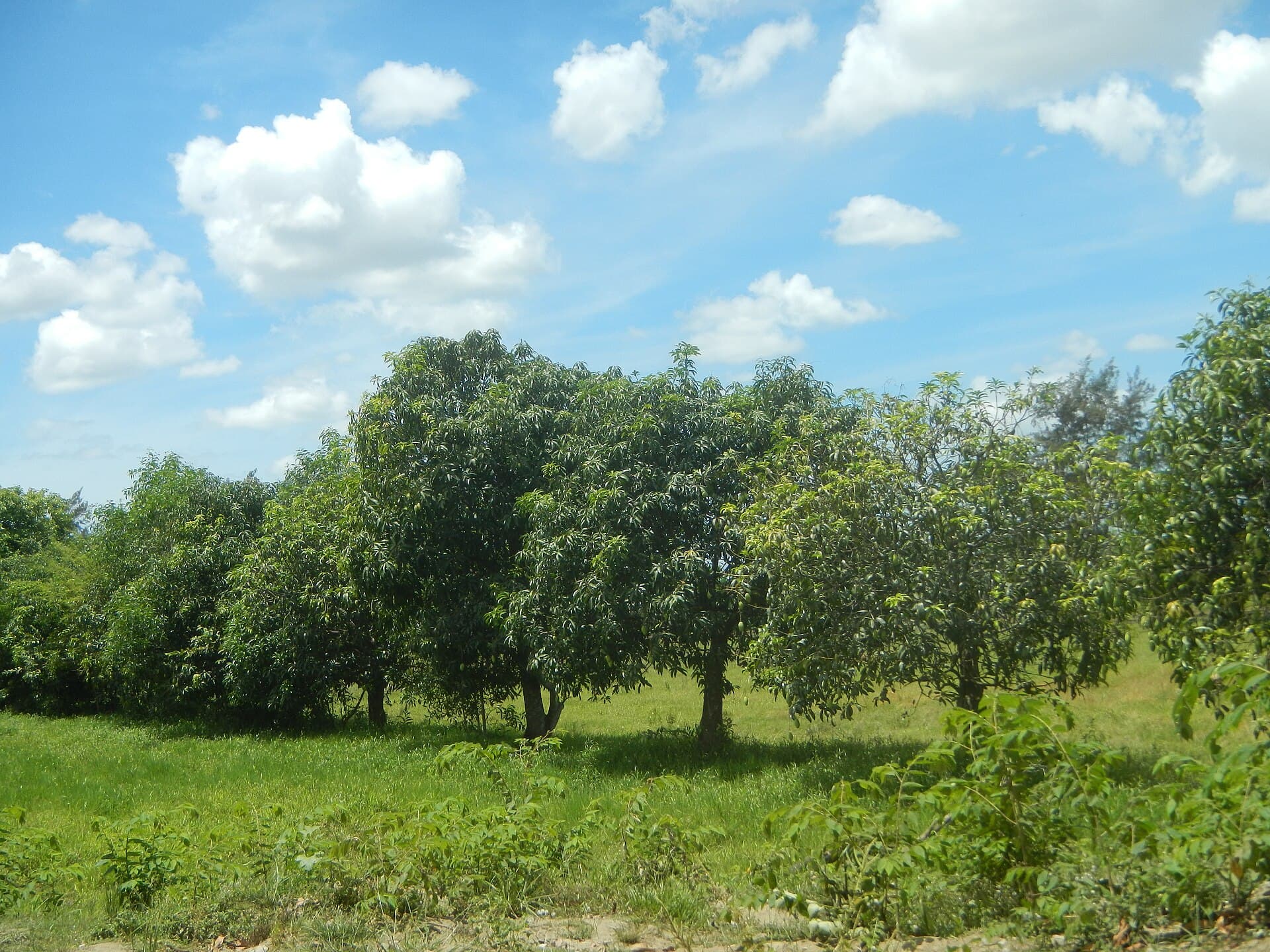
16 Best Fruit Bearing Trees in the Philippines to Plant at Home
Fruit bearing trees are trees grown for their edible fruit, like mango, rambutan, avocado and guava. This guide covers 16 fruit bearing trees in the Philippines that you can plant at home or on a farm: how big each one grows, how many years it takes to bear fruit from seed and from a grafted seedling, which ones fit a small backyard or a pot, and where to find seedlings from local nurseries in our Fruit Trees category.
The short answer: the fastest are papaya (6 to 11 months from seed), dragon fruit (6 to 9 months from a cutting) and mulberry (often within the first year). Mangosteen, lanzones and durian are the slowest and can take 7 to 20 years from seed, so plant them as grafted or budded seedlings. For a small backyard, atis, guava, papaya, dragon fruit and mulberry stay the easiest to manage.
In this guide | Short answer |
|---|---|
16 trees with their Tagalog names, size and years to first fruit. | |
A tree grown for edible fruit. Narra and mahogany are non-fruit-bearing examples. | |
Grafted and marcotted trees fruit years sooner and keep the mother tree's fruit. | |
Mango, mulberry, rambutan, avocado, papaya, mangosteen, guava, lychee, dragon fruit, durian, lanzones, pomelo, guyabano, langka, duhat and atis. | |
Caimito, chico, passion fruit, longan, marang and the citrus trees. | |
Atis, guava, papaya, dragon fruit and mulberry. | |
Papaya, dragon fruit and mulberry, within about a year. | |
Full sun, good drainage, mulch and steady watering in the first dry season. | |
Examples, non-fruit-bearing trees, grafting and more, plus one question in Tagalog. |
16 Fruit Bearing Trees at a Glance
Tap a tree to jump to it. Years to first fruit are typical figures from the sources in each section; care, variety and climate change them.
Tree | Tagalog | Full-grown height | First fruit from seed | Grafted, budded or cutting | Small yard or pot? | On FarmyHub |
|---|---|---|---|---|---|---|
Mangga | 10–30 m | About 6 years | Grafted: 1–2 years after planting | No, unless pruned | ||
Mulberry | Shrub or small tree (prunable) | Not usual | Cutting: often within the first year | Yes | ||
Rambutan | 15–25 m | 5–6 years (many seedlings are male) | Budded: 2½–3 years | No | ||
Abokado | About 9 m, up to 18 m | 4–5 years | Grafted: sooner | No | ||
Papaya | 6–9 m | 6–11 months | Grown from seed | Yes | ||
Mangostan | 6–25 m, very slow | 7–9 years, often 10–20 | Inarched: still slow | No | ||
Bayabas | Up to 10 m | 2–4 years | Marcotted: sooner | Yes, with pruning | ||
Litsiyas | 9–30 m, slow | 5–12 years, even 25 | Marcotted: 2–5 years | No | ||
Dragon fruit | Climbing cactus on a post | Not usual | Cutting: 6–9 months | Yes | ||
Durian | Grafted 8–10 m; seedling 27–40 m | 7 years or more | Grafted: about 4 years | No | ||
Lansones | 10.5–15 m | 12–20 years | Grafted: 10–12 years; cutting: about 8 | No | ||
Suha | 5–15 m | Not given | Grafted: about 3 years | Medium yard | ||
Guyabano | 7.5–9 m | 3–5 years | Grafted: not given | Medium yard | ||
Langka | 9–21 m | 4–14 years (early types 2½–3½) | Not given | No | ||
Duhat, lomboy | 12–15 m, up to 30 m | 8–10 years | Grafted: 4–7 years | No | ||
Atis | 3–6 m | 2–4 years | Grafted: as early as 8 months | Yes |
What Is a Fruit Bearing Tree?
A fruit bearing tree is any tree grown for fruit that people eat. Common examples of fruit bearing trees in the Philippines are mango, rambutan, avocado, guava, langka, guyabano, duhat, atis, lanzones, durian, mangosteen and pomelo. In Tagalog they are called punong namumunga.
Non-fruit-bearing trees are grown for wood, shade or flowers instead. They still make seeds or pods, but no fruit you would eat:
Non-fruit-bearing tree | Grown for |
|---|---|
Narra | Hardwood and shade; the national tree of the Philippines |
Mahogany | Timber |
Acacia (rain tree) | Shade along roads and in parks |
Gmelina | Fast-growing timber |
Benguet pine | Timber and reforestation in the Cordillera |
Molave | Very hard, durable wood |
Fire tree | Bright red flowers |
Bamboo (kawayan) | Poles and building material (a giant grass, not a true tree) |
Grafted vs Marcotted vs Seedling Fruit Trees
How a seedling was made decides how soon it fruits and whether the fruit matches the mother tree. That is why nurseries sell most fruit trees grafted, budded or marcotted.
Planting material | How it is made | Time to first fruit | Same fruit as the mother tree? | Watch out for |
|---|---|---|---|---|
Seedling | Grown from a seed | Slowest: about 6 years for mango, 12–20 years for lanzones | Not always | Rambutan and papaya seedlings can be male trees that never fruit |
Grafted or budded | A shoot or bud from a fruiting tree is joined onto a young seedling (the rootstock) | Much sooner: 1–2 years after planting for mango, 2½–3 years for budded rambutan | Yes | Remove shoots growing from below the graft, or the rootstock takes over |
Marcotted (air-layered) | Roots are grown on a branch while it is still on the tree, then the branch is cut off and planted | Early: 2–5 years for lychee | Yes | No deep taproot, so young trees need staking against strong winds |
Cutting | A cut branch is rooted in soil or water | Fast for mulberry and dragon fruit; about 8 years for lanzones | Yes | Only some fruits root well from cuttings |
Grafting also keeps trees smaller: grafted durian trees reach about 8 to 10 meters, against 27 to 40 meters for seedlings, according to Fruits of Warm Climates. In the sources below, "Fruits of Warm Climates" means Julia Morton's fruit reference, published online by Purdue University.
 |
1. Mango Tree (Mangga)
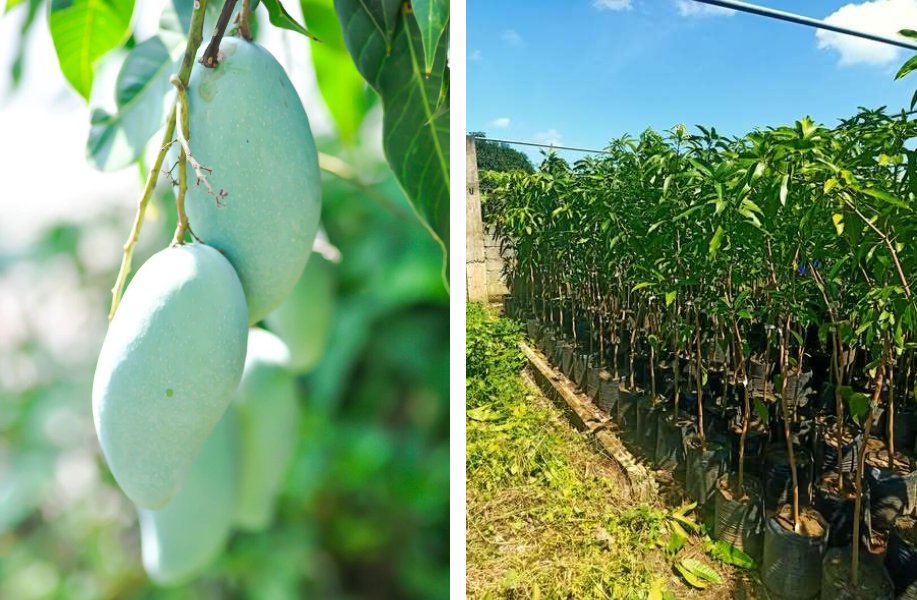
The mango is the most planted fruit tree in Filipino backyards and farms. Carabao makes up about two thirds of the Philippine crop and Pico about a quarter, according to Fruits of Warm Climates. A mango tree grown from seed takes about 6 years to fruit and grows 10 to 30 meters tall, while a grafted seedling can set fruit within a year or two of planting.
Commercial growers in the Philippines spray potassium nitrate to make mango trees flower. For the different varieties, see our guide to types of mango in the Philippines.
Scientific name: Mangifera indica
Height: 10–30 m; prune grafted trees to keep them low
First fruit: about 6 years from seed, 1–2 years after planting a grafted seedling
On FarmyHub: Bryan Bornilla in Cabanatuan City, Nueva Ecija lists grafted Carabao (₱210), Guimaras (₱310), Golden Queen and Catimon (₱500) mango trees and Piko mango seedlings (₱300).
 |
2. Mulberry Tree
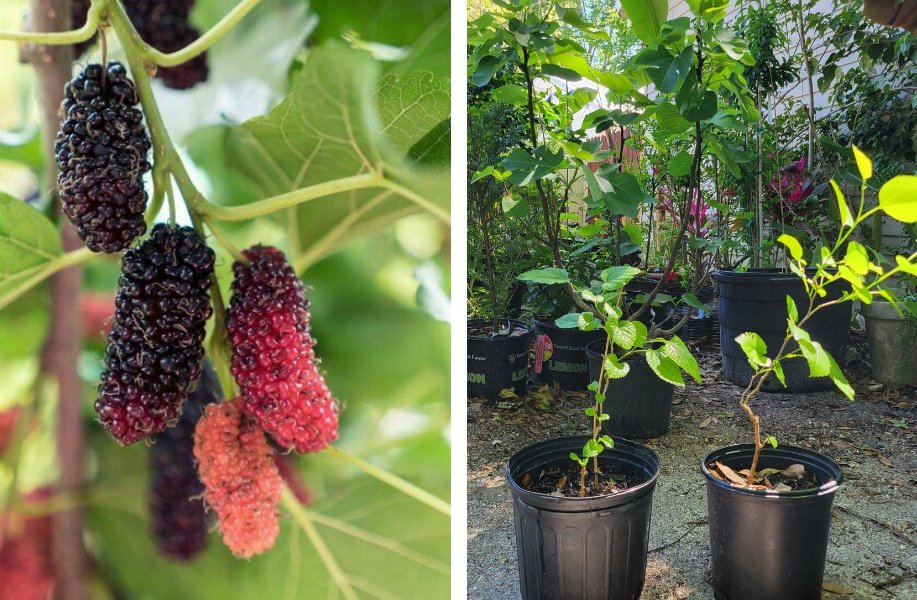
Mulberry is one of the fastest fruit trees you can grow. Most mulberries grow more than 3 meters (10 feet) a year and produce fruit within the first year, says University of Florida extension. The small berries turn from red to dark purple when ripe and are eaten fresh or made into jam.
Mulberry roots easily from cuttings and takes hard pruning, so you can keep it as a shrub in a pot or a corner of the yard.
Scientific name: Morus species
Height: fast-growing; prune to keep it shrub-sized
First fruit: often within the first year from a rooted cutting
On FarmyHub: Bryan Bornilla in Cabanatuan City, Nueva Ecija lists mulberry cuttings and seedlings for ₱180.
 |
3. Rambutan Tree
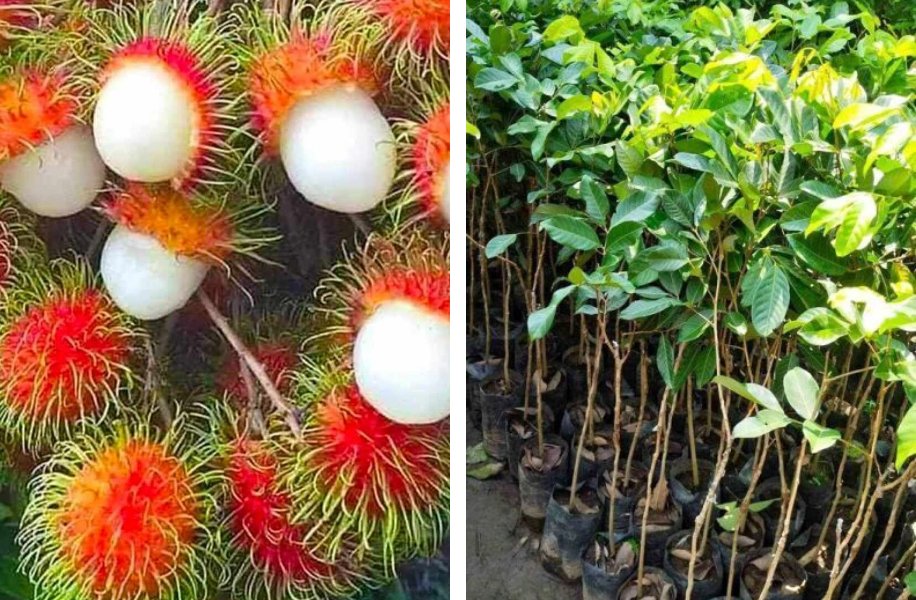
Rambutan reached the Philippines from Indonesia in 1912, and commercial orchards spread after the 1950s in Batangas, Cavite, Davao, Iloilo, Laguna, Oriental Mindoro and Zamboanga, according to Fruits of Warm Climates.
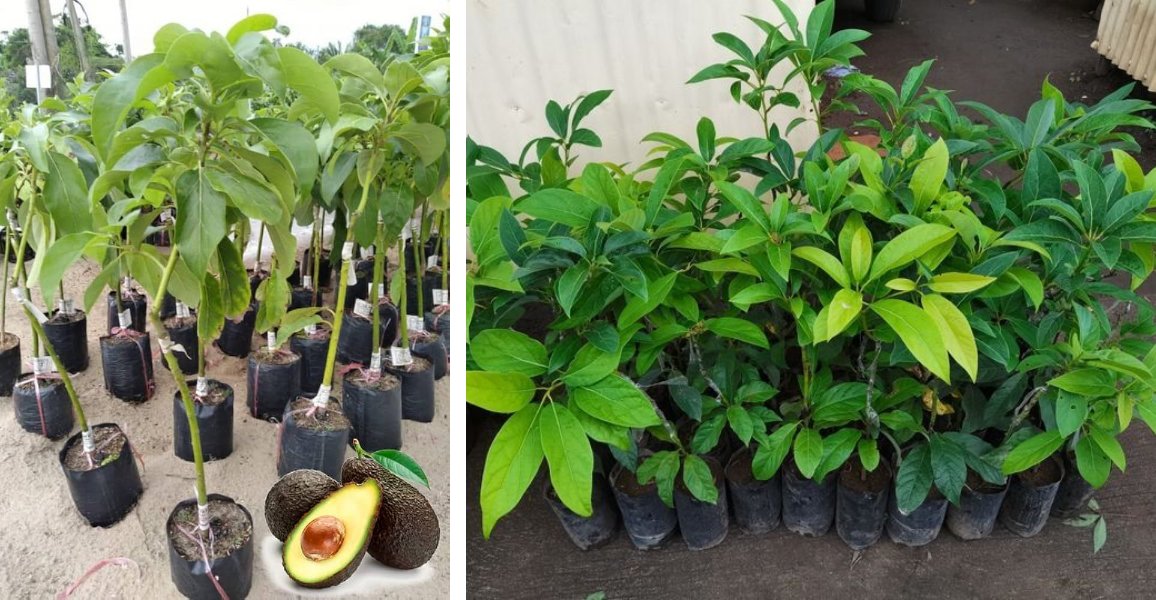
Always plant a budded or grafted rambutan. Seedlings take 5 to 6 years to bear, and many turn out to be male trees that never fruit: one Philippine seedling orchard had 67% male trees. Budded trees flower 2½ to 3 years after planting.
Scientific name: Nephelium lappaceum
Height: 15–25 m
First fruit: 5–6 years from seed, 2½–3 years for budded trees
On FarmyHub: Bryan Bornilla in Cabanatuan City, Nueva Ecija lists Rambutan RR seedlings for ₱280.
 |
4. Avocado Tree (Abokado)
The avocado came to the Philippines near the end of the 16th century, says Fruits of Warm Climates. Seedling trees begin to bear in 4 or 5 years and can keep producing for 50 years or more; grafting gives earlier fruit of a known variety.
Avocado trees usually reach about 9 meters, sometimes 18, so give them room or prune them every year.
Scientific name: Persea americana
Height: about 9 m, sometimes 18 m
First fruit: 4–5 years from seed, sooner from a grafted seedling
On FarmyHub: Bryan Bornilla in Cabanatuan City, Nueva Ecija lists grafted avocado trees for ₱250.
 |
5. Papaya Tree
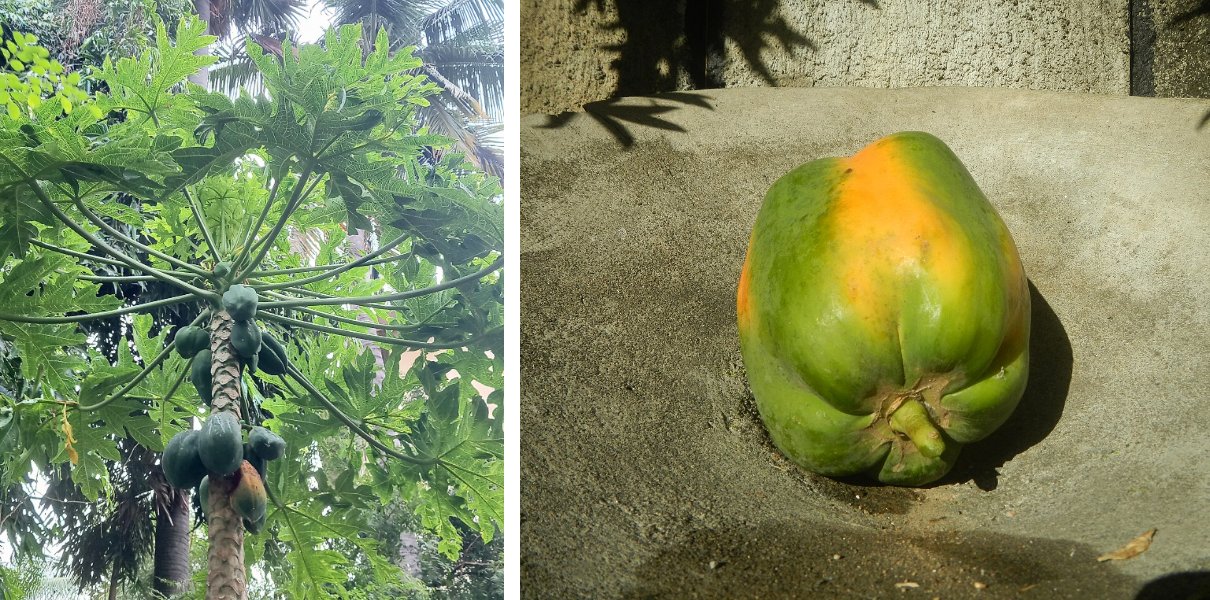
Papaya is the fastest "tree" on this list, though botanists call it a large herb, notes Fruits of Warm Climates. It grows 2 to 3 meters in its first year and fruits 6 to 11 months from seed, depending on the climate. Plants bear well for about 2 years, and farmers usually replace them after 3 to 4 years.
Spaniards brought papaya seeds to the Philippines around 1550. Papaya plants can be female, male or bisexual, so choose seed of a variety such as Solo, whose plants are all fruit-bearing.
Scientific name: Carica papaya
Height: 6–9 m
First fruit: 6–11 months from seed
On FarmyHub: no papaya seedlings listed yet; fresh papaya is in the Papaya category. If you grow papaya seedlings, you can list them for free.
 |
6. Mangosteen Tree (Mangostan)
Mangosteen is the slowest tree here. It grows very slowly, and a seedling may fruit in 7 to 9 years but often takes 10 or even 20, according to Fruits of Warm Climates. In the Philippines it is grown mainly in Mindanao and Sulu.
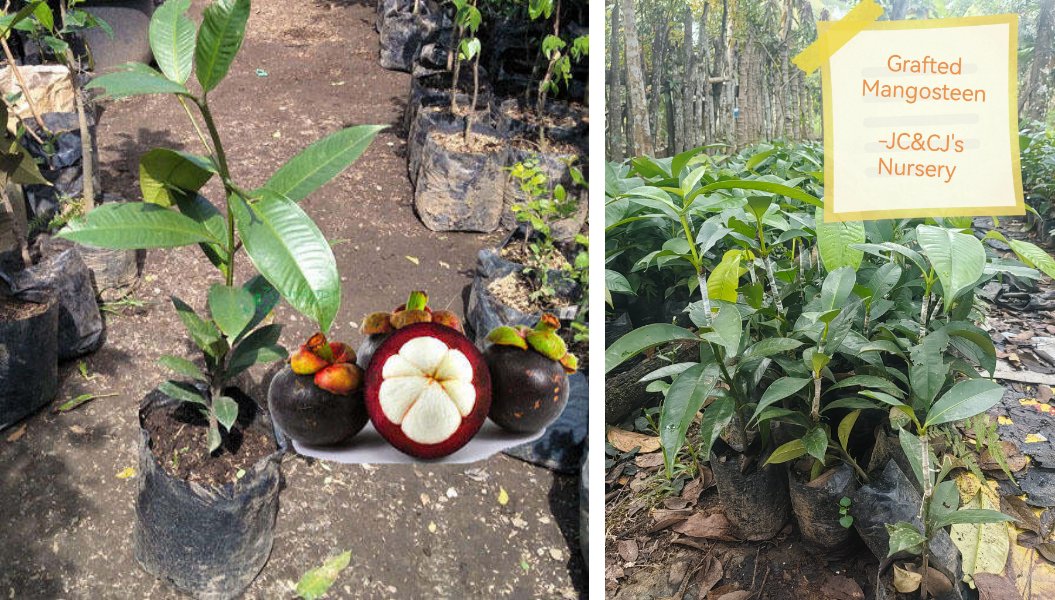
Ordinary grafting rarely works on mangosteen, so Philippine nurseries inarch it onto related Garcinia rootstocks. Plant it as a long-term tree.
Scientific name: Garcinia mangostana
Height: 6–25 m
First fruit: 7–9 years from seed, often 10–20
On FarmyHub: Bryan Bornilla in Cabanatuan City, Nueva Ecija lists mangosteen seedlings for ₱350; Celine Joyce Tadeo in Kidapawan, Cotabato sells grafted mangosteen by the batch (₱18,000 for 30 seedlings).
 |
7. Guava Tree (Bayabas)
Bayabas is the hardy backyard tree many Filipinos grew up with. Guava fruits 2 to 4 years from seed and stays a small tree of up to about 10 meters, smaller with pruning, says Fruits of Warm Climates.
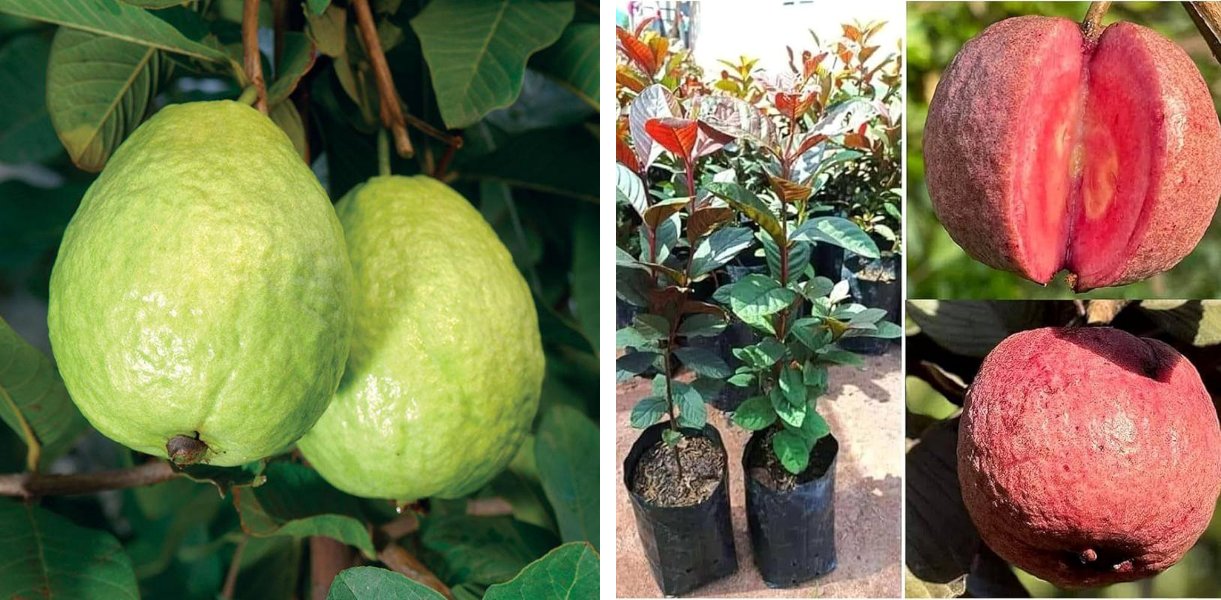
Nurseries now also sell large-fruited guapple (giant guava) and red guava seedlings.
Scientific name: Psidium guajava
Height: up to 10 m
First fruit: 2–4 years from seed
On FarmyHub: Bryan Bornilla in Cabanatuan City, Nueva Ecija lists giant guava (guapple) and red guava seedlings for ₱180 each; Celine Joyce Tadeo in Kidapawan, Cotabato sells guapple seedlings in batches of 30 (₱2,700).
 |
8. Lychee (Litchi) Tree
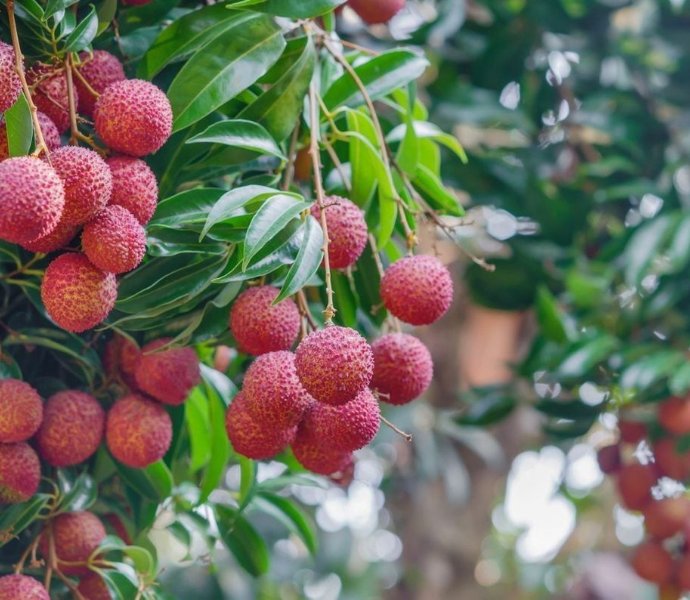
Lychee is planted in the Philippines, but be realistic: the tree needs a cool, dry rest period to flower well, and in hot lowland tropics it often sets fruit only occasionally or not at all, notes Fruits of Warm Climates.
It grows slowly. Seedlings may take 5 to 12 years, even 25, to bear, while air-layered (marcotted) trees fruit 2 to 5 years after planting. If you can, plant it in a cooler, higher area.
Scientific name: Litchi chinensis
Height: 9–30 m
First fruit: 5–12 years from seed, 2–5 years for marcotted trees
On FarmyHub: Bryan Bornilla in Cabanatuan City, Nueva Ecija lists grafted lychee trees for ₱330.
 |
9. Dragon Fruit Plant
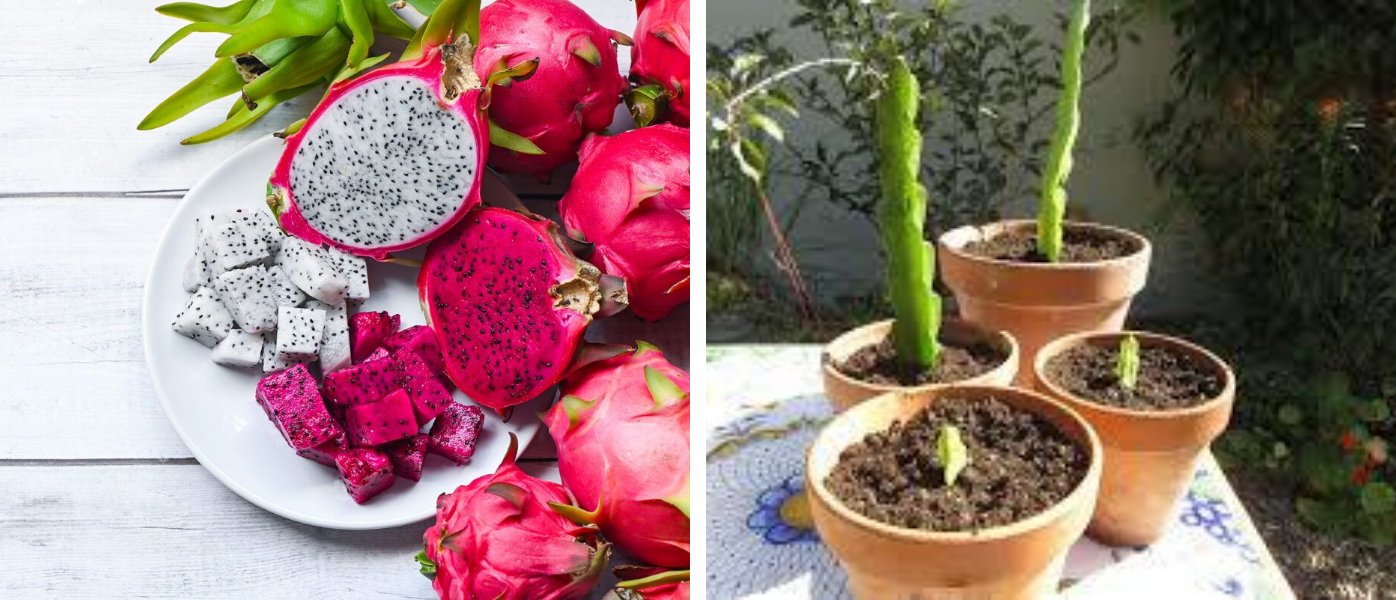
Dragon fruit is a climbing cactus, not a tree, so it grows up a post instead of out. Many plants from cuttings produce fruit 6 to 9 months after planting, according to the University of Florida.
Give each plant a sturdy concrete or wooden post and full sun, and it fits along a fence or in a big pot. The large white flowers open at night.
Scientific name: Hylocereus undatus (now Selenicereus undatus) and related red-fleshed species
Height: climbs a post or trellis
First fruit: about 6–9 months after planting a cutting
On FarmyHub: Bryan Bornilla in Cabanatuan City, Nueva Ecija lists red and white dragon fruit cuttings for ₱180.
 |
10. Durian Tree
Durian is grown mainly in Mindanao and Sulu; trees in the Visayas and Luzon grow well but produce few fruits, according to Fruits of Warm Climates.
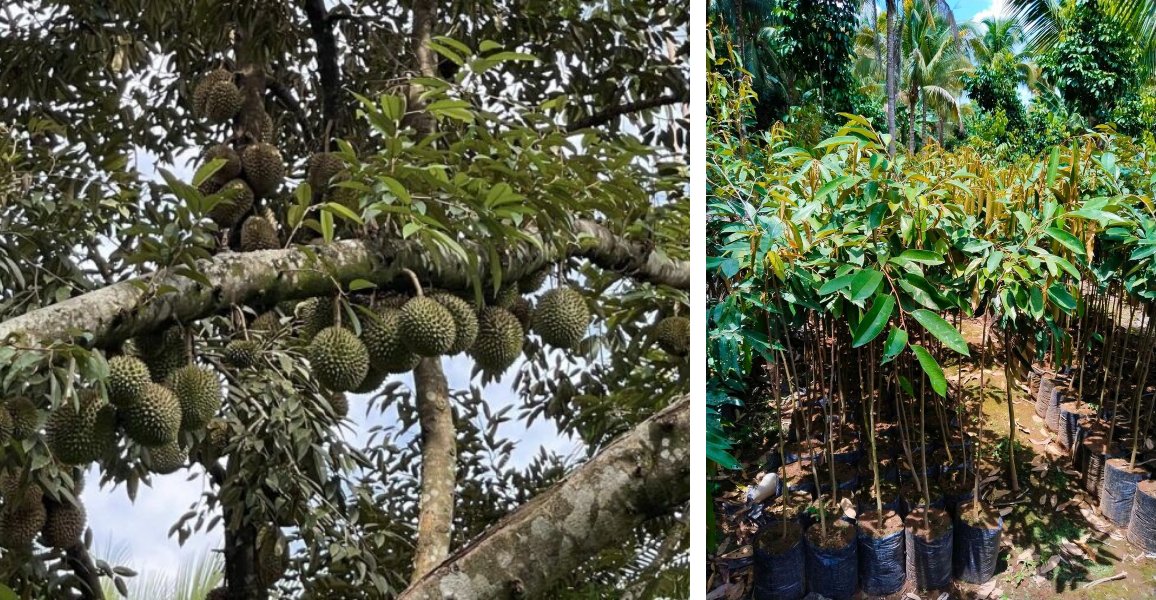
Grafted trees stay much shorter than seedlings, about 8 to 10 meters against 27 to 40 meters, and bloom in about 4 years, while seedlings take 7 years or more. Plant a grafted durian, such as the D101 variety, if you want fruit sooner.
Scientific name: Durio zibethinus
Height: grafted 8–10 m, seedlings 27–40 m
First fruit: grafted trees bloom in about 4 years, seedlings in 7 years or more
On FarmyHub: Bryan Bornilla in Cabanatuan City, Nueva Ecija lists grafted durian for ₱330; Celine Joyce Tadeo in Kidapawan, Cotabato sells grafted durian D101 by the batch (₱7,200 for 30 seedlings).
 |
11. Lanzones Tree (Lansones)
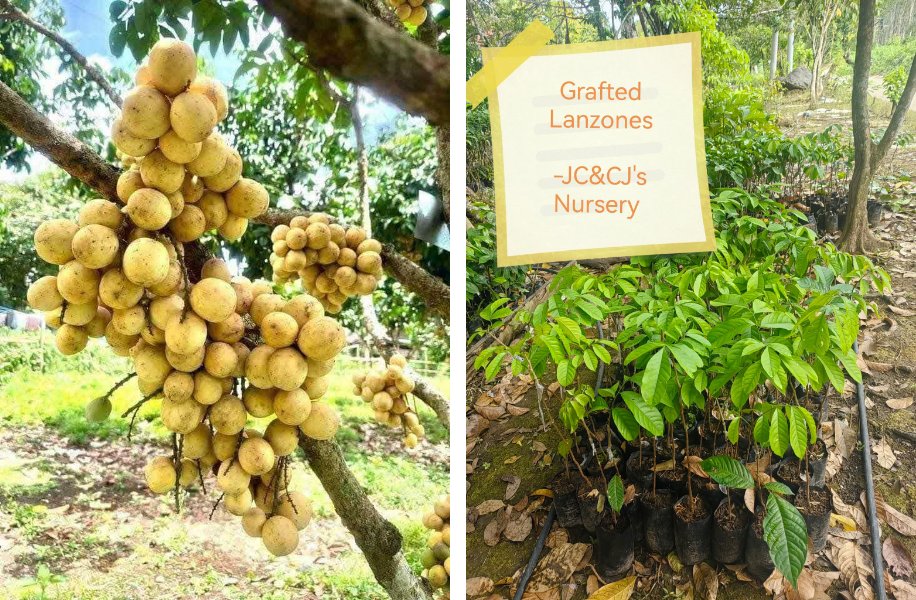
Lanzones is another slow tree. Seedlings bear in 12 to 20 years, says Fruits of Warm Climates, and a Philippine study found that cleft-grafted trees still took 10 to 12 years, while trees grown from rooted cuttings fruited in 8 (FAO AGRIS).
'Paete' is a leading Philippine variety, and longkong and duku are related types sold as seedlings.
Scientific name: Lansium domesticum (now Lansium parasiticum)
Height: 10.5–15 m
First fruit: 12–20 years from seed, 10–12 years for cleft grafts, about 8 years from rooted cuttings
On FarmyHub: Bryan Bornilla in Cabanatuan City, Nueva Ecija lists longkong seedlings for ₱300; Celine Joyce Tadeo in Kidapawan, Cotabato sells grafted lanzones by the batch (₱5,400 for 30 seedlings).
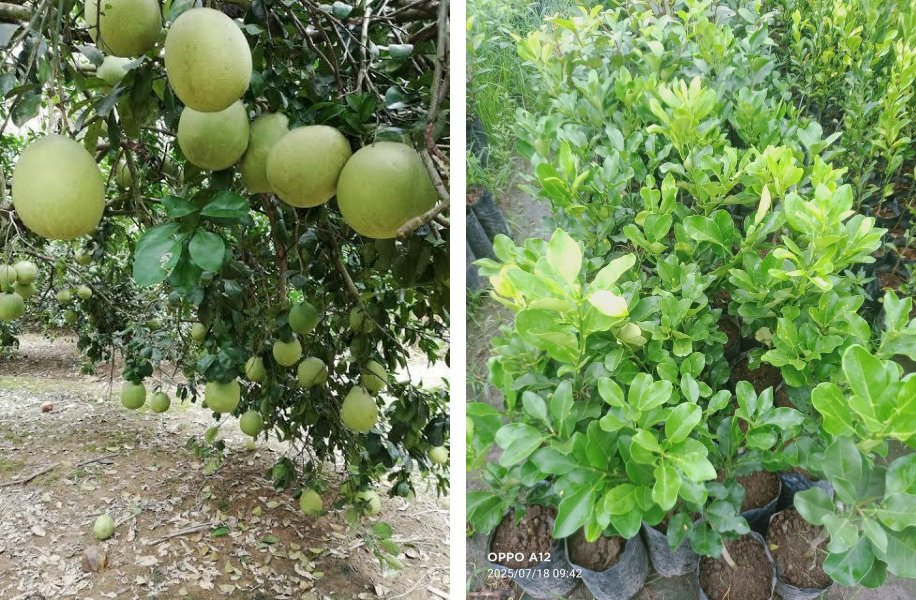 |
12. Pomelo Tree (Suha)
Suha is the biggest citrus fruit, and Davao is known for it. Pomelo trees grow 5 to 15 meters tall, and grafting has a long history here: budwood grafted at the Lamao experiment station in 1913 fruited in 1916, about three years later, according to Fruits of Warm Climates.
Scientific name: Citrus maxima
Height: 5–15 m
First fruit: about 3 years after grafting
On FarmyHub: Bryan Bornilla in Cabanatuan City, Nueva Ecija lists grafted Davao pomelo trees for ₱180.
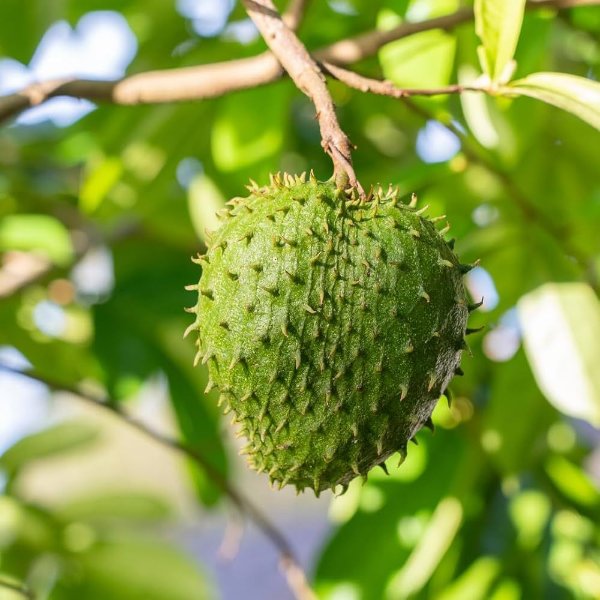 |
13. Guyabano Tree
Guyabano (soursop) is a small tree of 7.5 to 9 meters that begins to bear in 3 to 5 years, says Fruits of Warm Climates. Its creamy, sour-sweet fruit goes into juices and shakes, and Philippine supermarkets even sell the frozen pulp.
Scientific name: Annona muricata
Height: 7.5–9 m
First fruit: 3–5 years
On FarmyHub: Bryan Bornilla in Cabanatuan City, Nueva Ecija lists grafted guyabano trees for ₱180.
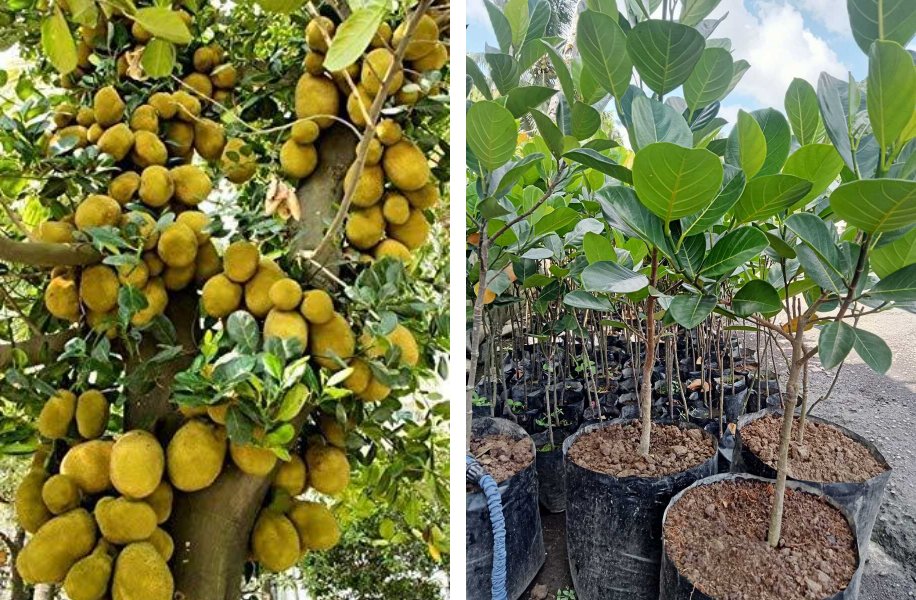 |
14. Jackfruit Tree (Langka)
Langka is common in the Philippines, both planted and growing wild, according to Fruits of Warm Climates. It is a big tree of 9 to 21 meters. Seedlings usually take 4 to 14 years to bear, though some early types fruit in 2½ to 3½ years.
Young green langka is cooked as a vegetable, and the ripe fruit is eaten fresh or in halo-halo.
Scientific name: Artocarpus heterophyllus
Height: 9–21 m
First fruit: 4–14 years from seed, 2½–3½ years for early-bearing types
On FarmyHub: Bryan Bornilla in Cabanatuan City, Nueva Ecija lists grafted langka (₱200) and giant langka (₱250).
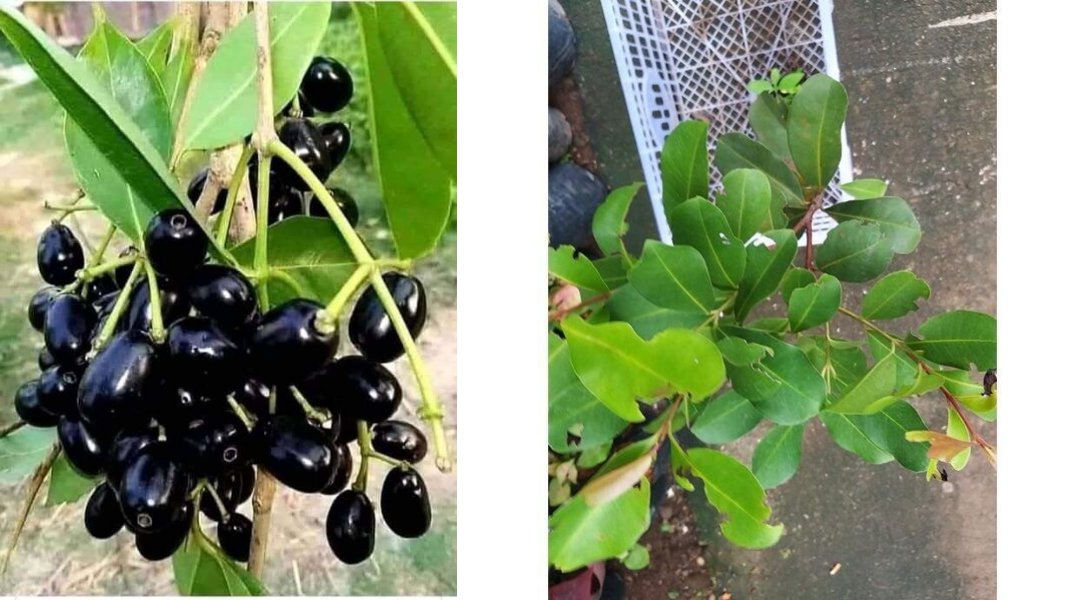 |
15. Duhat Tree
Duhat (Java plum, also lomboy) has grown in the Philippines since prehistoric times, and its dark purple fruit is in season from mid-May to mid-June, notes Fruits of Warm Climates. Duhat is also made into wine.
It is a big tree of 12 to 15 meters or more. Seedlings bear in 8 to 10 years, grafted trees in 4 to 7.
Scientific name: Syzygium cumini
Height: 12–15 m, up to 30 m
First fruit: 8–10 years from seed, 4–7 years grafted
On FarmyHub: Bryan Bornilla in Cabanatuan City, Nueva Ecija lists grafted giant duhat for ₱350.
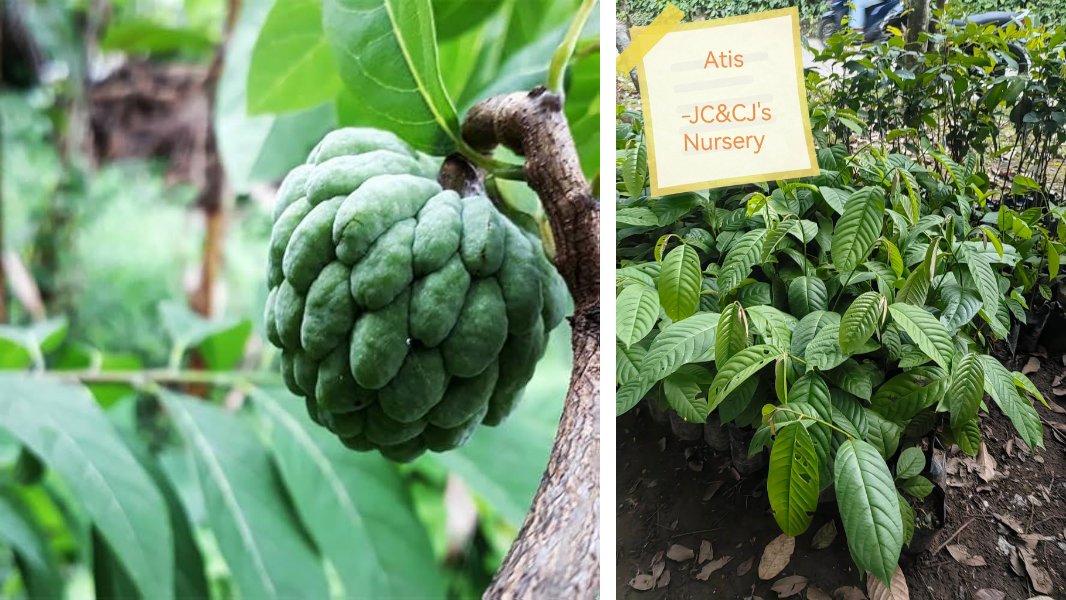 |
16. Atis Tree
Atis (sugar apple) is one of the best fruit trees for a small yard: it stays 3 to 6 meters tall and fruits 2 to 4 years from seed, according to Fruits of Warm Climates. Grafted plants can fruit much sooner; in a trial in India, grafted clones fruited 8 months after planting.
Seedless atis and atemoya (a cross of atis and cherimoya) are also sold as grafted trees.
Scientific name: Annona squamosa
Height: 3–6 m
First fruit: 2–4 years from seed, sooner when grafted
On FarmyHub: Bryan Bornilla in Cabanatuan City, Nueva Ecija lists grafted seedless atis (₱310) and atemoya (₱250); Celine Joyce Tadeo in Kidapawan, Cotabato sells grafted atis by the batch (₱2,100 for 30 seedlings).
More Fruit Trees You Can Plant
Tree | Tagalog | Good to know | On FarmyHub |
|---|---|---|---|
Caimito (star apple) | Kaimito | A common roadside tree; grafted trees have fruited one year after planting (Fruits of Warm Climates) | |
Chico (sapodilla) | Tsiko | Sweet brown fruit; a slow, sturdy tree | |
Passion fruit | Passion fruit | A climbing vine, not a tree; grow it on a fence or trellis | |
Longan | Longan | A lychee relative | |
Marang | Marang | A Mindanao favorite related to breadfruit | |
Calamansi, kiat-kiat, santol, macopa, Meyer lemon, ponkan | Small citrus and other backyard trees |
Best Fruit Trees for Small Backyards and Pots
What are the best trees for small backyards? Choose trees that stay small, take pruning or grow upward, and buy grafted or marcotted seedlings, which stay lower than seedling trees.
Tree | Why it fits a small space |
|---|---|
Stays 3–6 m tall and fruits in 2–4 years | |
A small tree that takes hard pruning | |
Narrow, and fruits in under a year | |
Grows up a single post or along a fence | |
Can be kept as a shrub in a large pot | |
Calamansi and kiat-kiat |
In pots, use a large container with drainage holes, a loose potting mix with compost, and water more often than trees in the ground. Big trees like mango, durian, langka and duhat need a real yard or a farm.
Which Fruit Trees Bear Fruit the Fastest?
Tree | Typical time to first fruit |
|---|---|
Papaya | 6–11 months from seed |
Dragon fruit | 6–9 months after planting a cutting |
Mulberry | Often within the first year from a cutting |
Atis | As early as 8 months when grafted; 2–4 years from seed |
Mango | 1–2 years after planting a grafted seedling |
Guava | 2–4 years from seed |
Rambutan | 2½–3 years for a budded tree |
Pomelo | About 3 years after grafting |
Guyabano | 3–5 years |
Durian | About 4 years grafted, 7 or more from seed |
Mangosteen and lanzones | The slowest: 7–20 years from seed |
How to Plant and Care for Fruit Trees
Step | What to do |
|---|---|
Spot | Full sun for most fruit trees and soil that drains well; avoid low spots where rainwater stands. |
Planting | Dig a hole about twice as wide as the root ball and plant at the same depth as in the bag, with the graft joint above the soil. |
Water | Water deeply and regularly during the first dry season, until the roots are established. |
Mulch | Spread dried leaves or rice straw around the base, not touching the trunk, to keep the soil moist and cool. |
Feeding | Add compost or organic fertilizer a few times a year; see organic fertilizers and our organic fertilizer guide. |
Wind | Stake young trees, especially marcotted ones, before the typhoon season. |
Pruning | Remove shoots growing from below the graft, and prune after harvest to keep the tree low and open to light. |
Where to Get Fruit Tree Seedlings
FarmyHub lists grafted fruit trees from Bryan Bornilla in Cabanatuan City, Nueva Ecija (more than 60 listings), grafted seedlings in batches of 30 from Celine Joyce Tadeo in Kidapawan, Cotabato, and passion fruit from San Pablo, Laguna. Compare them in our grafted fruit trees for sale category, and find more in Seedlings & Saplings.
🌳 See grafted fruit trees on FarmyHubFrequently Asked Questions About Fruit Bearing Trees
What are fruit bearing trees?
Fruit bearing trees are trees grown for edible fruit, such as mango, rambutan, avocado and guava. Trees grown for wood, shade or flowers, like narra and mahogany, are non-fruit-bearing.
What are 10 examples of fruit bearing trees in the Philippines?
Mango, rambutan, avocado, guava (bayabas), langka, guyabano, duhat, atis, lanzones and durian. Others are mangosteen, pomelo (suha), lychee, caimito, chico and marang. See all 16 at a glance.
What are examples of non-fruit-bearing trees?
Narra, mahogany, acacia, gmelina, Benguet pine, molave and fire tree. They are grown for timber, shade or flowers.
What is the fastest fruit tree to bear fruit?
Papaya (6 to 11 months from seed), dragon fruit (6 to 9 months from a cutting) and mulberry (often within the first year). Among real trees, a grafted mango can fruit 1 to 2 years after planting.
Which fruit trees are best for a small backyard?
Atis, guava, papaya, dragon fruit and mulberry, plus small citrus such as calamansi and kiat-kiat. Grafted seedlings stay smaller than trees grown from seed.
What is the difference between marcotting and grafting?
Grafting joins a shoot from a fruiting tree onto a young rootstock seedling; marcotting (air-layering) grows roots on a branch while it is still on the mother tree. Both fruit years sooner than seedlings and keep the mother tree's fruit, but marcotted trees have no deep taproot. See grafted vs marcotted vs seedling.
How long does a mango tree take to bear fruit?
About 6 years from seed, and 1 to 2 years after planting a grafted seedling.
Ano ang mga halimbawa ng punong namumunga?
Ilan sa mga punong namumunga sa Pilipinas ang mangga, rambutan, abokado, bayabas, langka, guyabano, duhat, atis, lansones at durian. Mas mabilis mamunga ang grafted o marcotted na punla kaysa sa itinanim mula sa buto.
Related: Fruit Trees, Seedlings & Saplings, types of mango in the Philippines and organic fertilizers.
Sell Your Fruit Trees on FarmyHub
Do you grow or trade fruit trees? FarmyHub connects Filipino farmers and suppliers with buyers across the country. There are two ways to start:
List your products yourself, for free. Create a free account in seconds with your Google or Facebook account, then post your listing in a few minutes. Once approved, your listing is visible to buyers, who can message or call you directly.
🌱 List your products for freeBecome a FarmyHub supplier. Tell us about your farm or business, your products and how much you can supply. Our team will contact you to learn about your business, and when a bulk buyer is looking for what you sell, we can recommend you.
🤝 Become a supplierPrefer using your phone? Download the free FarmyHub app to post listings and reply to buyers on the go.
📱 Get the app on Google PlayRegistered agriculturist, higher education instructor, and hands-on farmer. I write practical farming and agribusiness guides based on my work in the field and in the classroom.