

Bee Farming in the Philippines: 10 Steps to Start a Honey Business (Cost, Income & Guide 2026)
Bee farming in the Philippines is one of the most rewarding agribusiness opportunities you can start right from your backyard, orchard, or homestead. Pure, unadulterated honey is in steady demand among Filipino families, who use it daily for morning calamansi drinks, natural cough remedies, baking, and as a natural sweetener.
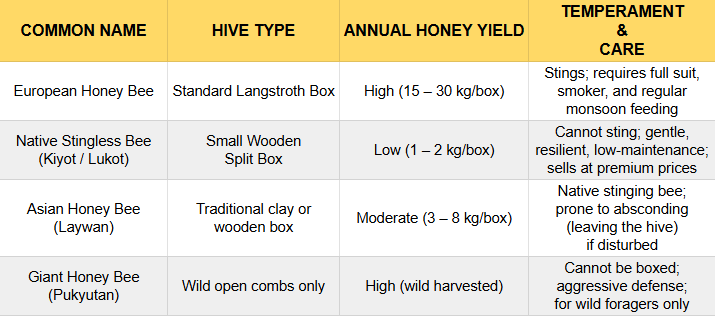
Comparison of Bee Species in the Philippines
While the Philippines has hundreds of native bee species (such as carpenter bees and sweat bees), most are solitary and produce no harvestable honey. For a viable honey business, only three species can be kept in managed hive boxes (Kiyot, Apis mellifera, and Laywan), while wild honey is harvested from the giant Pukyutan.
10 Steps to Start Your Philippine Honey Business
Step 1: Attend a Local Beekeeping Seminar First — Train before buying bees
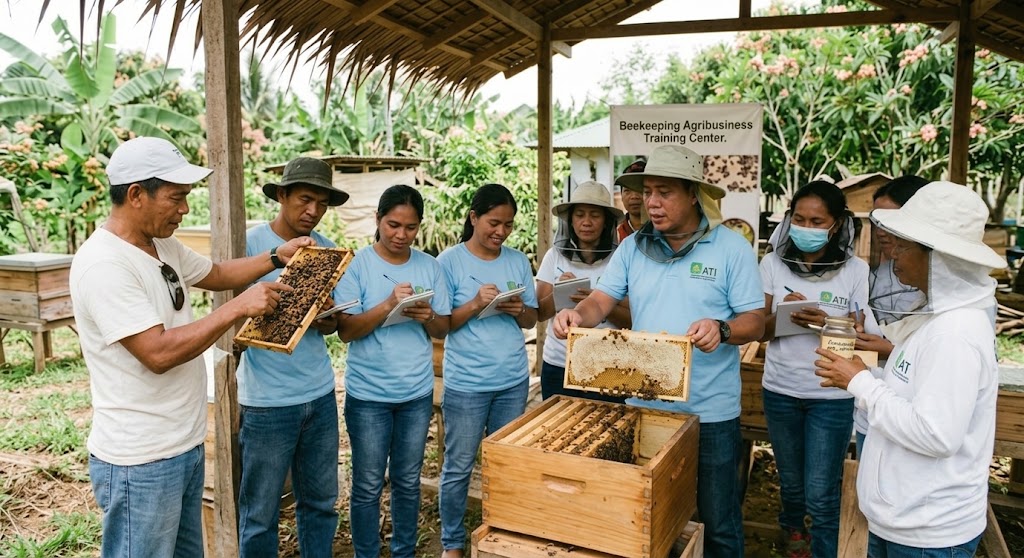
Join hands-on training from government centers like ATI (Agricultural Training Institute), UPLB Bee Program, DMMMSU-NARTDI (in La Union), or a trusted local bee farm.
Important: Make sure you and your family are not severely allergic to bee stings before spending any money.
.png)
Step 2: Pick the Best Spot for Your Hives — Ensure food and water
European Honey Bees: Position hives near flowering trees (coconut, mango, coffee, or citrus) within 1 to 2 kilometers, away from pesticide-sprayed farms. Keep at least 10–15 meters away from walkways and livestock due to stinging.
Native Stingless Bees: Can be safely placed right in your backyard. Because they do not sting, they pose zero risk to family or neighbors. Ensure nearby access to small flowering plants, herbs, and trees.
Step 3: Choose Between European Bees and Native Stingless Bees — Choose your bee type
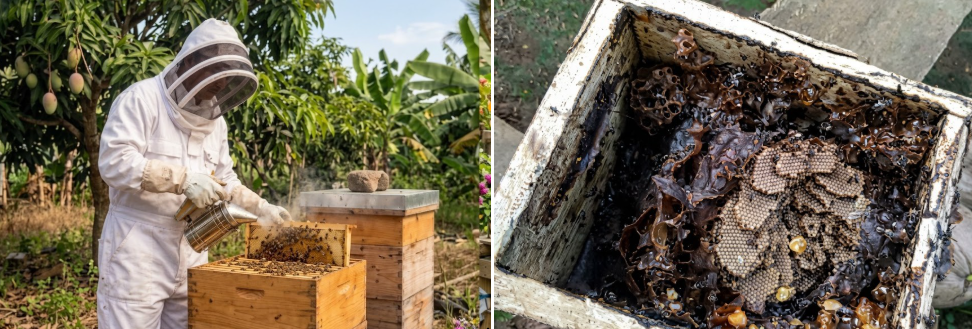
European Honey Bee (Apis mellifera): Produces a lot of honey (15 to 30 kilos per box each year). They can sting, so you need a full protective suit and smoker.
Native Stingless Bee (Kiyot or Lukot): Very gentle and cannot sting. They produce small amounts of honey (1 to 2 kilos a year), but you can sell it for double or triple the price because people buy it as natural medicine. Many beekeepers in the Philippines source these native colonies directly from Palawan, where stingless bees naturally thrive in the wild.
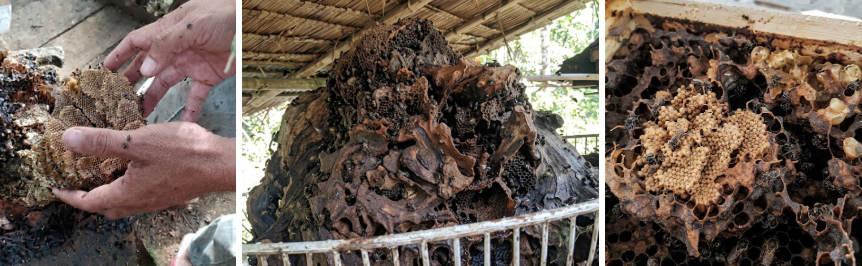
My Firsthand Experience: Why I Started with Native Stingless Bees
When I was in Bukidnon, I bought a starter native stingless bee colony inside its wooden box for ₱1,500 and brought it home to Oriental Mindoro.
Based on my experience, native stingless bees are much easier to keep than imported European bees. European bees produce a lot of honey, but you need a full protective suit, face shield, gloves, smoker, and expensive hive setups because their stings really hurt.
With native stingless bees, it is very simple. They do not sting (they might give a tiny, painless bite), so you don't need expensive protective equipment. They naturally gather nutrients from nearby flowering trees and plants to make pure honey.
Since native bees produce smaller amounts of honey per hive, the secret is to multiply your colonies. As the group grows big, they choose a new queen leader. When this happens, you simply split them into a new wooden box to grow your hives without spending much money.
💡 Real-World Analogy: Hybrid vs. Local Breed
Think of it like choosing a dog breed. If you buy a purebred high-maintenance dog, you have to invest in expensive high-quality feeds and special care. If you feed them low-quality food, they easily get sick. But if you get a local breed, they are naturally resilient, adaptable, and low-cost to maintain.
European bees are like high-maintenance breeds that need high investment in gear and feeding. Native stingless bees are like local breeds, they are hardy, fit naturally into our Philippine environment, gather their own nutrients from local flowers, and require very little maintenance cost.
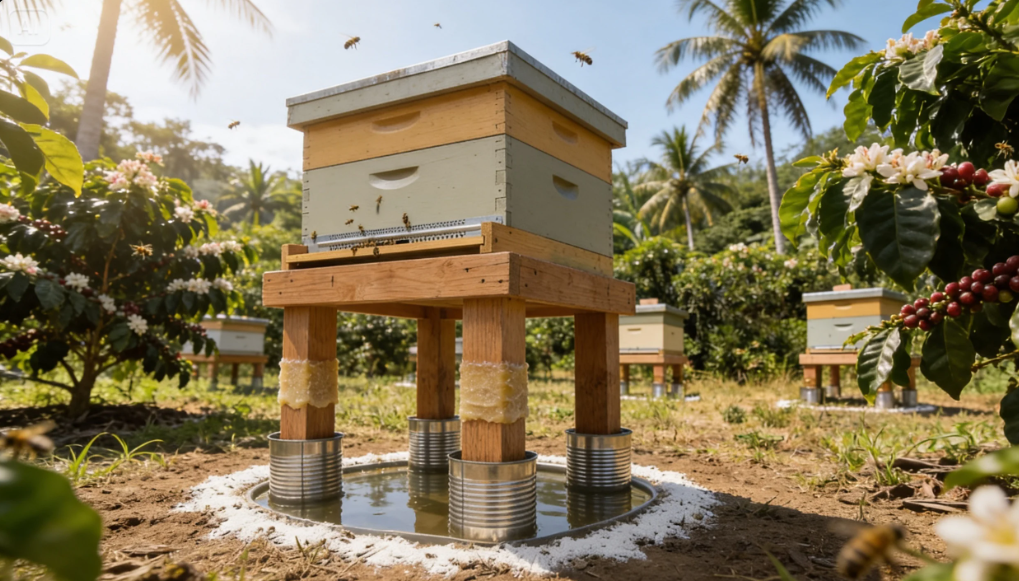
Step 4: Prepare Hive Boxes and Ant-Proof Stands — Protect homes from pests
To protect the colony from pests, place the legs of the stand in small cans filled with water or used motor oil to prevent red ants, black ants, and cane toads (kamprag) from entering the hive.
European Honey Bees: Buy standard wooden Langstroth boxes and place them on elevated, ant-proof stands 1.5 to 2 feet off the ground.
Native Stingless Bees: Use a compact wooden split box designed specifically for stingless bees. Place on the same elevated ant-proof stand.
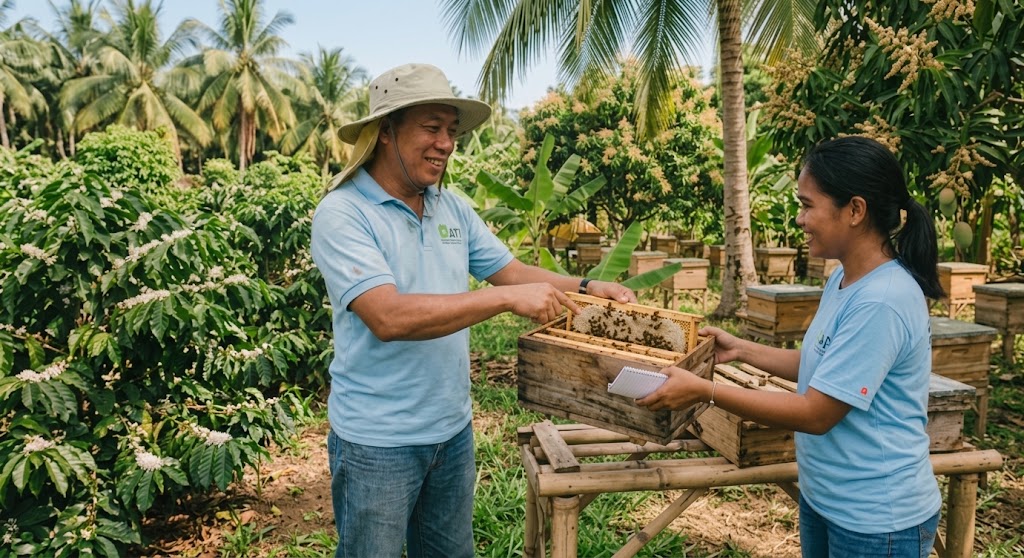
Step 5: Buy Your Bees at the Right Time (November to January) — Seasonal timing is key
European Honey Bees: Purchase a nucleus colony (nuc) a starter family containing a healthy queen, worker bees, brood frames, and honeycomb. Schedule your purchase between November and January to coincide with the start of the sunny flowering season, avoiding the July to October typhoon period when nectar is scarce.
Native Stingless Bees: Buy an established starter colony inside a wooden split box from reputable suppliers in Palawan, Bukidnon, and Batangas. These can also be purchased between November and January for optimal nectar foraging.
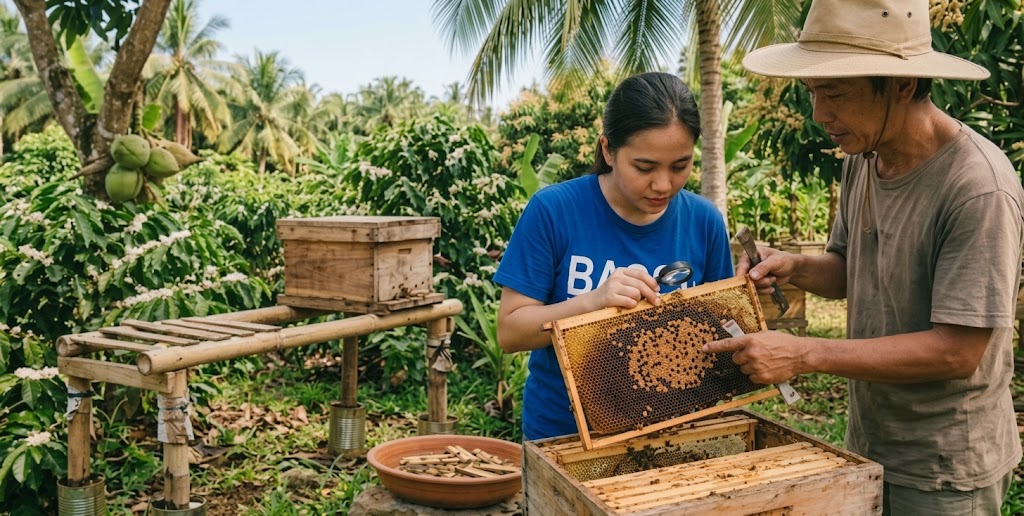
Step 6: Set Up and Check Your Hives — Position and inspect hives
Position hive entrances toward the East so morning sunlight encourages early foraging, and keep all boxes under light tree shade to avoid afternoon overheating.
European Honey Bees: Routinely inspect inside the box every 7 to 10 days by pulling frames to ensure the queen is laying eggs and checking for signs of Varroa mites.
Native Stingless Bees: Stingless bees seal their boxes with protective propolis. Inspect only from the outside entrance hole to confirm bee activity. Open the box only during colony splitting or annual honey harvesting.
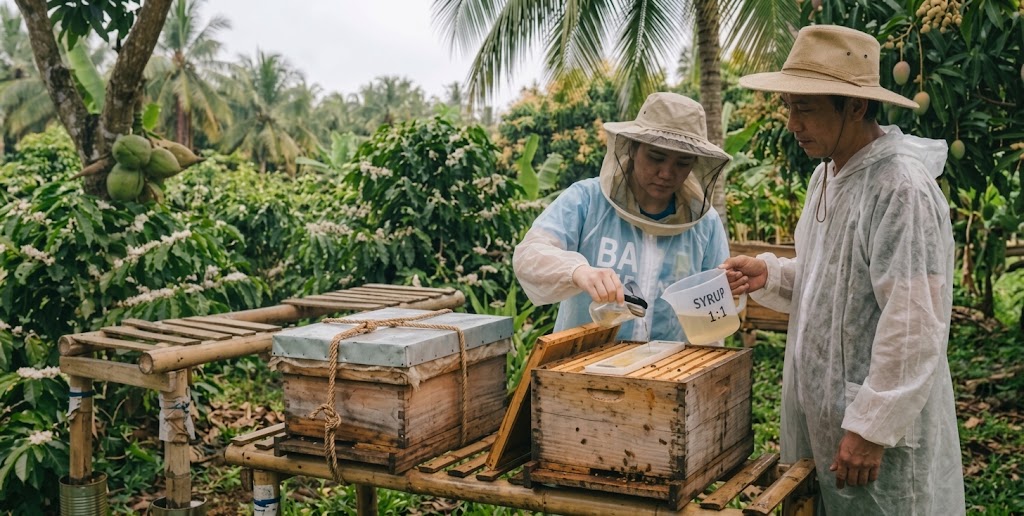
Step 7: Feed Your Bees During the Rainy Season (July to October) — Feed during monsoon rains
Heavy monsoon rains wash away nectar and keep bees from flying. Secure hive covers with heavy ropes or concrete blocks to withstand strong typhoon winds.
European Honey Bees: Feed a 1:1 sugar-water syrup in internal feeders during heavy monsoon rains to prevent colony starvation.
Native Stingless Bees: Usually need little or no sugar feeding, because they store their own honey and pollen in small pots. Just keep their box dry and shaded during the rainy season.
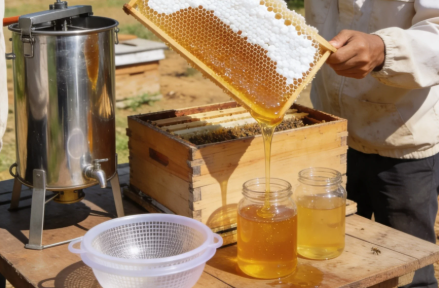
Step 8: Harvest Pure Honey During Summer (March to May) — Harvest during dry summer
European Honey Bees: Pull capped honeycomb frames and use a manual spinner to extract pure liquid honey.
Native Stingless Bees: Honey is stored in small resin pots, not frames, so it isn't extracted with a spinner. It's harvested by carefully opening the honey pots and draining them.
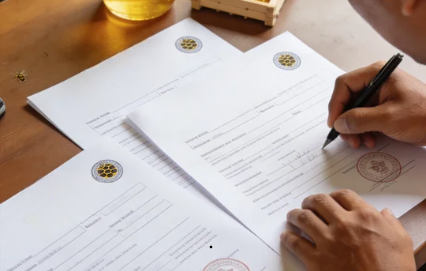
Step 9: Get Basic Business Permits — Secure required business permits
Legalize your operation by registering your business name with the DTI and obtaining a Barangay Clearance alongside a Mayor's or Business Permit from your local municipal hall. If you plan to expand distribution to supermarkets, malls, or pharmacies, secure an FDA-LTO (License to Operate).
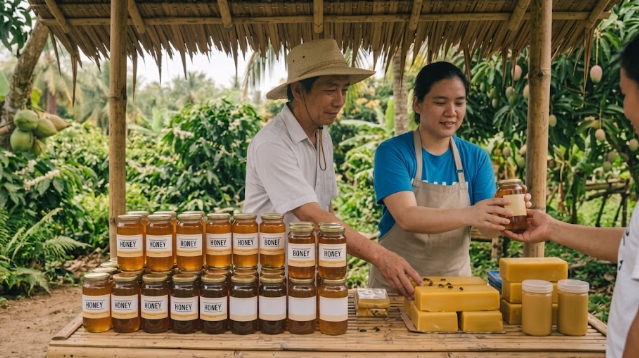
Step 10: Bottle, Brand, and Sell Locally — Bottle and market locally
European Bee Products: Sell liquid honey, honeycomb chunks, and rendered pure beeswax.
Stingless Bee Products: Sell raw stingless bee honey in small glass jars (250ml) at a premium price, along with raw propolis (bee glue).
Beekeeping Startup Cost & Income Projections (2026 Estimates)
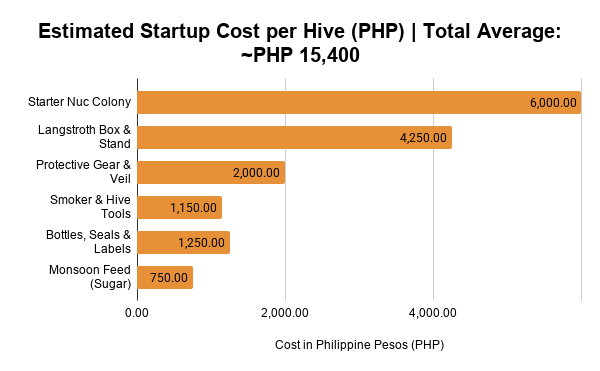
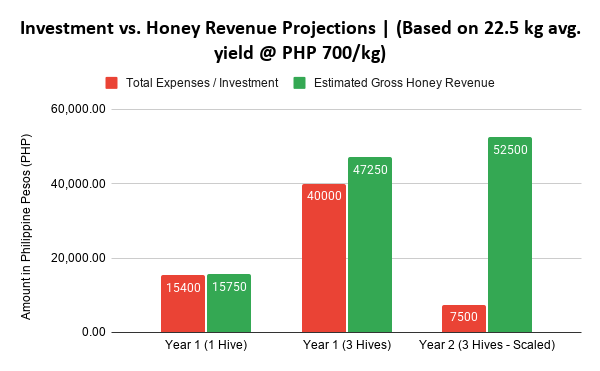
Important Notes & Assumptions for Beginners:
Weather & Yield Factors (Year 1 vs. Year 2): Year 1 revenue projections assume an average yield of 22.5 kg per hive during a favorable dry season (March–May) at PHP 700/kg. In Year 2, projected revenue rises to PHP 52,500 (~25 kg per hive for 3 hives) because established, mature colonies with fully built combs yield more honey than freshly installed starter colonies. Note that prolonged monsoon rains or severe typhoons can lower yields and require extra supplemental feeding.
Shared Equipment Savings: Scaling from 1 to 3 hives significantly lowers per-hive setup costs because tools, smokers, protective suits, and honey extractors are one-time shared purchases.
Local Price Variations: Prices for nuc starter colonies and materials reflect current market averages in Luzon and Visayas; actual rates vary slightly depending on your provincial supplier and transport logistics.
Secondary Income Excluded: These estimates only account for raw bottled honey. Additional earnings from beeswax, bee pollen, propolis, and future colony splits (selling starter nucs or split boxes) can boost profits even further.
Native Stingless Bee (Kiyot / Lukot) Financial Guide
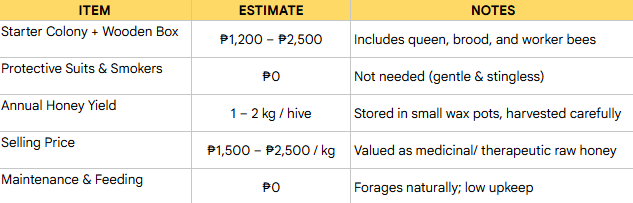
*Note on Maintenance & Feeding: While regular feed and protective gear cost ₱0, prepare a small budget (around ₱200–₱500 per year) for basic upkeep, such as refreshing ant-barrier oil/grease on hive legs, weatherproofing wooden boxes, and providing emergency sugar syrup during extended monsoon weeks when bees cannot forage.
Frequently Asked Questions (FAQ)
1. Is honey bee farming in the Philippines profitable for beginners?
Yes. Commercial and backyard honey bee farming in the Philippines can be profitable. Under proper management, an apiculture farming setup with European bees (Apis mellifera) yields 15 to 30 kilos per box annually, once the colony is established. A new colony usually produces less honey in its first season, so don't count on breaking even from the very first harvest.
2. How do I find bee farmers near me or legitimate starter colonies?
You can check regional centers such as the Agricultural Training Institute (ATI), the UPLB Bee Program in Laguna, or DMMMSU-NARTDI in La Union. Your provincial agriculture office (PAO) can also point you to trusted honey bee farms nearby, so you buy disease-free queens and healthy colonies.
3. How to make bee box for honey bee farming at home?
For European Bees: Build a standard 10-frame Langstroth hive using dry, non-toxic, untreated wood like pine, cypress, or seasoned local kiln-dried timber. Essential specifications include:
Precise "Bee Space": Maintain an exact internal gap of 6mm to 9mm between frames and box walls. Smaller gaps get glued shut with propolis, while larger gaps cause bees to build wild, messy comb.
Hive Box Dimensions: A standard deep brood box measures approximately 19-7/8 inches long, 16-1/4 inches wide, and 9-5/8 inches deep.
Entrance & Ventilation: Cut a 3/8-inch bottom entrance slit, and include an elevated, screened bottom board to improve airflow during humid months.
For Native Stingless Bees: Do NOT use Langstroth frame hives. Build a simple, compact wooden split box (often 20cm x 20cm x 30cm) with internal top-bar dividers or tier layers that allow easy splitting without frames.
4. What makes an apiary a model for sustainable bee farming?
Practicing sustainable bee farming means prioritizing colony health, biodiversity, and local ecology over maximum honey extraction:
Leave Adequate Honey Stores: Never over-harvest frames late in the season; always leave enough natural honey and pollen for the colony during typhoons and nectar droughts.
Zero Pesticide Zones: Partner with surrounding fruit orchards (mango, citrus, coffee) to ensure zero synthetic pesticide spraying within a 2-kilometer foraging radius.
Native Pollinator Conservation: Alongside commercial honey bees, cultivate native stingless bees (Kiyot/Lukot) to preserve local flowering plant diversity.
5. How much time and space do I need to start apiculture farming in my backyard?
Managing 1 to 5 hives requires only about 1 to 2 hours of inspection per week. While native stingless bees can be kept safely in small suburban backyards, stinging European honey bees require at least 10 to 15 meters of clearance from neighbors, sidewalks, and tethered livestock, positioned with hive entrances facing east toward the morning sun.
6. Where can I buy native stingless bees (Kiyot / Lukot) in the Philippines?
You can purchase starter colonies in wooden split boxes from accredited institutions like the UPLB Bee Program in Laguna, DMMMSU-NARTDI in La Union, regional ATI centers, or verified local beekeepers in major hubs like Palawan, Bukidnon, and Batangas. An established starter box typically costs between ₱1,200 and ₱2,500, which includes an active queen, brood comb, and built-in honey pots ready for splitting.
Start Small, Scale Smart: Launch Your Philippine Apiary Today
Starting a bee farm in the Philippines bridges the gap between environmental stewardship and a profitable agribusiness. While the promise of harvesting pure, golden honey is exciting, long-term success comes down to mastering the seasonal cycles—protecting your boxes from torrential monsoon rains and typhoons, maintaining ant-free stands, and timing your starter colonies with the local summer nectar flow.
If you are looking for finished bee products, explore FarmyHub’s Honey and Beekeeping Products categories. You will find locally harvested pure and raw honey, pure wild honey, natural honey comb, and pure beeswax sourced directly from Filipino bee farms, or see our list of honey sellers in the Philippines.
Registered agriculturist, higher education instructor, and hands-on farmer. I write practical farming and agribusiness guides based on my work in the field and in the classroom.