

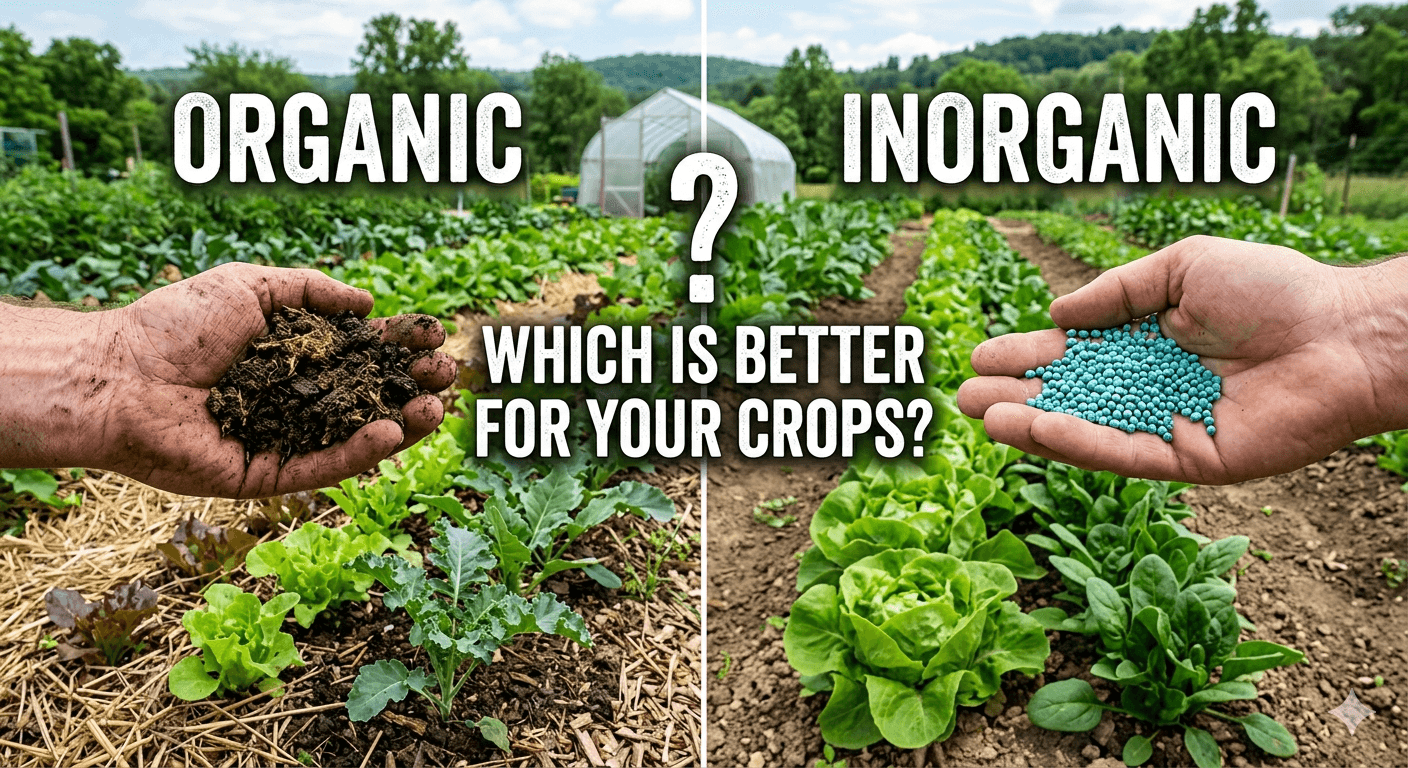
Organic and Inorganic Fertilizer Guide: Which Is Better for Your Crops? — Soil Health, Nutrient Precision, and the Hybrid Method
Every farmer dreams of a bountiful harvest, but the "secret" to healthy crops starts long before the first sprout appears. It begins beneath the surface. In the Philippines, the debate between Organic (natural) and Inorganic (synthetic) fertilizers is more relevant than ever. Is one truly better than the other, or is there a middle ground that ensures both profit and soil health? Let’s dig into the dirt and find out.
1. Breaking Down the Differences — Compare Nutrient Types
To choose the right food for your plants, you first need to understand what each fertilizer is made of and how it works. Think of it like food for humans: some meals give you a quick sugar rush, while others keep you full and strong all day.
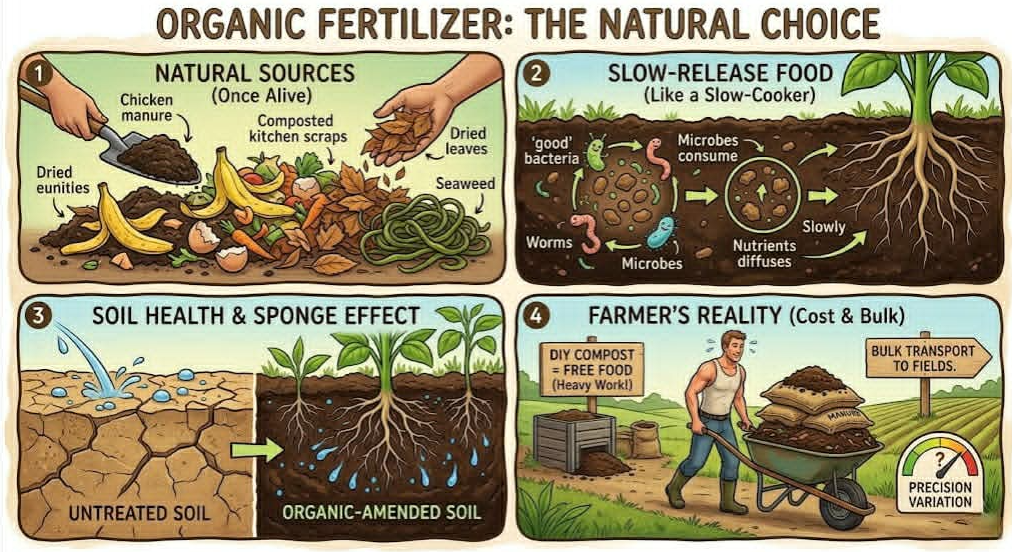
Organic Fertilizer (The Natural Choice)
Organic fertilizers come from things that were once alive. This includes animal manure (like chicken or cow dung), composted kitchen scraps, dried leaves, and even seaweed.
How it works: It is a "slow-release" food. Imagine a slow-cooker. The nutrients are locked inside the organic matter. Tiny bugs and "good" bacteria in the soil need to eat and break down this material first. Only then can the plant roots drink up the nutrients.
Soil Health: This is where organic shines. It acts like a sponge, helping the soil stay soft and hold onto water.
Cost: If you have a backyard or animals, this can be almost free. You can make your own compost. However, it is heavy and bulky, so it can be tiring to carry to big fields.
Precision: You never know exactly how much "power" is in a bag of manure. One batch might be stronger than the next.
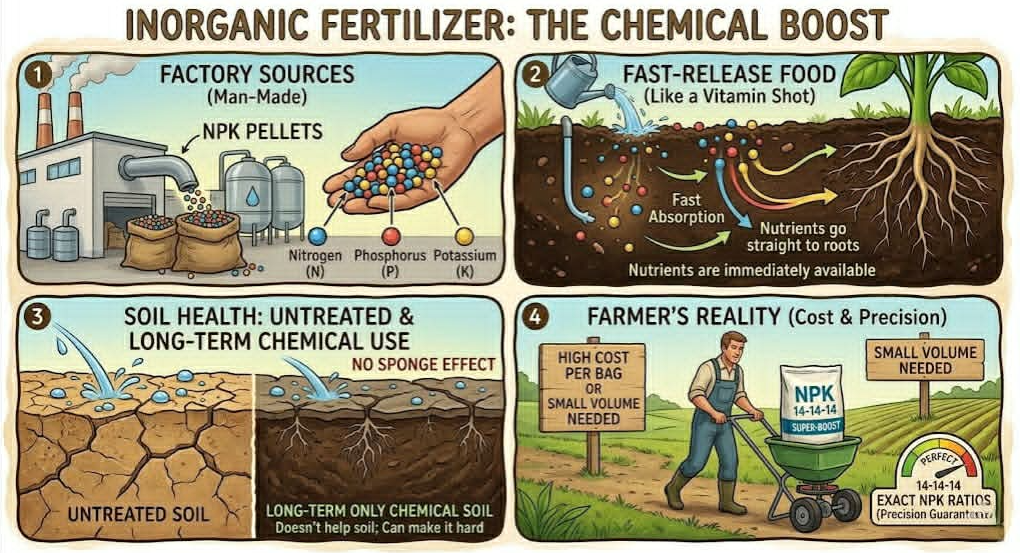
Inorganic Fertilizer (The Chemical Boost)
Inorganic fertilizers are man-made in factories. You usually see them as small colored pellets or powders, often called NPK (Nitrogen, Phosphorus, and Potassium).
How it works: It is "fast-release." It’s like a shot of vitamins. As soon as you water the plant, the nutrients dissolve and go straight to the roots.
Soil Health: While it helps the plant grow fast, it doesn't do much for the soil itself. In fact, using only chemicals for many years can make the soil hard, like a brick.
Cost: It is more expensive per bag. However, because it is very strong, you only need a small amount compared to organic piles.
Precision: The label tells you exactly what is inside. If your corn needs "14-14-14," you get exactly that.
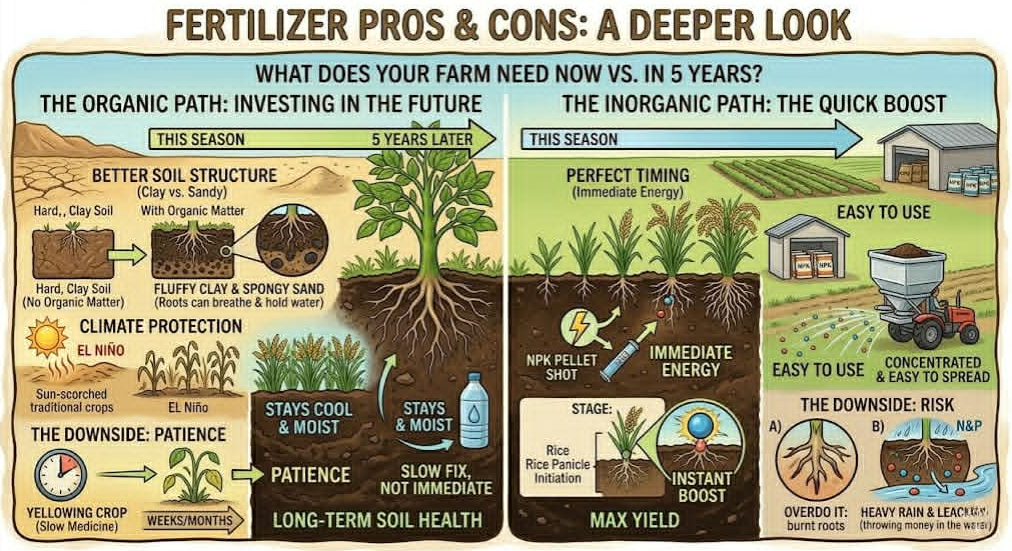
2. The Pros and Cons: A Deeper Look — Weigh Crop Yields
Choosing a fertilizer isn't just about the price; it’s about what your farm needs right now versus what it needs in five years.
The Organic Path: Investing in the Future
Think of organic fertilizer as a "long-term investment." You are feeding the soil, not just the plant.
Better Soil Structure: In the Philippines, we have a lot of clay soil that gets very hard when it’s dry, or sandy soil that loses water too fast. Organic matter fixes this. It makes clay soil "fluffy" so roots can breathe, and it helps sandy soil hold onto water like a bottle.
Climate Protection: During the "El Niño" or dry season, soil with lots of organic matter stays cool and moist longer. This can save your crops from wilting.
The Downside: You have to be patient. If your crops are turning yellow and look like they are dying today, organic fertilizer might be too slow to save them this week. It is a slow medicine, not a quick fix.
The Inorganic Path: The Quick Boost
This is the "emergency" or "high-speed" choice. When you are a professional farmer with a deadline, speed matters.
Perfect Timing: There are stages in a plant's life—like when a rice plant is about to produce grains—where it needs a lot of energy very fast. Inorganic fertilizer provides this instantly.
Easy to Use: Because it’s concentrated, it’s easy to store in a small shed and easy to spread across a large field without getting too tired.
The Downside: It’s easy to overdo it. If you put too much, you can "burn" the plant roots. Also, if a big rain comes right after you fertilize, the chemicals can wash away into nearby rivers. This is called "leaching," and it's like throwing your money into the water.
3. The "Modern Farmer" Strategy: The Best of Both Worlds — Blend Hybrid Methods
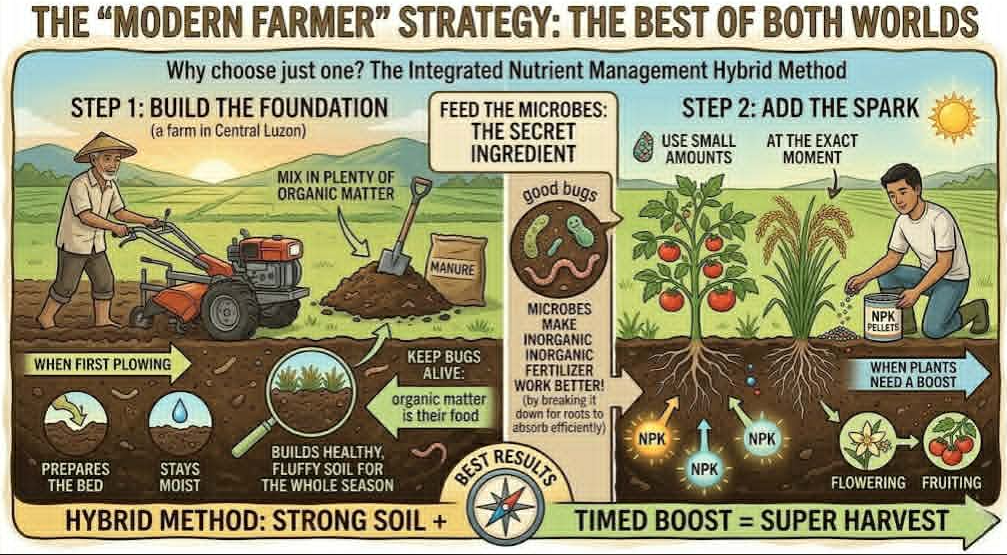
Why do you have to choose just one? Many of the most successful Filipino farmers today use a "Hybrid" or "Mixed" method. This is often called Integrated Nutrient Management.
Instead of picking a side, they use both to get the best results:
Build the Foundation: When you are first plowing the land, mix in plenty of organic compost or manure. This "prepares the bed" and ensures the soil stays healthy and moist for the whole season.
Add the Spark: Once the plants are growing, use small amounts of inorganic fertilizer at the exact moments the plants need a boost (like when they start to flower or fruit).
Feed the Microbes: By keeping some organic matter in the dirt, you keep the "good bugs" alive. These bugs actually help the inorganic fertilizer work better!
4. Local Context: Why It Matters for Filipinos — Matches Local Soil
In the Philippines, shifting toward organic practices isn't just about being "kind to nature"—it's about being a smart business owner.
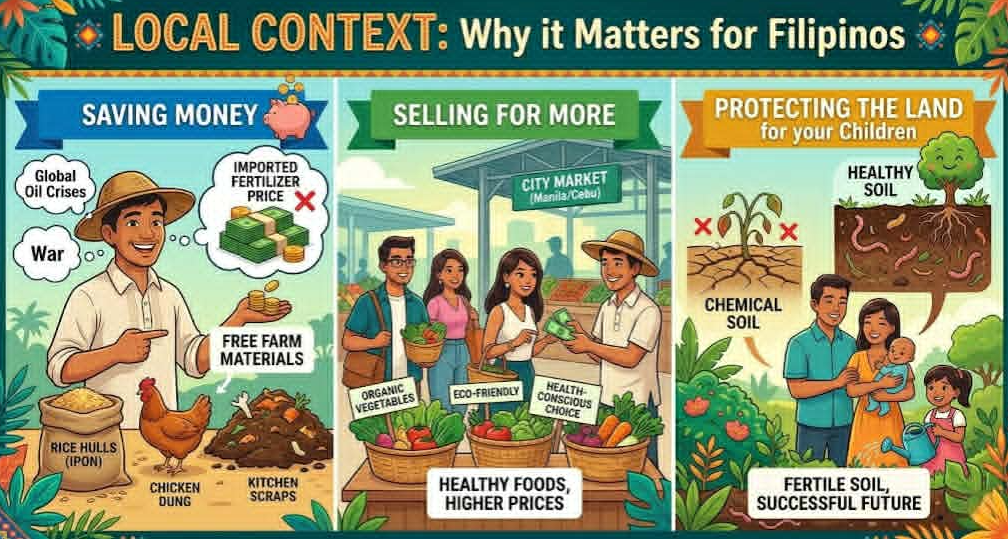
Saving Money
The price of chemical fertilizers often goes up because they are brought in from other countries. When there is a war or a problem with global shipping, the price of a bag of urea can double overnight. By using things you find on the farm—like rice hulls (ipon), chicken dung, or even kitchen scraps—you protect yourself from these high prices.
Selling for More
People in big cities like Manila or Cebu are looking for "cleaner" food. If you use less chemicals and more organic methods, you can market your vegetables as "Eco-Friendly" or "Low-Intervention." Health-conscious buyers are often willing to pay a few extra pesos per kilo for produce they trust.
Protecting the Land for your Children
If you use only chemicals for 20 years, the land might become "tired" and stop producing. By using organic methods, you ensure that the soil remains rich and fertile so that your children and grandchildren can still farm the same land successfully.

5. Easy Ways to Make Your Own Organic Fertilizer — Build Cheap Compost
If you want to start using organic methods but don't want to spend money, you can start small right at home:
Compost Piles: Dig a hole or use a large bin. Layer your "greens" (vegetable peelings, fruit scraps, fresh grass) with your "browns" (dried leaves, rice straw, cardboard). Keep it moist and turn it with a shovel every few weeks. In a few months, you’ll have "black gold" soil.
Banana Peel Water: Bananas are full of potassium. Soak old peels in a jar of water for a few days, then use that water for your flowering plants.
Rice Water: Don't throw away the water you use to wash your rice! It contains vitamins and starches that help the good bacteria in the soil grow.
6. The Bottom Line: Which is Better? — Maximize Farming Profit
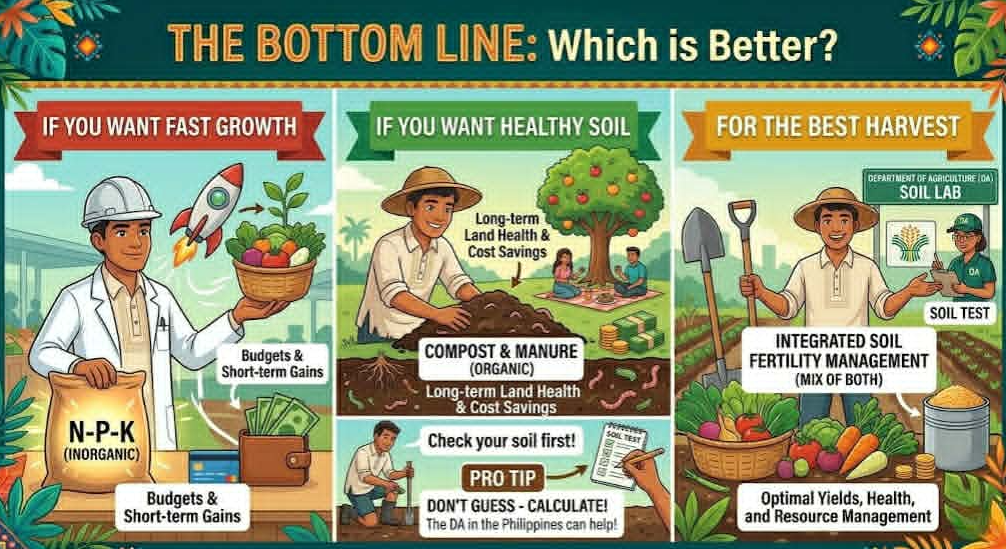
There is no "one-size-fits-all" answer. The best fertilizer is the one that fits your crop's needs, your budget, and the long-term health of your land.
If you want fast growth and have a bit of extra money, use inorganic.
If you want healthy soil and want to save money over time, use organic.
If you want the best harvest, use a mix of both.
Pro Tip: Check your soil first!
Before spending your hard-earned money on heavy bags of fertilizer, consider a soil test. In the Philippines, you can often get help from the Department of Agriculture (DA) to test your soil. It’s the only way to know exactly what "vitamins" your land is actually missing. Don't guess—calculate!
Ready to grow?
Whether you're starting a small compost pile in your backyard or looking for the best NPK pellets for your rice field, remember that your soil is the foundation of your success. If you take care of the land, the land will take care of you.
Happy farming!
Registered agriculturist, higher education instructor, and hands-on farmer. I write practical farming and agribusiness guides based on my work in the field and in the classroom.