

Food Storage Guide: Fruits and Veggies That Should Never Share a Shelf — Ethylene Science, Dangerous Pairings, and Crisper Protocols
To get the most value out of your groceries, you must prioritize how you store them. Many people do not realize that certain fruits and vegetables can actually cause each other to rot when placed in close proximity. Separating these items is an effective way to extend shelf life and maintain peak flavor. This guide explores the biological "turf wars" happening in your kitchen and how to broker a peace treaty for maximum freshness.
1. The Science of the "Silent Ripener": Ethylene Gas
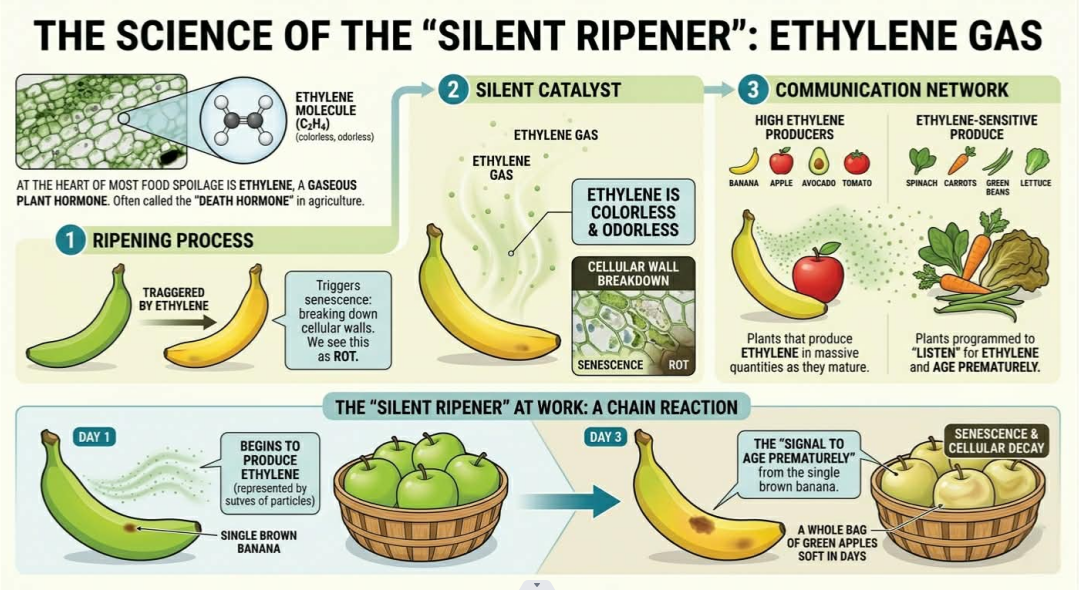
At the heart of most food spoilage is ethylene, a gaseous plant hormone. In the agricultural world, it is often called the "death hormone" because it triggers the ripening process, which eventually leads to senescence—the breakdown of cellular walls—which we see as rot.
Ethylene is colorless and odorless, making it a silent catalyst. Some plants produce it in massive quantities as they mature, while others are biologically programmed to "listen" for it. When an ethylene-sensitive vegetable sits next to a high-producer, the vegetable receives a signal to age prematurely. This is why a single brown banana can turn a whole bag of green apples soft in a matter of days.
2. High-Risk Pairings: The Freshness Foes
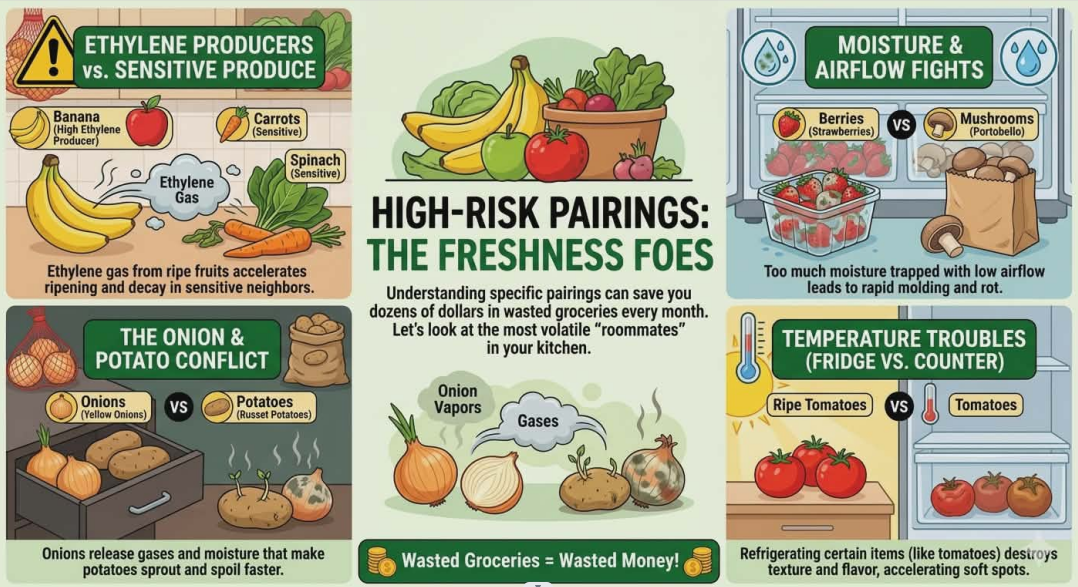
Understanding specific pairings can save you dozens of dollars in wasted groceries every month. Let’s look at the most volatile "roommates" in your kitchen.
Apples & Potatoes
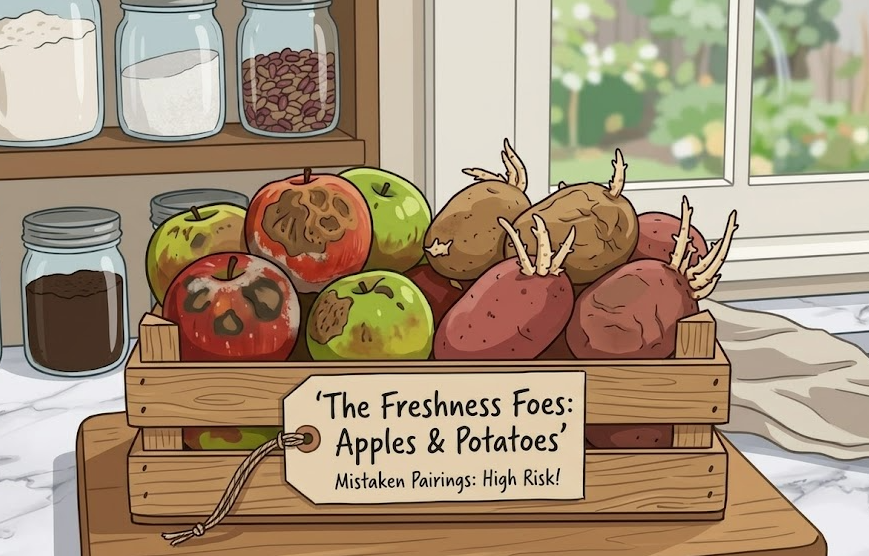
This is the most common pantry mistake. Apples are high ethylene producers. When stored in the same bin as potatoes, the gas triggers the potato's dormant eyes to begin sprouting. These sprouts drain the potato of its starch and moisture, leaving you with a shriveled, soft tuber that is difficult to peel and unpleasant to eat.
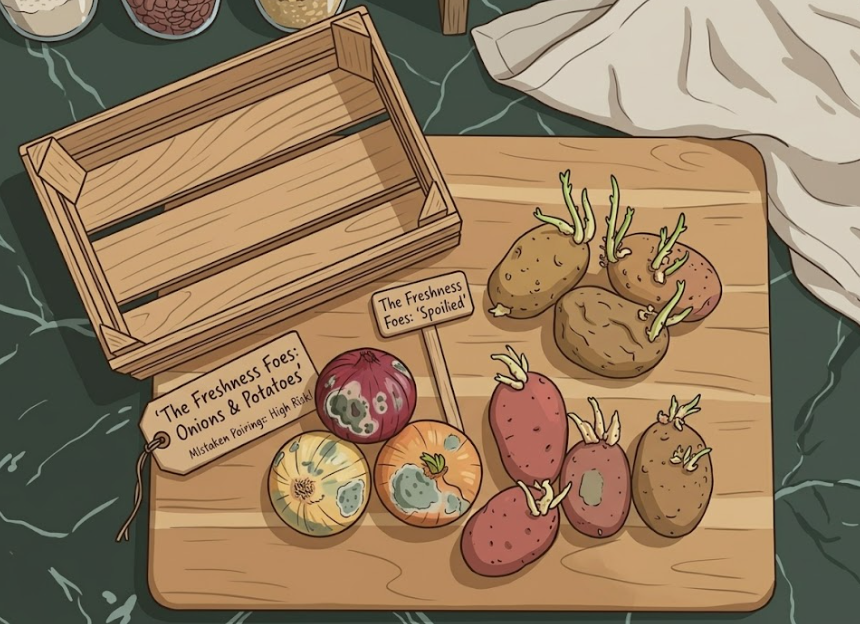
Onions & Potatoes
While neither is a massive ethylene producer compared to a banana, they are incompatible for a different reason: moisture and gas exchange. Onions release a significant amount of moisture and pungent thiols (sulfur compounds). Potatoes are porous and absorb this moisture, which leads to early rot. Furthermore, the flavor of the potato can actually change to a dull, onion-like musk if they sit together for more than a week.
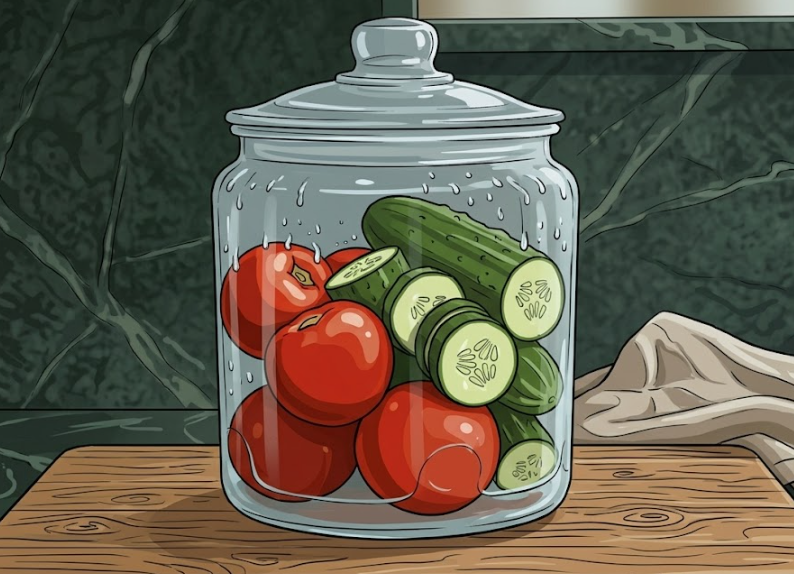
Tomatoes & Cucumbers
Cucumbers are extremely sensitive to ethylene. Even the moderate amount produced by a vine-ripe tomato is enough to make a cucumber turn yellow and lose its structural integrity (becoming "slimy") within 48 hours. If you want crunchy salads, these two should only meet in the bowl right before serving.

Bananas & Everything
Bananas are the "powerhouse" of ethylene. If you keep them in a bunch, they ripen each other. If you place them in a fruit bowl with anything else, they act as a ripening accelerant. This can be useful if you need to ripen a rock-hard avocado quickly (place them together in a paper bag), but for daily storage, bananas should be isolated.
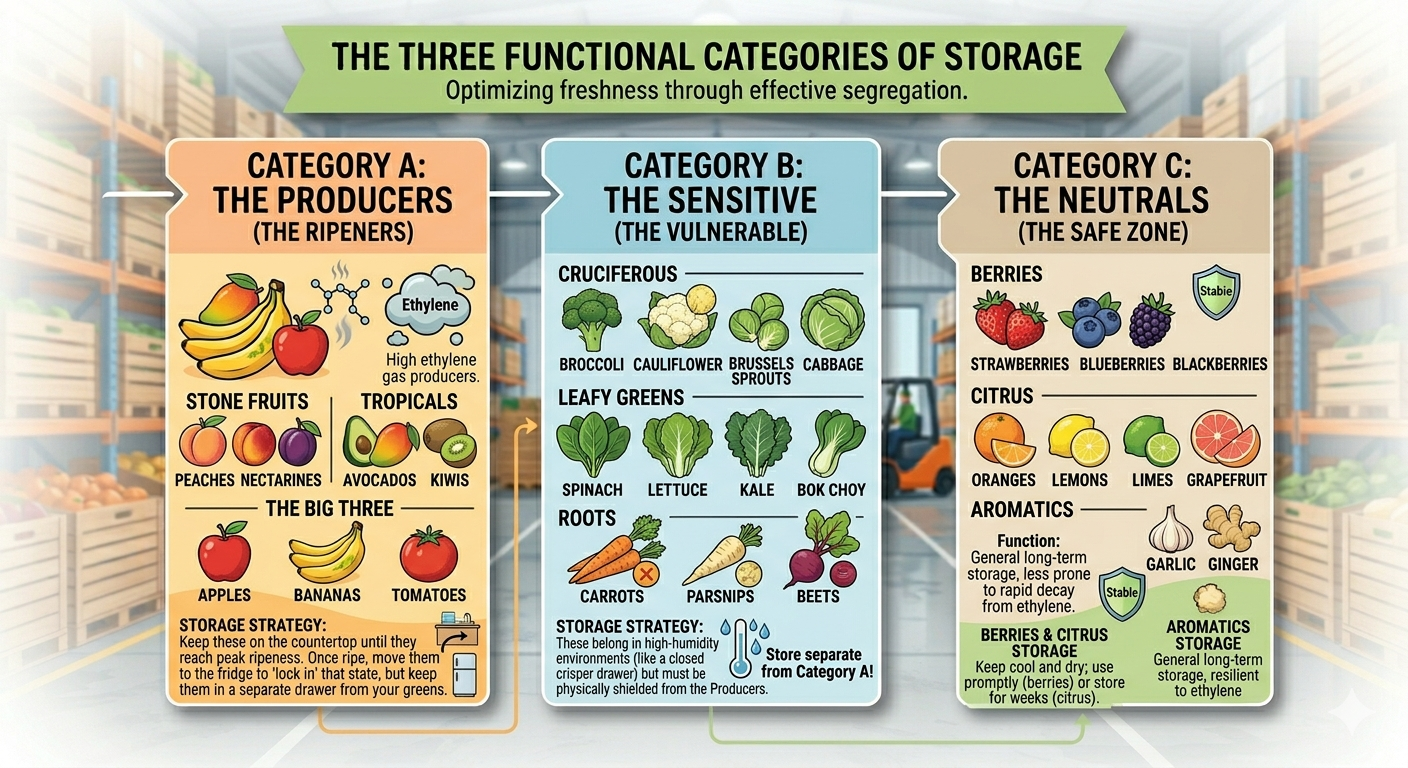
3. The Three Functional Categories of Storage
To master your kitchen, you must categorize your produce into three groups: the "Offense," the "Defense," and the "Neutrals."
Category A: The Producers (The Ripeners)
These items are the "offensive" players. They should be stored where air can circulate to prevent gas buildup.
Stone Fruits: Peaches, nectarines, and plums.
Tropicals: Avocados, mangos, and kiwis.
The Big Three: Apples, bananas, and tomatoes.
Storage Strategy: Keep these on the countertop until they reach peak ripeness. Once ripe, move them to the fridge to "lock in" that state, but keep them in a separate drawer from your greens.
Category B: The Sensitive (The Vulnerable)
These are the "defensive" players. They are easily influenced and quickly ruined by ethylene.
Cruciferous: Broccoli, cauliflower, Brussels sprouts, and cabbage.
Leafy Greens: Spinach, lettuce, kale, and bok choy.
Roots: Carrots, parsnips, and beets.
Storage Strategy: These belong in high-humidity environments (like a closed crisper drawer) but must be physically shielded from the Producers.
Category C: The Neutrals (The Safe Zone)
These items are the "Switzerland" of the fridge. They don't make much gas, and they aren't bothered by it.
Berries: Strawberries, blueberries, blackberries.
Citrus: Oranges, lemons, limes, and grapefruit.
Aromatics: Garlic and ginger.
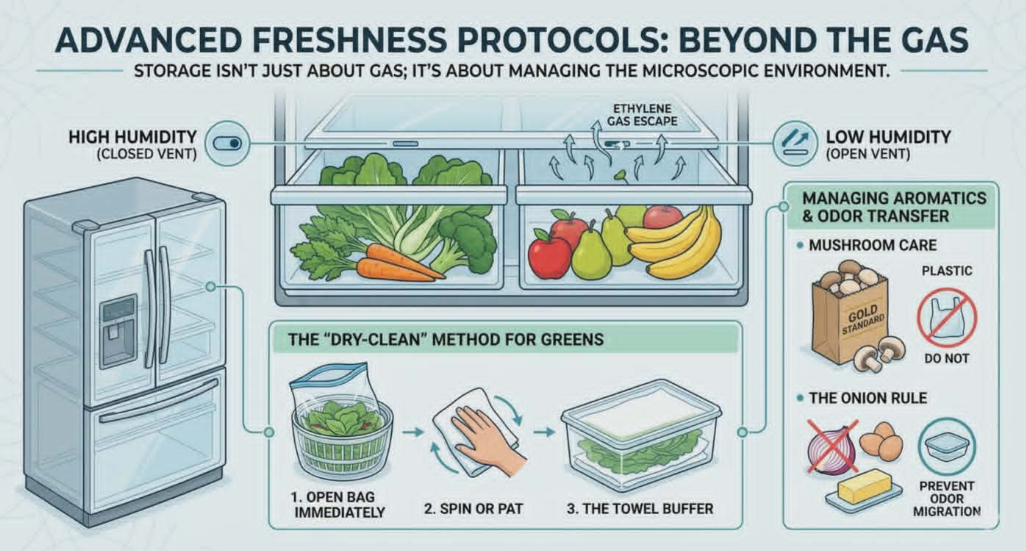
4. Advanced Freshness Protocols: Beyond the Gas
Storage isn't just about gas; it’s about managing the microscopic environment of every shelf.
The Humidity Factor
Most refrigerators have two crisper drawers. For maximum efficiency, you should set one to High Humidity (closed vent) and one to Low Humidity (open vent).
High Humidity Drawer: Use this for things that wilt. Leafy greens, carrots, and broccoli love moisture. By closing the vent, you trap the water vapor released by the plants, keeping them crisp.
Low Humidity Drawer: Use this for things that rot. Ethylene producers like apples and pears belong here with the vent open. This allows the ethylene gas to escape while keeping the temperature cool.
The "Dry-Clean" Method for Greens
Moisture is the primary cause of bacterial slime on spinach and lettuce. When you bring greens home in a plastic bag, they often have "respiration moisture" trapped inside.
Open the bag immediately.
Spin or Pat: If the greens are wet, spin them in a salad spinner or pat them dry.
The Towel Buffer: Line a container with a dry paper towel, place the greens inside, and top with another paper towel before sealing. This absorbs excess moisture while maintaining enough humidity to prevent wilting.
Managing Aromatics and Odor Transfer
Mushrooms, eggs, and butter are highly porous. They act like sponges for environmental odors.
The Onion Rule: Never store an uncovered half-onion in the fridge. The sulfuric compounds will migrate to your dairy products.
Mushroom Care: Never store mushrooms in plastic. They need to breathe or they will sweat and turn slimy. A brown paper bag is the gold standard; it absorbs excess moisture while allowing air exchange.
5. Environmental and Economic Impact
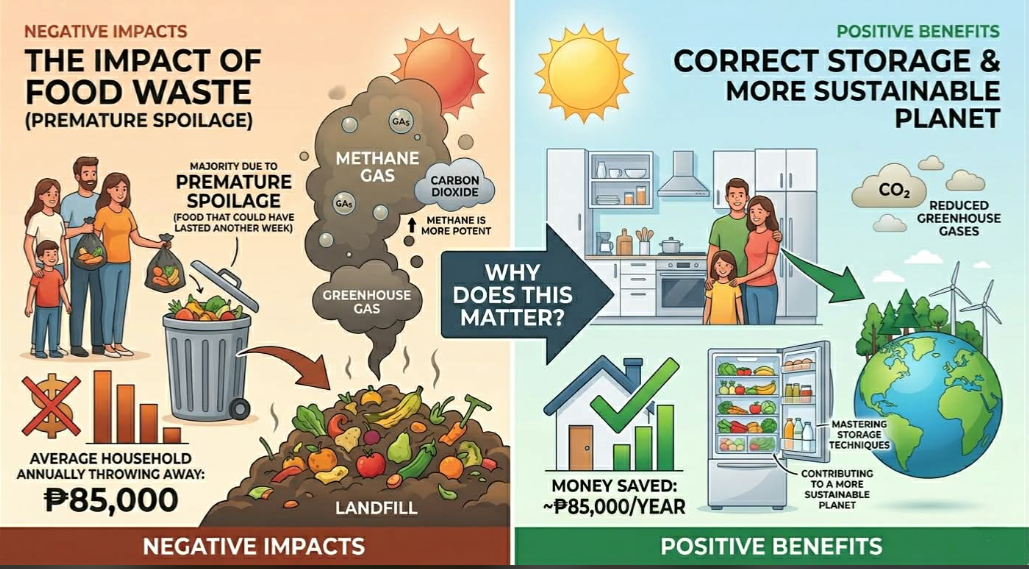
Why does this matter? The average household throws away nearly ₱85,000 worth of food annually. A significant portion of this is "premature spoilage"—produce that could have lasted another week if stored correctly.
Beyond your wallet, food waste is a major environmental issue. When fruits and vegetables rot in a landfill, they produce methane, a greenhouse gas significantly more potent than carbon dioxide. By mastering these storage techniques, you are directly contributing to a more sustainable planet.
6. The "Golden Rules" Checklist for Success
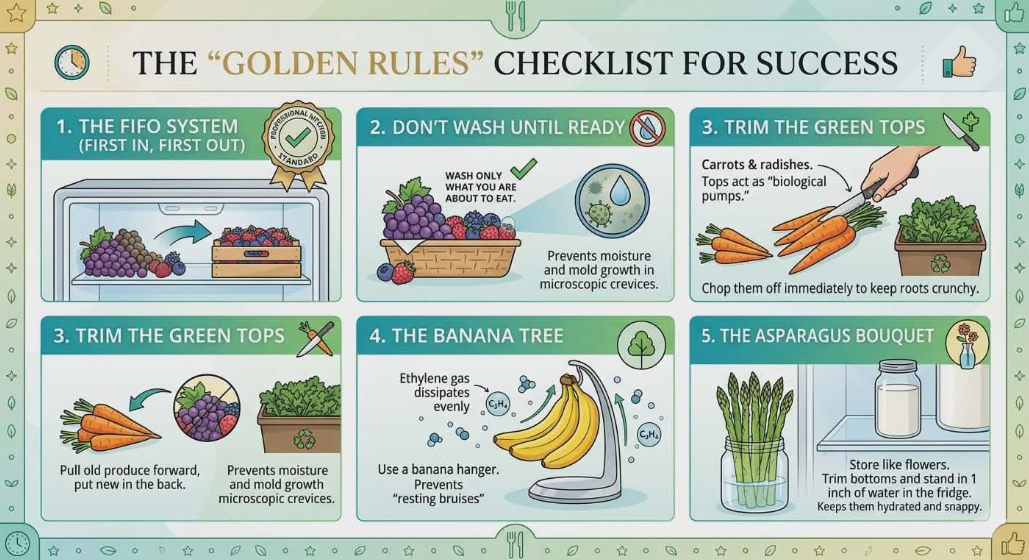
The FIFO System (First In, First Out): This is a professional kitchen standard. When you come home from the store, pull old produce forward and put the new items in the back.
Don’t Wash Until You’re Ready: Washing berries or grapes days before eating them introduces moisture into microscopic crevices, inviting mold. Wash only what you are about to eat.
Trim the Green Tops: Carrots and radishes come with green tops that act as biological pumps, sucking moisture and sugar out of the root. Chop them off immediately to keep the roots crunchy.
The Banana Tree: Use a banana hanger. This prevents "resting bruises" and allows ethylene gas to dissipate more evenly.
The Asparagus Bouquet: Store asparagus like flowers. Trim the bottoms and stand them up in an inch of water in the fridge. This keeps them hydrated and snappy.
7. A Detailed Summary of Storage Archetypes
To summarize, think of your kitchen as a series of micro-climates. Here is a breakdown of how to treat the main players:
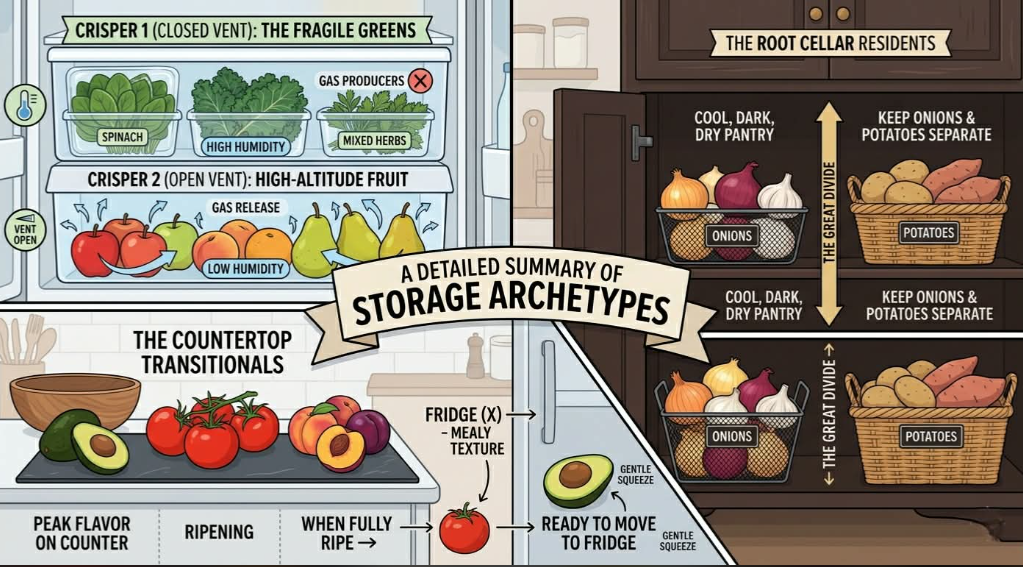
The High-Altitude Fruit (Apples and Pears): These are best kept in the low-humidity fridge drawer with the vent open. They produce a lot of gas and need air circulation to prevent them from over-ripening themselves.
The Fragile Greens (Spinach, Kale, and Herbs): These require high humidity and absolute isolation from gas producers. Keep them in the closed-vent drawer, ideally wrapped in a slightly damp paper towel or in a container that allows them to remain crisp without becoming waterlogged.
The Root Cellar Residents (Potatoes, Sweet Potatoes, and Onions): These should stay out of the fridge entirely. They prefer a cool, dark, dry place like a pantry or a low cabinet. However, the "Great Divide" applies here: keep the onions in a basket at one end of the pantry and the potatoes at the other.
The Countertop Transitionals (Avocados, Tomatoes, and Stone Fruit): These are the "wait and see" items. They stay on the counter to reach peak flavor. Once they yield to a gentle squeeze, they move to the fridge to stop the clock. Remember: a tomato in the fridge loses its texture and becomes mealy, so only refrigerate them if they are fully ripe and you can't eat them immediately.
By following these guidelines, you aren't just "storing" food; you are actively managing a biological timeline. You will find that your grocery bills decrease, your meals taste better, and your kitchen runs with professional efficiency. Proper storage is the final, essential step in the farm-to-table journey.
Registered agriculturist, higher education instructor, and hands-on farmer. I write practical farming and agribusiness guides based on my work in the field and in the classroom.